Braking is one of those motorcycle skills that looks simple from the outside.
You pull the lever.
You press the pedal.
The bike slows down.
But once you start riding, you quickly realize braking is much more than stopping the motorcycle. It is balance, timing, grip, body position, awareness and calm control — all happening at the same time.
For beginner riders, braking can feel intimidating. The front brake may feel powerful. The rear brake may feel safer. Emergency braking may feel scary. And when traffic suddenly slows down in front of you, there is no time to think through theory.
That is why braking needs to become a practiced habit, not a panic reaction.
Learning how to brake safely on a motorcycle is one of the most important skills you can build. It helps you ride with more confidence, more control, and more margin. It also connects directly to defensive riding: the earlier you see danger, the smoother you can brake.
A good rider does not wait until the last second and hope the brakes save them.
A good rider creates space, reads the road and brakes smoothly before things become urgent.
Read : Motorcycle safety fundamentals for beginners
Quick Answer
How Do You Brake Safely on a Motorcycle?
To brake safely on a motorcycle, roll off the throttle, keep your eyes up, apply the front brake smoothly and progressively, use the rear brake for support and stability, keep the motorcycle upright when braking hard and avoid grabbing the brakes suddenly. Practice braking regularly in a safe area so it becomes natural before an emergency happens.
Why Motorcycle Braking Feels Different From Car Braking
In a car, braking is simple for the driver. You press one pedal and the vehicle slows down while staying balanced on four wheels.
On a motorcycle, braking is more physical.
You have:
- A front brake lever
- A rear brake pedal
- Two tires instead of four
- Less contact with the road
- More body movement
- More balance involved
- More weight transfer when slowing down
When you brake, the weight of the motorcycle shifts forward. The front tire gets loaded, which gives it more grip. The rear tire gets lighter, which means it can lock more easily if you press the rear brake too hard.
This is why motorcycle braking is not just about “brake harder.”
It is about braking correctly.
The goal is to slow down while keeping the bike stable, the tires gripping and your body calm.
Front Brake vs Rear Brake: What Is the Difference?
Most beginner riders hear mixed advice about brakes.
Some people say, “Be careful with the front brake.”
Others say, “The front brake does most of the stopping.”
Some riders rely too much on the rear brake because it feels less intimidating.
The truth is that both brakes matter, but they do different jobs.
The Front Brake
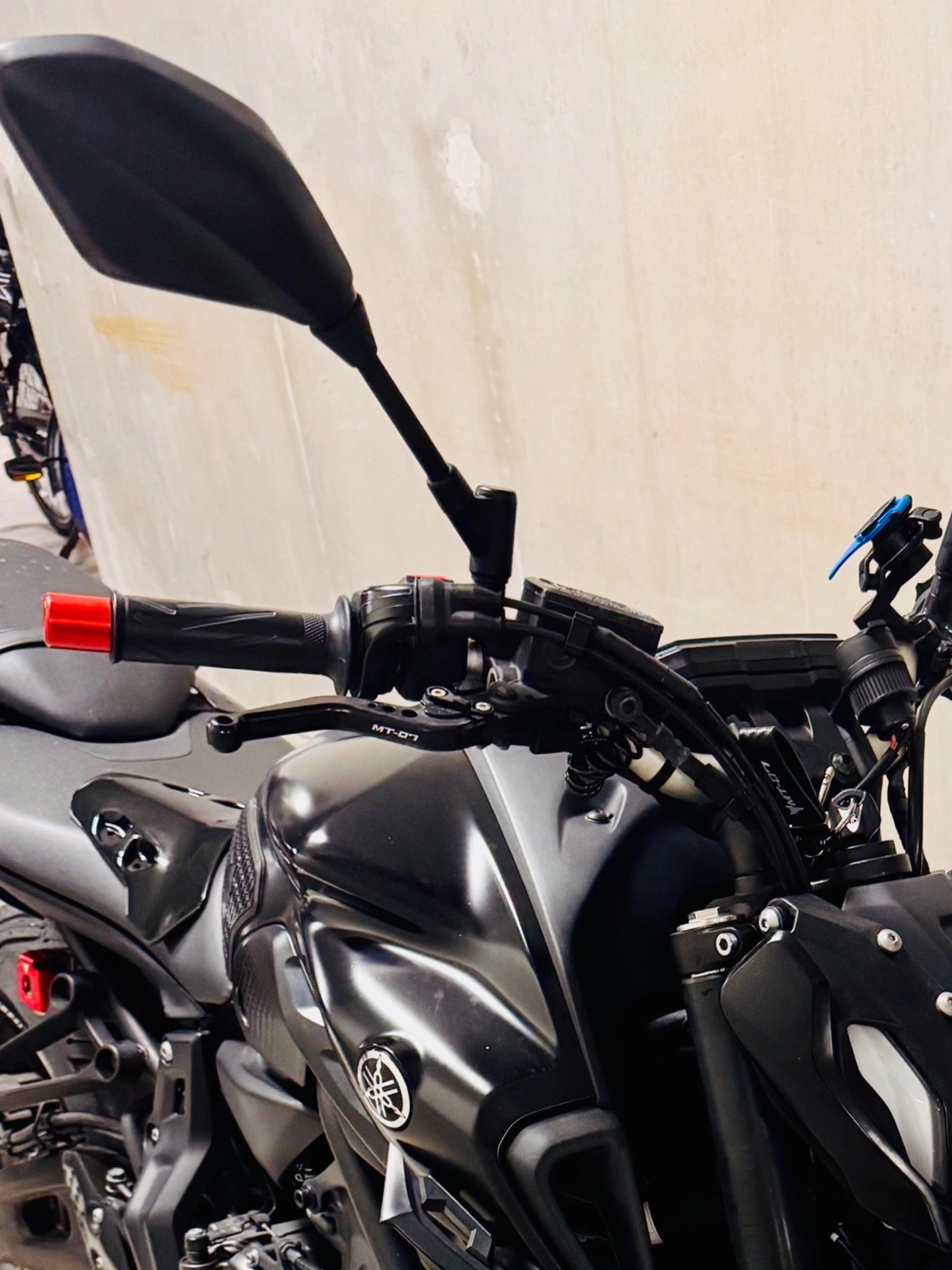
The front brake provides most of your stopping power on most motorcycles.
When you brake, weight transfers forward. This pushes the front tire harder into the road, giving it more grip. That extra grip allows the front brake to slow the motorcycle very effectively.
But because the front brake is powerful, it needs respect.
The danger is not using the front brake.
The danger is grabbing it suddenly.
If you panic and squeeze the front brake too hard too quickly, especially on a slippery surface or while leaned over, you can upset the bike. But if you apply it smoothly and progressively, the front brake becomes your strongest safety tool.
Think of the front brake like a firm handshake, not a punch.
Smooth first. Stronger after.
The Rear Brake
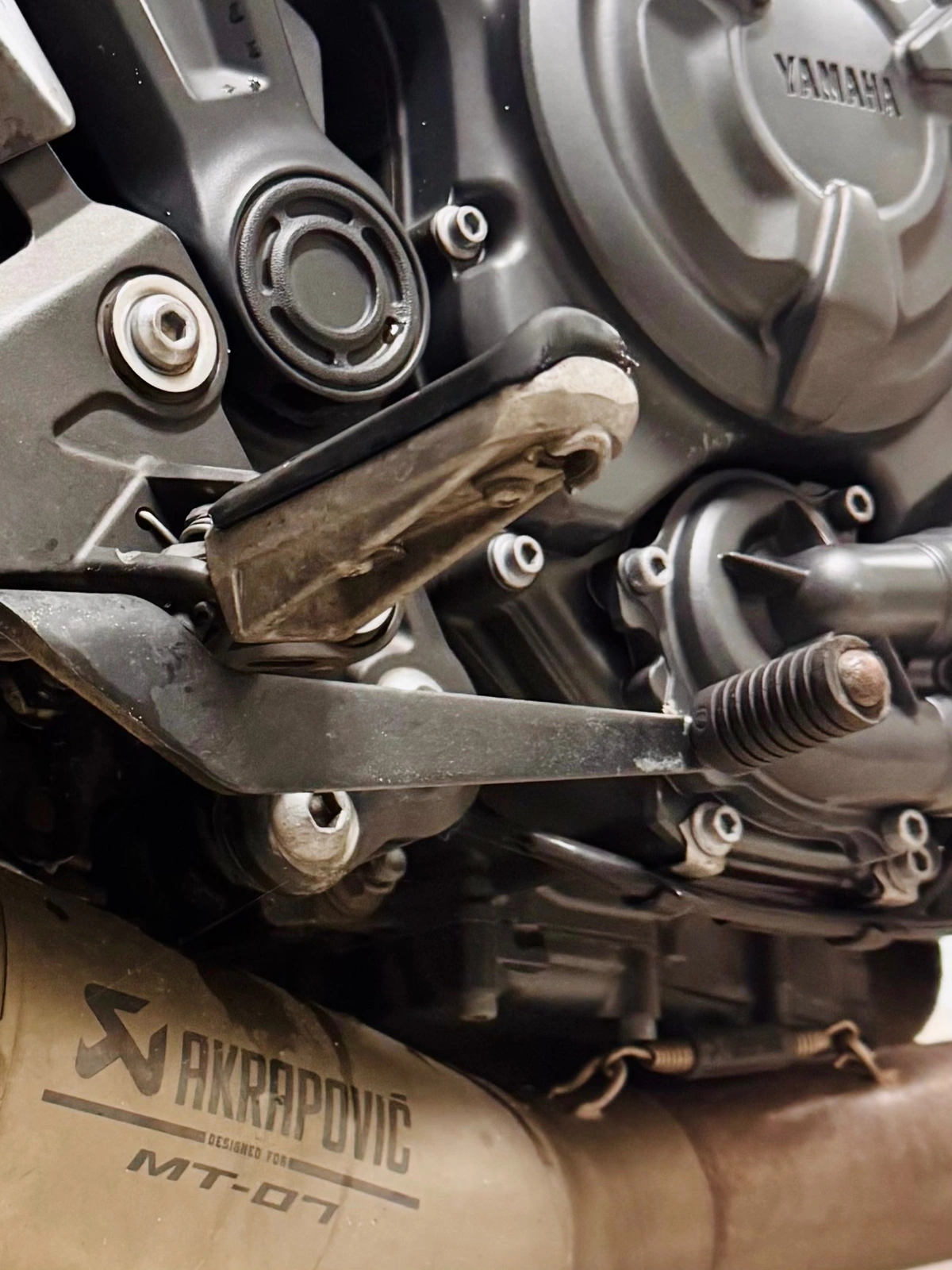
The rear brake is controlled by your right foot.
It usually provides less stopping power than the front brake, but it is still useful. The rear brake helps stabilize the motorcycle, especially at low speeds, in slow traffic, during tight turns and when you want gentle speed control.
The rear brake is useful for:
- Slow-speed control
- U-turns
- Filtering slowly through traffic (where legal – not all countries have the same lane filtering rules for motorcycles)
- Stabilising the bike
- Riding downhill carefully
- Adding support during normal braking
But the rear brake can lock more easily during hard braking because the rear tire becomes lighter when weight shifts forward.
If the rear wheel locks while the bike is upright, it may slide. If you panic, release suddenly. When leaned over, it can become unstable.
So the rear brake is helpful — but it is not a replacement for learning the front brake properly.
Should You Use Both Brakes?
Yes, in most normal riding situations, beginners should learn to use both brakes together.
A simple beginner braking sequence looks like this:
- Roll off the throttle
- Apply the front brake smoothly
- Add gentle rear brake
- Keep your eyes up
- Increase pressure progressively
- Stop in a straight, controlled line
The front brake does most of the slowing.
The rear brake helps support and stabilize.
Over time, you will develop feel. You will know when you need more front brake, less rear brake or just gentle speed control.
But in the beginning, the priority is simple:
Do not grab. Do not stomp. Be smooth.
What Progressive Braking Means
Progressive braking is one of the most important braking concepts for beginners.
It means you do not apply full brake pressure instantly.
Instead, you build pressure smoothly.
Imagine squeezing a sponge.
You do not crush it immediately. You squeeze gently first, then gradually increase pressure.
That is how motorcycle braking should feel.
With the front brake:
- Touch the brake gently first
- Let the weight transfer forward
- Then squeeze more firmly
- Keep increasing pressure smoothly if needed
This gives the front tire time to load up and grip the road.
A panic grab does the opposite. It shocks the tire before it has enough grip, which can cause instability.
Progressive braking is calm braking.
And calm braking is safe braking.
Check : Beginner mistakes that make braking dangerous
Keep Your Eyes Up When Braking
One of the easiest mistakes to make while braking is looking down.
When something happens suddenly, your eyes may drop toward the road, the front wheel or the vehicle directly in front of you.
But your motorcycle follows your eyes and body tension.
If you look down, your body often becomes stiff. Your arms lock. Your balance gets worse. Your steering becomes less natural.
When braking, keep your eyes up.
Look where you want to stop.
Look at the escape path.
Look beyond the immediate hazard.
Scan for what is happening behind and around you.
This is especially important in traffic.
If the car in front brakes suddenly, do not stare only at its bumper. Look for your stopping zone and possible escape route. Is there space to the side? Is the vehicle behind you stopping? Is the road surface clean?
Eyes up gives your brain more information.
More information gives you better decisions.
Read : Defensive riding skills for safer braking
Braking in a Straight Line
For beginner riders, the safest place to brake hard is while the motorcycle is upright and moving in a straight line.
When the bike is upright, the tires have more grip available for braking. When the bike is leaned over in a corner, some of the tire’s grip is already being used for turning.
This is why beginners should focus on this habit:
Brake before the corner, not in the middle of it.
Learn how to corner safely on a motorcycle
Before a turn:
- Look ahead
- Roll off the throttle
- Brake smoothly while upright
- Choose your entry speed
- Release the brake gently
- Look through the corner
- Maintain smooth throttle
This does not mean you can never adjust speed in a corner. But as a beginner, avoid entering too fast and then trying to fix everything while leaned over.
Most cornering problems start before the corner.
Good braking before the turn makes the turn easier, calmer and safer.
Emergency Braking: What Beginners Should Practice
Emergency braking is not something you want to learn during an actual emergency.
You need to practice it before your body needs it.
The first time you brake hard should not be when a car pulls out in front of you.
Find a safe, empty, legal area where you can practice. If possible, take professional training. Start slowly and build gradually.
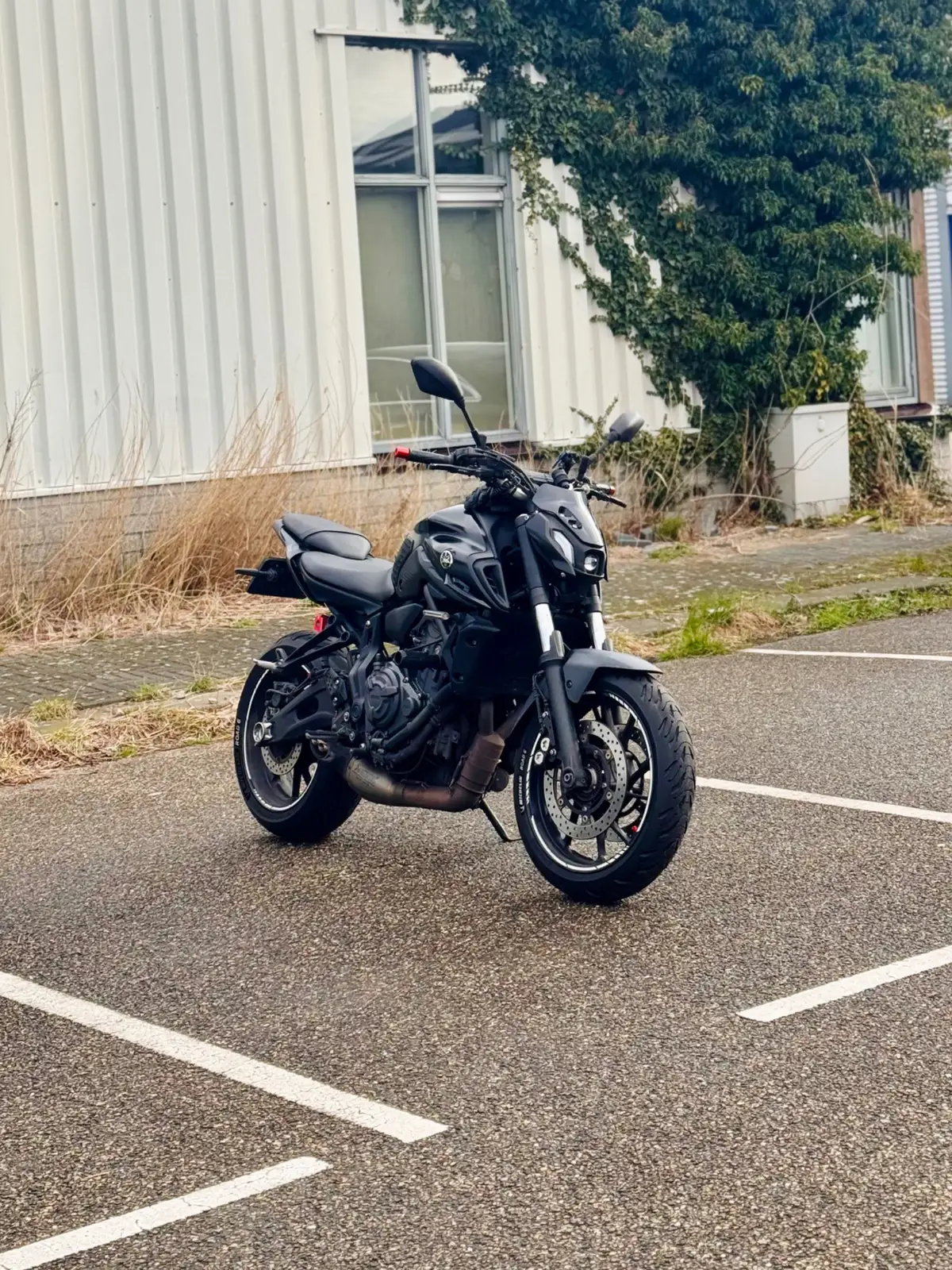
A beginner emergency braking drill can look like this:
- Ride at a low speed in a straight line
- Choose a braking point
- Roll off the throttle
- Squeeze the front brake smoothly
- Add rear brake gently
- Keep the bike upright
- Keep your eyes up
- Stop fully under control
- Reset and repeat
Start at low speed. Do not rush the process.
Once it feels controlled, slowly increase speed.
The goal is not to impress yourself. The goal is to understand how your motorcycle behaves when braking harder than usual.
You want the feeling to become familiar.
Familiar means less panic.
Read : Practising Braking With Professional Instruction
What If Your Motorcycle Has ABS?
ABS stands for Anti-lock Braking System.
If your motorcycle has ABS, it can help prevent the wheels from locking during hard braking. This is a valuable safety feature, especially for beginners.
But ABS does not make you invincible.
ABS cannot fix:
- Poor following distance
- Bad road positioning
- Excessive speed
- Panic reactions
- Bad corner entry
- Slippery surfaces with no margin
- Lack of awareness
Think of ABS as a safety net, not a riding technique.
You should still practice smooth, progressive braking. You should still use both brakes properly. You should still leave space. You should still ride defensively.
Technology helps most when your habits are already good.
Braking Without ABS
If your motorcycle does not have ABS, braking control becomes even more important.
You need to be especially smooth with your inputs.
Avoid grabbing the front brake suddenly. Avoid stomping on the rear brake. Practice gradually so you understand the feeling of the tires approaching their grip limit.
If a wheel locks, the correct response depends on which wheel locks and what the bike is doing. This is why proper training is so valuable. A good instructor can help you practice safely and understand the correct response in controlled conditions.
As a beginner, your main focus should be prevention:
- Keep more space
- Brake earlier
- Stay smooth
- Avoid hard braking while leaned over
- Practice in safe conditions
- Respect wet or dirty roads
Without ABS, your margin matters even more.
Common Mistakes
Braking mistakes are normal when you are learning. The key is to recognise them early.
Mistake 1: Grabbing the Front Brake
A sudden grab can upset the motorcycle.
Better habit: squeeze smoothly and progressively.
Mistake 2: Relying Only on the Rear Brake
The rear brake feels safer to many beginners, but it does not provide enough stopping power on its own in many situations.
Better habit: learn to use the front brake properly and combine both brakes.
Mistake 3: Looking Down
Looking down makes you tense and reduces awareness.
Better habit: keep your eyes up and look where you want to stop.
Mistake 4: Braking Too Late
Late braking creates panic.
Better habit: scan far ahead and brake earlier.
Mistake 5: Braking Hard While Leaned Over
Hard braking while leaned over reduces your margin for grip.
Better habit: slow down before the corner while the bike is upright.
Mistake 6: Stomping the Rear Brake
The rear wheel can lock if you press too hard, especially during hard stops.
Better habit: use gentle, controlled pressure.
Mistake 7: Not Practicing
Many riders only discover their braking limits during a real emergency.
Better habit: practice braking in a safe area before you need it.
Braking in Traffic
Traffic braking is different from empty-road braking.
In traffic, you are not only thinking about the vehicle in front. You also need to think about the vehicle behind, the road surface, side traffic, pedestrians, cyclists and escape routes.
When riding in traffic:
- Keep more following distance
- Watch brake lights several vehicles ahead
- Avoid sitting too close to bumpers
- Cover the brakes when approaching risk areas
- Check mirrors before slowing
- Brake early and smoothly
- Keep an escape path where possible
If traffic ahead slows suddenly, do not only focus on stopping. Also check what is happening behind you. If a car is following too closely, a smoother earlier brake can help give them more warning.
At traffic lights, leave some space in front of you. Keep the bike in gear while waiting until the vehicle behind has stopped. Watch mirrors. Be ready to move if needed.
Defensive braking is not just stopping.
It is stopping in a way that keeps you safe from every direction.
Braking in Corners
As a beginner, your main goal is to avoid needing hard braking in corners.
This starts with proper corner entry speed.
Before the corner, ask:
- Can I see the exit?
- Is the road clean?
- Is the corner tightening?
- Is there traffic ahead?
- Am I entering at a speed that feels calm?
If the answer is uncertain, slow down before entering.
If you do need to reduce speed slightly in a corner, be gentle. Avoid sudden brake pressure. Keep your eyes through the corner. Stay relaxed.
Advanced riders may use techniques like trail braking, but beginners should not rush into advanced methods without proper training.
Your beginner goal is simple:
Enter slower. Look through. Stay smooth. Exit safely.
That habit alone prevents many cornering problems.
Braking in the Rain
Rain changes everything.
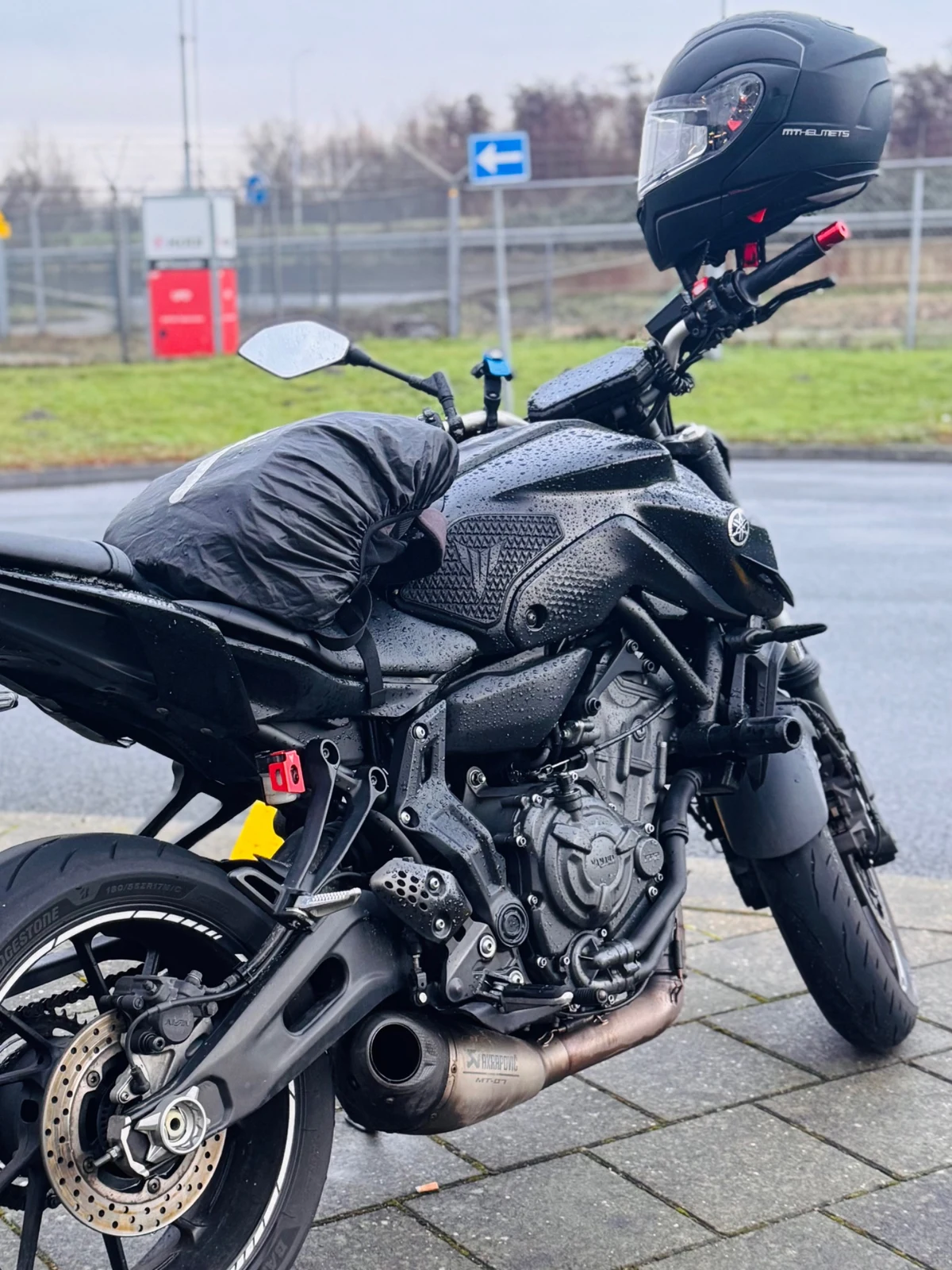
Grip is reduced. Visibility is reduced. Stopping distances increase. Painted lines, metal covers, tram tracks, leaves and oil patches become more dangerous.
When braking in the rain:
- Increase following distance
- Brake earlier
- Apply brakes more gently
- Keep the motorcycle more upright
- Avoid sudden lean or throttle changes
- Watch road markings and metal surfaces
- Keep your visor clear
The first rain after a dry period can be especially slippery because dirt and oil rise to the surface.
Do not ride in the rain with dry-road habits.
Rain rewards patience. Always.
Braking on Gravel, Sand or Slippery Surfaces
Loose surfaces require calm inputs.
If you brake suddenly on gravel or sand, the tires can lose grip quickly.
If you see a loose surface ahead:
- Slow down before reaching it if possible
- Keep the bike upright
- Avoid sudden braking
- Avoid sudden steering
- Look where you want to go
- Stay relaxed on the bars
If you are already on gravel or sand, be gentle. Use very smooth inputs and avoid panic.
The goal is to reduce the amount of grip you are asking from the tires.
On uncertain surfaces, smoothness is safety.
Braking Downhill
Downhill braking needs extra awareness because gravity is helping the motorcycle move forward.
Do not wait until the last second to brake.
Use controlled braking earlier. Keep your speed manageable. Use engine braking where appropriate. Avoid dragging the brakes for too long if you are descending for a long distance.
Your goal is to stay in control before speed builds up.
A beginner mistake is letting the bike gain speed downhill and then trying to fix it with sudden braking.
Better habit:
Control speed early. Keep it calm.
Should You Cover the Brake?
Covering the brake means keeping your fingers ready over the front brake lever.
This can reduce reaction time in risky situations.
You might cover the brake when approaching:
- Junctions
- Roundabouts
- Pedestrian crossings
- Heavy traffic
- Parked cars
- Side roads
- Unpredictable vehicles
But do not ride everywhere with a tense hand on the brake. You still need relaxed control.
Covering the brake should be calm readiness, not fear.
The same idea applies to your right foot near the rear brake in slow traffic or low-speed situations.
Be ready before you need to react.
How to Practice Braking Safely
Braking practice should be simple, controlled and repeatable.
Find a safe area with enough space and no traffic. Wear full gear. Start slowly.
Practice these drills:
Drill 1: Smooth Normal Stops
Ride slowly in a straight line. Stop gently using both brakes. Focus on smoothness.
Drill 2: Progressive Stops
Start at a moderate speed. Brake lightly at first, then gradually increase pressure. Feel the weight transfer.
Drill 3: Target Stops
Choose a safe stopping point. Try to stop smoothly at that point without rushing.
Drill 4: Rear Brake Feel
At low speed, gently use the rear brake to understand how it affects stability.
Drill 5: Emergency Stop Progression
Start slow. Brake more firmly while keeping the bike upright and your eyes up. Increase speed only when you feel controlled.
Do not practice beyond your comfort too quickly.
The goal is skill, not drama.
If possible, take a professional motorcycle safety course. A good instructor can correct small habits that you may not notice yourself.
A Simple Braking Checklist for Beginner Riders
Before braking, remember:
- Eyes up
- Roll off throttle
- Smooth front brake
- Gentle rear brake
- Progressive pressure
- Bike upright for hard braking
- Stay relaxed
- Look for escape path
- Check mirrors when possible
- Practice regularly
This checklist may sound simple, but under pressure, simple is exactly what you need.
Good braking is not panic strength.
Good braking is calm control.
Final Thoughts: Braking Is Confidence
Learning how to brake safely on a motorcycle changes the way you ride.
You become calmer in traffic.
You stop rushing corners.
You keep better distance.
You trust the motorcycle more.
You understand your limits more honestly.
Braking is not just an emergency skill. It is a confidence skill.
The better you can slow down, the safer you can speed up. The better you can stop, the more relaxed you feel while moving.
As a beginner, do not avoid braking practice because it feels uncomfortable.
That discomfort is exactly where confidence is built.
Start slowly. Practice often. Stay smooth. Keep your eyes up. Use both brakes. Respect the front brake, but do not fear it.
And remember:
The safest stop is usually the one you prepared for early.
Ride smart. Stay calm. Come home safe.
FAQs
How do you brake safely on a motorcycle?
To brake safely on a motorcycle, roll off the throttle, apply the front brake smoothly and progressively, use the rear brake gently for support, keep your eyes up and keep the motorcycle upright when braking hard.
Is braking in a corner dangerous?
Hard braking in a corner can reduce your grip margin, especially for beginners. It is safer to slow down before the corner while the motorcycle is upright, then turn smoothly.
Should I use both brakes on a motorcycle?
Yes, in most normal riding situations, using both brakes helps slow the motorcycle effectively and keeps it more stable. The front brake provides most stopping power, while the rear brake supports balance and control.
Is the rear brake safer than the front brake?
The rear brake can feel less intimidating, but it is not a replacement for the front brake. It provides less stopping power and can lock more easily during hard braking because the rear tire becomes lighter.
Does ABS make motorcycle braking safe?
ABS can help prevent wheel lock during hard braking, but it does not replace good technique. You still need proper following distance, smooth inputs, awareness and regular braking practice.
Related Reads
Build Safer Braking Habits Before Your Next Ride
Check out the Top 10 Motorcycle Safety Tips Every Rider Should Know
And if you are new to riding, start with the full guide:
Motorcycle Safety for Beginners: The Complete Guide to Riding Smart and Staying Alive