Cornering is one of the best feelings in motorcycling.
When you get it right, everything feels smooth. The bike leans naturally, your eyes look through the turn, the throttle feels steady and the road opens up in front of you. It is one of those moments where the motorcycle, the rider and the road feel connected.
But cornering is also where many beginner riders feel nervous.
A corner can suddenly feel too tight.
The bike may feel like it is leaning more than expected.
Your eyes may lock onto the outside curb.
Your hands may become stiff.
You may enter too fast and then try to fix everything halfway through the turn.
That is when cornering becomes uncomfortable.
The truth is this: safe cornering does not start in the middle of the corner. It starts before the corner.
It starts with how you see the road, how early you slow down, where you look, how relaxed your body is and how smoothly you use the controls.
This guide is for beginner riders who want to learn how to corner safely on a motorcycle without panic, ego or unnecessary risk.
Because the goal is not to attack every corner.
The goal is to ride through it smoothly, safely and with control.
Start with motorcycle safety basics for beginners
Quick Answer
How Do You Corner Safely on a Motorcycle?
To corner safely on a motorcycle, slow down before the turn, look through the corner, keep your body relaxed, choose a safe line, avoid sudden braking or throttle changes, maintain steady control through the bend and gently accelerate as the road opens. Good cornering is smooth, calm and planned before the bike leans.
Why Cornering Feels Difficult for Beginners
Cornering can feel difficult because it asks you to trust the motorcycle while your brain is telling you to be careful.
When the bike leans, a beginner rider may feel like something is wrong. Your body may want to sit upright, tense the arms, shut the throttle or look directly at the danger.
That reaction is natural, but it can make the corner worse.
Motorcycles are designed to lean. Leaning is not the problem. The problem is entering the corner too fast, looking at the wrong place, becoming stiff or making sudden inputs while the motorcycle is already leaned over.
Beginner riders often struggle with cornering because of:
- Entering too fast
- Looking too close
- Staring at the outside of the corner
- Braking too hard mid-corner
- Holding the handlebars too tightly
- Freezing when the corner tightens
- Not trusting the motorcycle
- Following faster riders
- Poor lane position
- Not reading the road early enough
The solution is not to force confidence.
The solution is to build a repeatable cornering process.
When you know what to do before, during and after the corner, your body becomes calmer.
Calm riders make smoother inputs.
Smooth inputs make safer corners.
The Golden Rule: Slow In, Smooth Out
For beginner riders, the most important cornering rule is:
Slow in, smooth out.
This means you enter the corner at a speed that feels controlled, then ride through it smoothly and gently accelerate as you see the exit.
Many cornering problems happen because riders enter too fast. Once you are already leaned over, your options become smaller. If you panic, brake suddenly or stare at the outside of the turn, the bike can become unstable.
A slower entry gives you time.
Time to look.
Time to choose your line.
Time to stay relaxed.
Time to adjust if the corner tightens.
Time to avoid gravel, wet patches or road markings.
There is no shame in entering a corner slower than another rider.
A clean, calm corner is always better than a fast, messy one.
Speed can come later.
Control comes first.
Step 1: Look Far Ahead Before the Corner
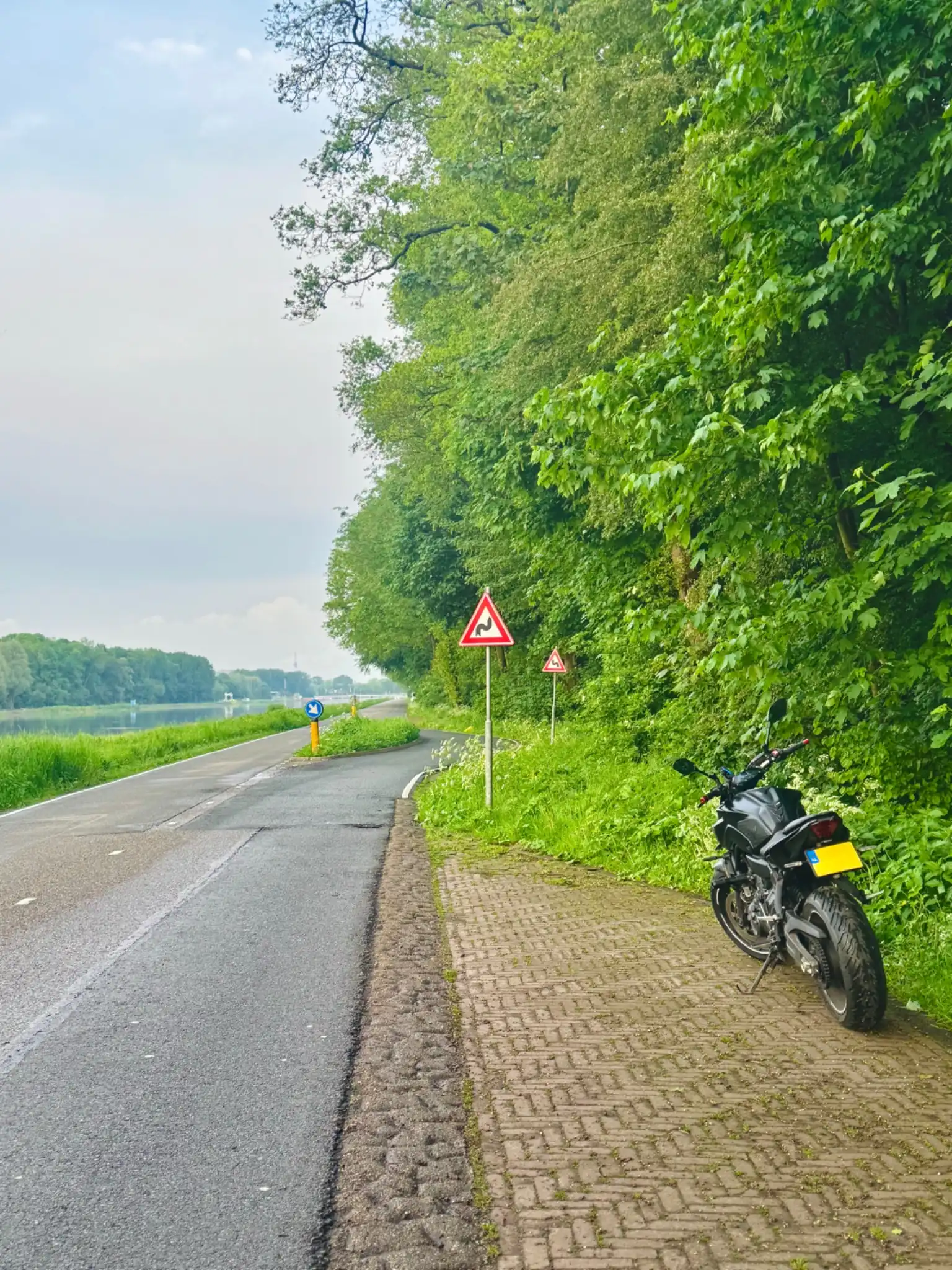
Safe cornering starts with your eyes.
Before you reach the corner, look ahead and gather information.
Ask yourself:
- How sharp is the corner?
- Can I see the exit?
- Is the road surface clean?
- Is there traffic ahead?
- Is the corner uphill or downhill?
- Is there gravel, sand, water, leaves, or oil?
- Are there road markings or metal covers?
- Is the corner open or blind?
- Is there space if I need to adjust?
The earlier you read the corner, the less surprised you will be.
Beginner riders often look too close to the front wheel. This makes the corner feel faster and gives the brain less time to process what is coming.
Look farther ahead.
Your eyes should scan the road before you arrive, not after you are already inside the turn.
The corner tells you what it needs if you look early enough.
Read : Defensive riding techniques for better road awareness
Step 2: Slow Down Before the Corner
This is where braking and cornering connect.
Do most of your braking before the corner while the motorcycle is upright.
When the bike is upright, the tires have more grip available for braking. When the bike is leaned over, some of that grip is already being used for turning.
That is why beginners should avoid entering corners too fast and then trying to brake hard while leaned over.
Before the corner:
- Roll off the throttle
- Brake smoothly if needed
- Choose a safe entry speed
- Release the brake gently
- Look through the corner
- Lean the bike calmly into the turn
The goal is to enter at a speed where you feel like you can handle the whole corner without panic.
If you are unsure, slow down more before entering.
It is much easier to add gentle throttle later than to fix too much speed mid-corner.
If you have not read it yet, start with How to Brake Safely on a Motorcycle: Front vs Rear Explained.
Step 3: Choose a Safe Line
Your line is the path you take through the corner.
For racing, people talk about perfect racing lines. But for road riding, the safest line is not always the fastest line.
On public roads, your line should prioritize:
- Visibility
- Road position
- Space
- Surface quality
- Escape options
- Staying within your lane
- Avoiding oncoming traffic
- Avoiding gravel and debris near the edge
As a beginner, avoid cutting corners too tightly. Also avoid drifting wide toward the outside edge of your lane.
Stay within your lane and choose a path that gives you the best view through the corner.
For right-hand corners, be careful not to move too close to the center line where oncoming vehicles may appear.
For left-hand corners, avoid running too wide toward the curb, gravel or road edge.
The safest road-riding line is the one that gives you control and visibility, not the one that looks dramatic.
Step 4: Look Through the Corner
This is one of the biggest cornering lessons:
The motorcycle goes where you look.
If you stare at the curb, you may drift toward it.
If you stare at the gravel, you may ride toward it.
If you stare at the outside of the corner, the corner will feel tighter and scarier.
Instead, turn your head and look where you want to go.
Not just your eyes.
Your head.
Point your chin toward the exit of the corner. This helps your body and motorcycle follow the right direction.
At first, this may feel unnatural. Your brain wants to look at the thing that scares you. But that is exactly the habit you need to train out of yourself.
Look through the corner.
Look at the safe path.
Look at the exit.
Look where you want the bike to go.
Good vision makes cornering calmer.
Step 5: Stay Relaxed on the Handlebars
A tense rider makes the motorcycle tense.
Beginner riders often grip the handlebars too hard in corners. When you feel nervous, your arms lock, your shoulders rise and you start fighting the bike.
This makes steering worse.
The handlebars are for guiding the motorcycle, not for holding your whole body weight.
Try this:
- Relax your shoulders
- Keep your elbows slightly bent
- Hold the grips lightly
- Support yourself with your core and legs
- Keep your knees gently against the tank
- Breathe through the corner
The bike needs to move naturally underneath you.
If your arms are stiff, every bump, lean or correction feels bigger than it is.
A relaxed body helps the motorcycle stay stable.
Sometimes the best cornering improvement is not a technical trick. It is simply loosening your grip and breathing.
Step 6: Use Smooth Throttle Control
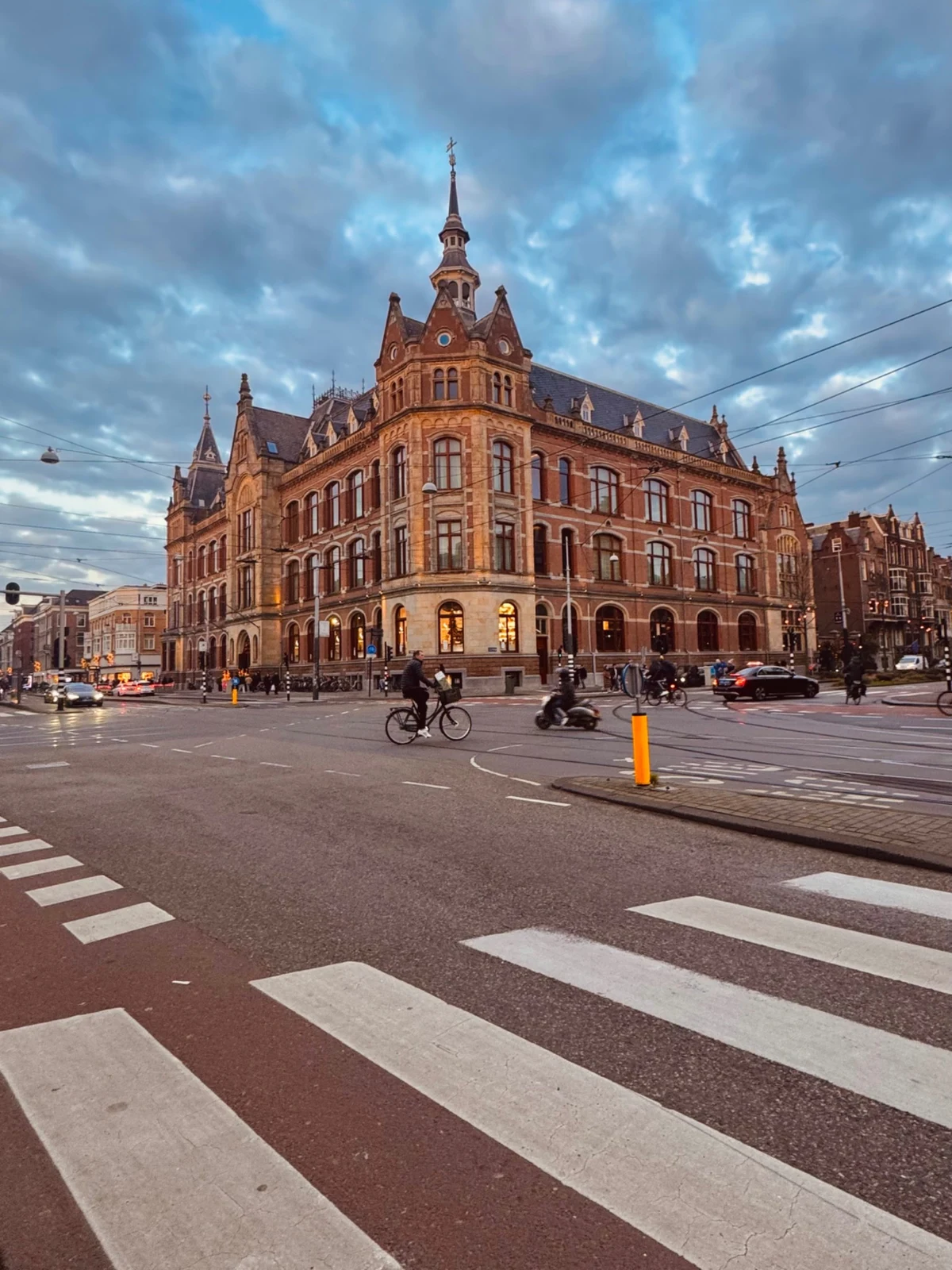
Throttle control matters a lot in corners.
As a beginner, avoid sudden throttle changes while leaned over.
Do not abruptly shut the throttle unless necessary.
Do not suddenly accelerate mid-corner.
Do not roll on aggressively before you can see the exit.
A simple beginner approach:
- Slow down before the corner
- Enter with light, steady throttle
- Maintain smooth control through the bend
- Gently roll on as the bike stands up and the road opens
The throttle should feel calm and progressive.
Smooth throttle keeps the motorcycle balanced.
Sudden throttle changes can shift weight quickly and unsettle the bike, especially on wet, dirty or uneven roads.
Cornering is not the place for panic inputs.
Everything should feel deliberate.
Step 7: Avoid Sudden Braking Mid-Corner
As a beginner, try to avoid hard braking while leaned over.
The tire has a limited amount of grip. When you are cornering, some of that grip is used for turning. If you suddenly add heavy braking while leaned over, you ask more from the tire at exactly the moment your margin is already smaller.
This does not mean you can never slow down in a corner.
Sometimes you may need a small adjustment. But that adjustment should be gentle, not sudden.
If you feel you entered too fast:
- Keep your eyes through the corner
- Stay relaxed
- Avoid staring at the outside edge
- Avoid grabbing the brake
- Reduce throttle smoothly if needed
- Make gentle corrections
- Trust the bike and look where you want to go
Panic usually makes the problem worse.
The better solution is prevention: choose the right speed before the corner.
That is why “slow in, smooth out” matters so much.
Step 8: Let the Bike Finish the Corner Before Accelerating Hard
Many beginner riders want to accelerate too early.
But if you add too much throttle while still leaned over, especially on a slippery or uneven surface, the bike can become unsettled.
Wait until you can see the exit and the motorcycle is starting to stand up.
Then gently roll on the throttle.
Do not rush it.
A good corner exit feels natural. The bike stands up, your eyes are looking ahead, the road opens and the throttle comes in smoothly.
The goal is not to launch out of every corner.
The goal is to exit in control, in your lane and ready for whatever comes next.
Common Mistakes
Mistake 1: Entering Too Fast
This is the classic mistake.
If you enter too fast, everything becomes harder: looking, leaning, staying relaxed and choosing your line.
Better habit: slow down before the corner.
Mistake 2: Looking at the Danger
Staring at the curb, barrier, gravel or outside of the turn can pull you toward it.
Better habit: look at the safe path and turn your head toward the exit.
Mistake 3: Gripping the Bars Too Hard
A tight grip makes the motorcycle harder to guide.
Better habit: relax your arms, breathe and support yourself with your legs and core.
Mistake 4: Braking Suddenly While Leaned Over
Hard braking mid-corner reduces your grip margin.
Better habit: brake before the corner while the bike is upright.
Mistake 5: Following Faster Riders
Trying to keep up with someone else can push you into corners too fast.
Better habit: ride your own ride.
Mistake 6: Cutting the Corner
Cutting corners may reduce your view and place you too close to oncoming traffic or road debris.
Better habit: choose a safe road-riding line that gives visibility and space.
Mistake 7: Accelerating Too Early
Too much throttle while leaned over can unsettle the bike.
Better habit: wait until you see the exit and the bike begins to stand up.
Mistake 8: Freezing
When a corner feels scary, beginners may freeze, stop looking through the turn and stiffen their body.
Better habit: breathe, look through the corner, stay smooth and trust the process.
Check : Common beginner motorcycle mistakes
What to Do If You Enter a Corner Too Fast
This is a situation every rider wants to avoid, but it can happen.
Maybe the corner is tighter than expected.
Maybe you misread the road.
Maybe you followed someone else’s pace.
Maybe you were distracted.
The most important thing is not to panic.
If you enter a corner too fast:
- Keep your eyes up
- Look through the corner
- Do not stare at the outside edge
- Stay relaxed
- Avoid grabbing the brakes
- Make smooth adjustments
- Trust the motorcycle more than your fear
- Focus on the safe path
Many motorcycles can lean and turn more than beginner riders think. The rider often gives up before the bike does.
That does not mean you should push beyond your skill. It means that in the moment, panic is not your friend.
Look where you want to go.
Stay smooth.
Afterward, learn from it. Ask yourself why it happened. Did you enter too fast? Did you look too late? Did you miss road signs? Were you following someone?
The lesson matters.
That is how you become safer.
Cornering in the Rain
Rain changes cornering and pretty much everything else too.
Grip is reduced, visibility is lower and road surfaces become more unpredictable. Painted lines, metal covers, tram tracks, leaves, oil and smooth patches can become slippery.
In wet conditions:
- Slow down earlier
- Reduce lean angle
- Avoid sudden throttle
- Avoid sudden braking
- Keep the bike more upright
- Look farther ahead
- Increase following distance
- Be gentle with every input
Do not ride wet corners like dry corners.
Rain rewards patience.
Especially in urban areas, watch for painted lines, manhole covers and tram tracks. These can be much more slippery than normal asphalt.
Your job is to make the motorcycle do less work.
Less speed.
Less lean.
Less sudden input.
More smoothness.
Cornering on Gravel, Sand or Dirty Roads
Loose surfaces can make cornering feel unstable.
If you see gravel, sand, mud, wet leaves or debris in a corner, reduce your speed before you reach it if possible.
When riding over loose surfaces:
- Keep the bike more upright
- Avoid sudden braking
- Avoid sudden throttle
- Avoid sharp steering
- Look at the cleanest path
- Stay relaxed on the bars
- Let the motorcycle move slightly underneath you
Do not stare at the gravel.
Look where you want to go.
If you tense up and fight the bike, the situation can feel worse. Smooth and relaxed is safer.
The best solution is always early vision. The earlier you see the hazard, the more calmly you can adjust.
Cornering in City Riding
City corners are different from open-road corners.
In the city, the corner itself is not the only challenge. You also have pedestrians, cyclists, cars, scooters, parked vehicles, delivery vans, traffic lights, road markings, tram tracks and people doing unpredictable things.
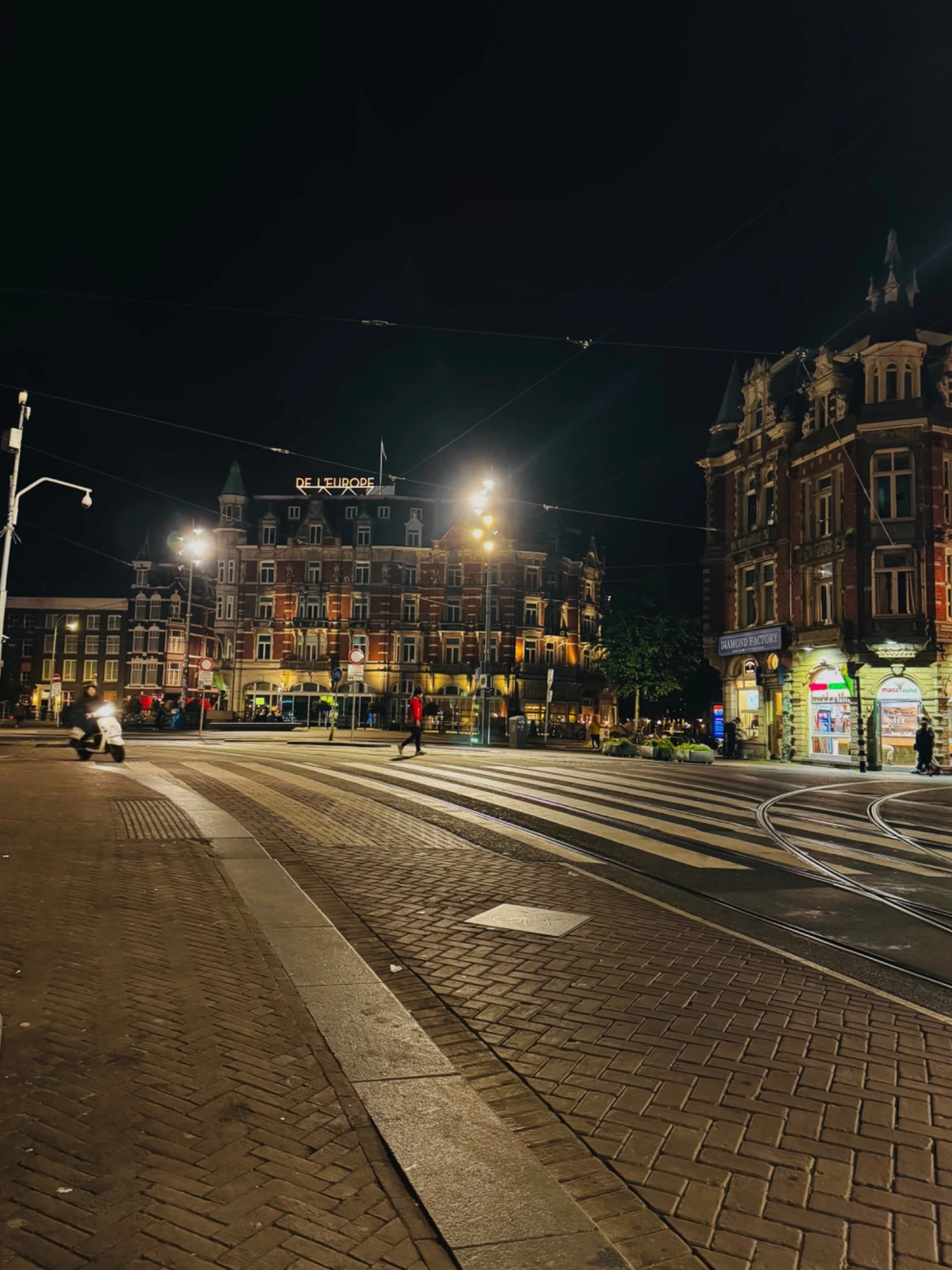
When cornering in the city:
- Slow down more than you think
- Watch for pedestrians at crossings
- Expect cyclists to appear from the side
- Avoid leaning hard over painted lines or tram tracks
- Watch parked cars and opening doors
- Be careful near junctions
- Keep your hands and eyes relaxed
- Do not rush
In Amsterdam especially, you need patience. A beautiful smooth corner is not always possible in traffic and that is okay.
City riding is not about style.
It is about awareness.
Cornering on Country Roads
Country roads can be beautiful, but they can also hide surprises.
A corner may tighten unexpectedly.
A tractor may leave mud on the road.
Gravel may sit near the edge.
A cyclist may be around the bend.
An animal may cross.
The road may be narrower than it looks.
On unfamiliar country roads, never assume the corner is clean or open.
Enter at a speed that gives you options.
If you cannot see the exit, treat the corner with respect.
Blind corners should always ask for extra patience.
You can enjoy the road without gambling on what you cannot see.
How Body Position Helps Beginner Riders
You do not need extreme body position on public roads.
You do not need to hang off the motorcycle like a racer.
For beginner riders, the goal is simple body control:
- Stay relaxed
- Keep your head up
- Look through the corner
- Keep your arms loose
- Keep your inside shoulder relaxed
- Hold the bike gently with your legs
- Lean naturally with the motorcycle
Do not overcomplicate body position too early.
A lot of beginners try to copy advanced riding videos before mastering basic vision and throttle control.
Start with calm fundamentals.
Good eyes.
Good speed.
Good line.
Good relaxation.
Smooth throttle.
That is enough to make your cornering much safer.
How to Practice Cornering Safely
You do not need to wait for a mountain road to practice cornering.
Start simple.
Find quiet roads, empty parking areas or safe practice spaces where you can work on basic control without pressure.
Practice:
1. Looking Through the Turn
At low speed, practice turning your head and looking where you want to go.
Not down.
Not at the front wheel.
Not at the curb.
Look through.
2. Smooth Throttle
Practice rolling on and off the throttle gently. Feel how the bike responds.
Your hand should be smooth, not sharp.
3. Relaxed Arms
Notice if your shoulders are tense. Breathe and loosen your grip.
The bike should not feel like something you are wrestling.
4. Slowing Before the Turn
Practice reducing speed before turning, then going through the turn calmly.
Do not rush entry speed.
5. Consistent Lines
Try to ride predictable, smooth lines through simple corners. Focus on control, not speed.
6. Post-Ride Reflection
After a ride, ask:
- Which corners felt good?
- Which corners felt uncomfortable?
- Did I look far enough ahead?
- Did I enter too fast?
- Did I tense up?
- Did I follow someone else’s pace?
- What can I practice next time?
That reflection is where improvement happens.
Check : Motorcycle Cornering Training
A Simple Beginner Cornering Checklist
Before and during every corner, remember:
- Look ahead early
- Slow down before the corner
- Choose a safe line
- Keep your eyes through the turn
- Stay relaxed
- Avoid sudden braking
- Keep throttle smooth
- Stay within your lane
- Watch road surface
- Gently accelerate as the road opens
- Ride your own pace
If you remember only one thing, remember this:
Slow in. Look through. Stay smooth.
That alone can change the way you corner.
Final Thoughts: Smooth Cornering Is Safe Cornering
Cornering safely on a motorcycle is not about bravery.
It is about preparation.
The safest riders are not the ones who throw the bike into every corner. They are the ones who read the corner early, choose the right speed, look where they want to go, stay relaxed and make smooth inputs.
That is the kind of rider I want to become every time I ride.
Not dramatic.
Not tense.
Not trying to prove anything.
Smooth. Calm. Aware. In control.
As a beginner, your job is not to corner fast.
Your job is to build trust slowly — in your eyes, your body, your motorcycle and your judgement.
Speed without control is stress.
Control creates confidence.
So the next time you approach a corner, do not rush it.
Breathe.
Look ahead.
Slow down.
Turn your head.
Stay smooth.
Let the bike do what it was built to do.
Ride smart. Stay calm. Come home safe.
Check out : Motorcycle safety tips every rider should know
FAQs
How do you corner safely on a motorcycle?
To corner safely on a motorcycle, slow down before the turn, look through the corner, stay relaxed, choose a safe line, avoid sudden braking, keep throttle smooth and gently accelerate as the road opens.
Should beginners brake in a corner?
Beginners should do most of their braking before the corner while the motorcycle is upright. Small adjustments may be needed sometimes, but hard braking while leaned over should be avoided until you have proper training and experience.
Where should I look when cornering on a motorcycle?
Look through the corner toward the exit. Turn your head and point your chin where you want the motorcycle to go. Avoid staring at hazards, curbs, gravel or the outside of the turn.
What is the safest cornering technique for beginners?
The safest beginner cornering technique is slow in, smooth out. Enter the corner at a controlled speed, look through the turn, stay relaxed, and gently accelerate when the road opens.
Why do I feel scared when leaning a motorcycle?
Leaning can feel scary because your brain may not fully trust the motorcycle yet. Confidence comes from entering corners at the right speed, looking through the turn, relaxing your body and practicing smoothly over time.
What should I do if I enter a corner too fast?
Keep your eyes up, look through the corner, stay relaxed, avoid grabbing the brakes, and make smooth adjustments. After the ride, reflect on why it happened so you can avoid repeating it.
Related Reads
Build Safer Riding Habits Before Your Next Ride
Motorcycle Safety for Beginners: The Complete Guide to Riding Smart and Staying Alive
How to Brake Safely on a Motorcycle: Front vs Rear Explained