Motorcycling gives you freedom, focus and a feeling that is hard to explain to anyone who has never ridden.
But every ride also asks something from you.
It asks for attention. It asks for discipline. It asks for respect.
A motorcycle does not give you the same protection as a car. There is no seatbelt, no metal cage, no airbag around your whole body. That does not mean riding has to be scary. It means riding has to be intentional.
The safest riders are not always the slowest riders. They are the riders who think ahead, create space, stay calm, wear proper gear and never assume that other people on the road have seen them.
These are the motorcycle safety tips I believe every rider should know — beginner or experienced.
If you are new to riding, start here. If you have been riding for years, come back to these basics often. They are simple, but they can save your life.
Start With The Basics : Motorcycle Safety for Beginners
Quick Answer
What Are the Most Important Motorcycle Safety Tips?
The most important motorcycle safety tips are to wear proper protective gear, ride defensively, keep enough distance, look far ahead, brake smoothly, stay visible, avoid blind spots, check your motorcycle before riding, adjust to weather conditions and never ride beyond your skill level.
Motorcycle safety is not one big decision. It is many small decisions made before something goes wrong.
1. Wear Proper Gear Every Single Ride
The first safety rule is simple:
Gear up every time.
Not only for long rides. Not only for highways. Not only when the weather is bad.
Every ride.
It is easy to think, “I am just going nearby,” or “I will only be gone for five minutes.” But short rides are still rides. Familiar roads can still surprise you.
The most serious crash I’ve ever had happened close to home. That experience taught me something I will never forget: the road does not become safer just because it is familiar.
At minimum, wear:
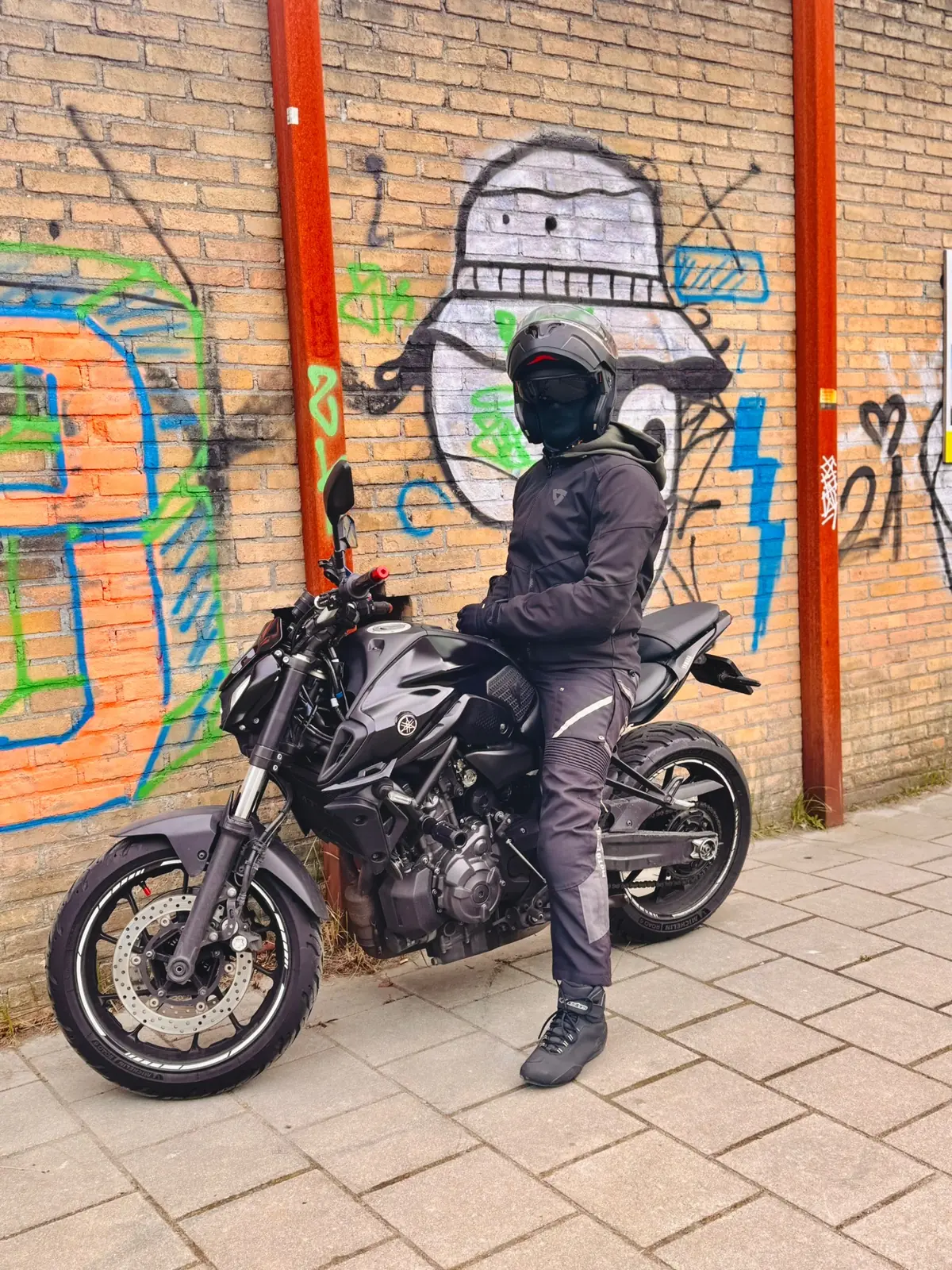
- A properly fitted helmet
- Motorcycle gloves
- Protective jacket
- Motorcycle pants or riding jeans
- Motorcycle boots
- Ear protection for longer rides
Your gear does not make you invincible, but it gives your body a better chance if something goes wrong.
The best gear is the gear you actually wear. Choose protection that fits well, feels comfortable and matches the way you ride.
2. Ride Like You Are Invisible
One of the most important motorcycle safety habits is to stop assuming that other road users have seen you.
You may have your headlight on. You may be in the correct lane. You may have priority. You may be riding perfectly legally.
Still, someone may not notice you.
Motorcycles are smaller than cars. They can disappear in blind spots, behind pillars, near larger vehicles or in busy traffic. A driver may look in your direction and still fail to register you.
That is why I ride with this mindset:
I can see them, but that does not mean they can see me.
This does not mean riding scared. It means riding prepared.
At junctions, roundabouts, lane changes and parking exits, expect mistakes. Be ready for someone to pull out, turn across your path or move into your lane without warning.
Your job is not to prove that you had right of way.
Your job is to come home safe.
3. Keep a Safety Bubble Around You
Space is one of the most underrated safety tools in motorcycling.
When you keep space around your motorcycle, you give yourself time. Time to brake. Time to steer. Time to think. Time to escape.
When you ride too close to the vehicle in front, you remove your options. If they brake suddenly, you are forced to react instantly. If the road surface changes, you have less time to adjust. If something falls from a vehicle, you may have nowhere to go.
Try to maintain a safety bubble:
- Space in front of you
- Space behind you
- Space to your left and right
- An escape path if traffic suddenly changes
Avoid riding boxed in between vehicles. Avoid staying beside cars for too long. Avoid sitting in the blind spot of vans, trucks and buses.
A safe rider is always asking:
Where can I go if something changes right now?
That question keeps you awake.
Read: Defensive riding habits every beginner should learn
4. Look Far Ahead, Not Just in Front of Your Wheel
Your eyes are one of your most powerful riding tools.
Beginner riders often look too close to the motorcycle. They focus on the road immediately in front of the front wheel. This makes everything feel faster and gives you less time to react.
Look farther ahead.
Scan the road. Watch traffic patterns. Notice brake lights. Look at side roads. Watch pedestrians. Read the surface. Look through corners.
Your eyes should constantly move:
- Far ahead
- Near road surface
- Mirrors
- Junctions
- Escape paths
- Back to far ahead
Good riders do not only react to danger. They notice clues before the danger fully appears.
For example, a gap in traffic may mean a car is about to turn. A pedestrian near the curb may step out. A front wheel turning at a junction may tell you a car is about to move before the driver fully commits.
The earlier you see, the smoother you ride.
5. Brake Smoothly and Practice Emergency Stops
Braking is not something you want to figure out during an emergency.
You need to practice it before you need it.
Many beginner riders are nervous about using the front brake. But on most motorcycles, the front brake provides most of your stopping power. The key is not to grab it suddenly. The key is to apply it progressively.
Think of braking as a smooth squeeze, not a panic grab.
- Roll off the throttle
- Apply the front brake smoothly
- Add rear brake for stability
- Keep your eyes up
- Increase pressure progressively
- Stop in control
If you have ABS, it can help prevent wheel lock, but it does not replace skill. You still need good habits, proper following distance and smooth inputs.
Find a safe, empty area and practice braking at low speeds. Then gradually build confidence. Learn how your motorcycle feels when slowing down quickly.
When a real emergency happens, your body will fall back on what you have practiced.
So practice calm control before panic ever gets involved.
6. Slow Down Before the Corner
One of the best cornering safety tips is also one of the simplest:
Slow down before the corner, not in the middle of it.
As a beginner, you want to enter corners at a speed that feels calm and manageable. If you enter too fast, you may panic, stare at the outside of the corner, brake suddenly or run wide.
The safest corner starts before the turn.
Use this basic approach:
- Look ahead and judge the corner
- Slow down before entering
- Choose a safe line
- Look through the corner
- Stay relaxed
- Maintain smooth throttle
- Accelerate gently as the road opens
Do not rush the entry. A slower, smoother corner is better than a fast, messy one.
Riding well is not about attacking every corner. It is about understanding each corner and choosing the right speed before you commit.
Smooth is safe. Smooth is fast later.
7. Avoid Target Fixation
Target fixation is when you stare at the thing you are afraid of hitting — and accidentally ride toward it.
It can happen with:
- Potholes
- Curbs
- Guardrails
- Gravel
- Cars
- Barriers
- The outside of a corner
This is one of the most important mental safety lessons in motorcycling:
The bike tends to go where you look.
If you stare at the danger, your body may guide the motorcycle toward it. If you look at the escape path, you give yourself a better chance of avoiding it.
The solution is simple, but it takes practice:
Look where you want to go.
If there is a pothole, look at the clean path around it.
If a corner tightens, turn your head and look through the exit.
If traffic suddenly stops, look for your braking zone or escape route.
Your eyes should search for solutions, not freeze on problems.
8. Stay Out of Blind Spots
Blind spots are dangerous for motorcyclists because you can disappear from a driver’s view even when you feel clearly visible.
This is especially true around:
- Cars changing lanes
- Vans and trucks
- Buses
- Roundabouts
- Multi-lane roads
- Motorways
- City traffic
A simple rule:
If you cannot see the driver’s mirror, they may not be able to see you.
Do not sit next to a vehicle for longer than necessary. Either stay clearly behind or move through safely when there is enough space and it is legal to do so.
Be especially careful near large vehicles. Trucks and buses have bigger blind spots and need more space to turn and stop.
Never assume a driver knows you are there.
Position yourself so you are easier to see, but always keep an escape plan in case they still miss you.
9. Adjust Your Riding to Weather and Road Conditions
The road is always changing.
A safe speed on a dry, clean road may be too fast in rain, wind, darkness, gravel or heavy traffic. Good riders adjust. They do not ride the same way in every condition.
In the rain:
- Brake earlier
- Increase following distance
- Avoid sudden throttle
- Avoid sudden lean
- Watch painted lines and metal covers
- Keep your visor clear
On gravel or sand:
- Stay relaxed
- Keep the bike more upright
- Avoid sudden braking
- Look where you want to go
- Let the bike move slightly underneath you
In strong wind:
- Expect gusts near open areas
- Be careful when passing large vehicles
- Keep your grip relaxed
- Avoid overcorrecting
At night:
- Slow down
- Make sure lights are working
- Keep your visor clean
- Do not outride your visibility
The question is not, “Can I ride in this?”
The better question is:
Can I ride safely in this with my current skill, focus and equipment?
That answer will change from day to day. Be honest with yourself.
10. Do a Quick Pre-Ride Check
A pre-ride check does not need to be complicated. You do not need to inspect every bolt before every ride.
But you should build the habit of checking the basics.
Before riding, quickly check:
- Tires
- Brakes
- Lights
- Mirrors
- Chain
- Leaks
- Throttle
- Clutch
- Brake levers
- Fuel or battery range
- Riding gear
Also check yourself.
Ask:
- Am I tired?
- Am I distracted?
- Am I rushing?
- Am I angry?
- Am I properly dressed?
- Am I mentally ready to ride?
This final part matters more than people think.
A motorcycle needs to be ready, but so do you.
Some rides go wrong before the engine even starts because the rider is already impatient, distracted or emotionally switched off.
Take one calm minute before the ride.
That minute can change everything.
Bonus Tip: Never Ride Someone Else’s Ride
This deserves its own mention.
Do not let another rider, a group, a video or your own ego decide your pace.
Ride your ride.
If someone is faster, let them go.
If a group is pushing too hard, drop back.
If the weather feels wrong, slow down.
If your body feels tired, stop.
If your gut says no, listen.
There is no shame in riding within your limits.
Actually, that is what good riders do.
Your goal is not to impress anyone for one corner, one overtake or one short burst of speed.
Your goal is to become the kind of rider who can enjoy motorcycles for the rest of your life.
Common Motorcycle Safety Mistakes to Avoid
| Mistake | Why It’s Dangerous | Better Habit |
|---|---|---|
| Riding without full gear | Short rides can still become serious crashes | Gear up every ride |
| Following too closely | Less time to react | Keep a safety bubble |
| Staring at hazards | Increases target fixation | Look at the escape path |
| Braking suddenly | Can unsettle the bike | Brake progressively |
| Entering corners too fast | Reduces options mid-corner | Slow before the corner |
| Sitting in blind spots | Drivers may not see you | Move to a visible position |
| Riding tired or emotional | Weakens judgement | Check yourself before riding |
| Trying to keep up | Pushes you beyond skill level | Ride your own ride |
Read : Common Beginner Mistakes
Final Thoughts
Motorcycle safety is not about removing the joy from riding.
It is what allows the joy to last.
The more safety habits you build, the more relaxed you become. You stop reacting late. You stop riding tense. You start seeing things earlier. You start making better decisions without needing to think so hard.
That is when riding becomes smoother.
And smooth riding is beautiful.
Wear the gear. Keep space. Look far ahead. Practice braking. Slow down before corners. Avoid blind spots. Stay visible. Respect the weather. Check your bike. Check yourself.
Before every ride, ask:
Would the way I am about to ride help me come home safely?
If the answer is yes, ride.
FAQs
What is the most important motorcycle safety tip?
The most important motorcycle safety tip is to ride defensively. Always create space, look far ahead, expect mistakes from other road users and never assume you have been seen.
Should I wear motorcycle gear for short rides?
Yes. You should wear proper motorcycle gear for every ride, even short rides near home. Familiar roads can still be dangerous and accidents can happen close to home.
How can beginner riders become safer?
Beginner riders can become safer by wearing proper gear, practicing braking and low-speed control, riding within their limits, taking training seriously and building defensive riding habits.
Is the front brake dangerous on a motorcycle?
The front brake is not dangerous when used correctly. It provides most of your stopping power. The key is to apply it smoothly and progressively instead of grabbing it suddenly.
How do I avoid target fixation?
To avoid target fixation, look where you want to go instead of staring at the hazard. Train your eyes to find the safe path, especially in corners or sudden traffic situations.
How often should I check my motorcycle?
You should do a quick check before every ride. Focus on tires, brakes, lights, mirrors, controls, chain, leaks and your riding gear.
Related Reads
Motorcycle Safety for Beginners
How To Corner Safely On A Motorcycle