Riding a motorcycle in heavy traffic is a different skill.
It is not the same as riding on an open road. It is not the same as enjoying a quiet weekend route. It is not even the same as basic city riding when the roads are calm.
Heavy traffic demands patience, awareness and emotional control.
Cars stop suddenly.
Cyclists move across lanes.
Pedestrians step out.
Scooters squeeze through gaps.
Delivery vans block your view.
Drivers check their phones.
Traffic lights change the rhythm every few seconds.
And you, on a motorcycle, need to stay calm inside all of it.
For beginner riders, heavy traffic can feel overwhelming because there is so much happening at once. You are managing clutch control, throttle, braking, balance, mirrors, road position and unpredictable people around you.
But with the right habits, traffic becomes less stressful.
The goal is not to dominate traffic.
The goal is to move through it smoothly, safely, and without letting other people’s impatience become your problem.
This guide covers practical motorcycle riding in traffic safety tips for urban riders, especially beginners who want to feel more confident in busy streets, junctions, roundabouts, slow traffic and city riding.
Because in traffic, the safest rider is not the most aggressive one.
It is the rider who sees early, creates space, stays visible and refuses to rush.
Start here with the basics : Motorcycle Safety for Beginners
Quick Answer
How Do You Ride a Motorcycle Safely in Heavy Traffic?
To ride safely in heavy traffic, keep enough space, stay visible, avoid blind spots, scan far ahead, cover your brakes near hazards, ride at a manageable speed, watch for cyclists and pedestrians, avoid sudden lane changes and never assume other road users have seen you.
Heavy traffic rewards calm, predictable riding.
Why Heavy Traffic Is Risky for Motorcyclists
Heavy traffic increases risk because everything is closer together.
There is less space.
Less reaction time.
More blind spots.
More stop-and-go movement.
More distractions.
More unpredictable decisions.
On a motorcycle, small changes around you matter more.
A car drifting slightly in its lane may become your problem.
A pedestrian stepping between vehicles may appear late.
A cyclist may move across your path.
A van may hide a junction or crossing.
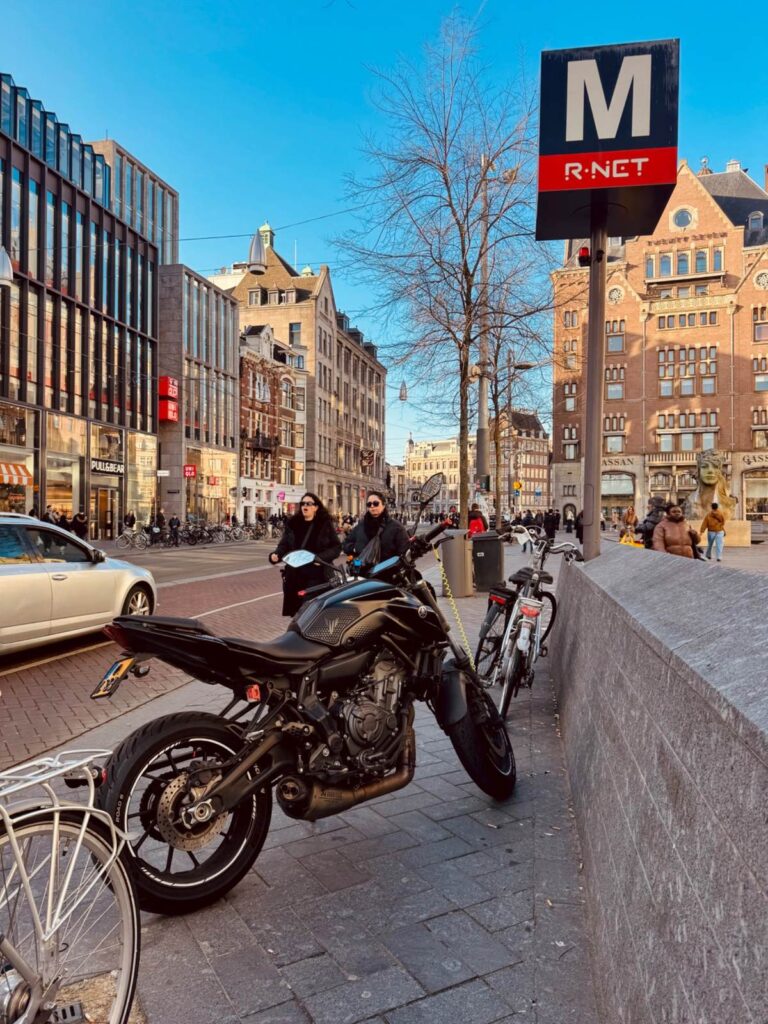
Check Out : What commuting on an MT-07 is actually like
Traffic is not dangerous only because it is busy.
It is dangerous because it reduces margin.
And margin is what keeps riders safe.
When you ride in heavy traffic, your job is to rebuild that margin wherever you can.
You do that by adjusting speed, position, space, vision and mindset.
Good urban riders are not surprised by everything. They expect movement. They expect mistakes. They expect that someone may not see them.
That does not make them fearful.
It makes them prepared.
Start With the Right Mindset
Before talking about technique, start with mindset.
Traffic can make you impatient.
Someone cuts you off.
Someone blocks your lane.
Someone changes lanes without indicating.
Someone drives too close behind you.
Someone looks straight at you and still pulls out.
If you react emotionally to every mistake, you will ride badly.
Anger narrows your vision.
Frustration makes you rush.
Ego makes you fight for space.
Stress makes your hands tense.
Impatience makes you take gaps you do not need.
In heavy traffic, calm is a safety skill.
Tell yourself:
I do not need to win traffic. I need to move through it safely.
That one sentence changes everything.
Let the impatient driver go.
Let the aggressive scooter pass.
Let the car take the gap.
Let the mistake happen away from you.
You are not weak for staying calm.
You are skilled.
Read : Top 10 Motorcycle Safety Tips
Ride Like You Are Invisible
This is one of the most important urban riding rules:
Ride like you are invisible.
Do not assume people have seen you just because you are close to them.
A driver may check the mirror and still miss you.
A cyclist may hear traffic but not expect you.
A pedestrian may look in your direction and still step out.
A car may indicate late or not at all.
A van may pull away without seeing your position.
In heavy traffic, motorcycles can disappear easily because there are many objects competing for attention.
Your headlight helps.
Your gear may help.
Your road position helps.
But none of them guarantee that you are seen.
So position yourself to be visible, but ride as if visibility is never guaranteed.
At every junction, lane change, crossing and gap, ask:
What if they have not seen me?
Then adjust early.
Read : Motorcycle Visibility Tips For Urban Riders
Check : Motorcycle Dash Cams For Everyday Traffic
Keep a Safety Bubble Around You
Space is safety.
In traffic, you may not always have a large amount of space, but you should still create as much as possible.
Think of your safety bubble in all directions:
- Space in front
- Space behind
- Space to the left
- Space to the right
- Space to escape
Do not ride boxed in if you can avoid it.
A bad traffic position might look like this:
- Car close in front
- Car close behind
- Van beside you
- Curb on the other side
- No clear escape path
If something changes, your options are limited.
A better position gives you at least one way out.
Sometimes that means slowing down slightly.
Sometimes that means moving to a better lane position.
Sometimes that means letting a car pass.
Sometimes that means avoiding the tight gap altogether.
Ask often:
Where can I go if something moves right now?
If the answer is “nowhere,” change your position.
Keep More Following Distance Than Cars Expect
In traffic, many drivers follow too closely.
Do not copy them.
On a motorcycle, following distance gives you more than braking space.
It gives you vision.
If you follow too close behind a car or van, you cannot see what is happening ahead. You may miss brake lights, road hazards, pedestrians, cyclists, traffic lights or junctions.
A larger gap gives you:
- Better visibility
- Smoother braking
- More reaction time
- More escape options
- Less stress
- More control over your pace
If a car moves into your gap, do not take it personally.
Just rebuild the space.
Your safety gap is not a piece of territory to defend.
It is a tool to protect your ride.
In heavy traffic, people will fill gaps. That is normal.
Stay calm. Create space again.
Watch Several Vehicles Ahead
Do not stare only at the vehicle directly in front of you.
In traffic, the first clue often appears several vehicles ahead.
Brake lights.
A bus stopping.
A cyclist moving out.
A pedestrian crossing.
A car turning.
A traffic light changing.
A lane slowing down.
If you only react to the vehicle in front, you are late.
Try to look through traffic whenever possible.
Look over cars.
Look between vehicles.
Watch brake lights ahead.
Watch the flow of lanes.
Watch gaps opening and closing.
Traffic has rhythm.
If you learn to read the rhythm, you can brake earlier, accelerate smoother and avoid sudden reactions.
This is one reason experienced riders look calmer.
They are not reacting faster.
They are seeing earlier.
Avoid Blind Spots
Blind spots are one of the biggest dangers in heavy traffic.
Motorcycles are small and easy to miss. If you sit beside a car, van, bus or truck, the driver may not know you are there.
Avoid staying in blind spots.
A simple rule:
If you cannot see the driver’s mirror, they may not be able to see you.
Be especially careful beside:
- Vans
- Buses
- Trucks
- Taxis
- Delivery vehicles
- Cars preparing to change lanes
- Vehicles near junctions
- Vehicles near exits or roundabouts
Do not ride beside a vehicle longer than necessary.
Either stay clearly behind or move through safely when there is enough space and it is legal and appropriate.
Large vehicles deserve extra respect.
Their blind spots are bigger, their stopping distance is longer and they may block your view of hazards ahead.
Do not fight for space with something much heavier than you.
Be Careful Around Vans, Buses, and Trucks
Large vehicles create multiple problems for motorcyclists.
They block your view.
They hide junctions.
They hide pedestrians.
They have large blind spots.
They need more space to turn.
They may stop suddenly.
They may swing wide.
They may move without seeing you.
Never place yourself in a tight space beside a large vehicle, especially near turns, roundabouts or narrow streets.
If a bus or truck is turning, give it room.
If a van blocks your view, increase your distance.
If you cannot see what is ahead, slow down.
Do not blindly follow large vehicles into junctions or through traffic gaps. They may clear a space that does not stay safe for you.
A good rule:
If a big vehicle blocks your view, treat the hidden space as a hazard.
Because something may be there.
Watch for Cyclists and Scooters
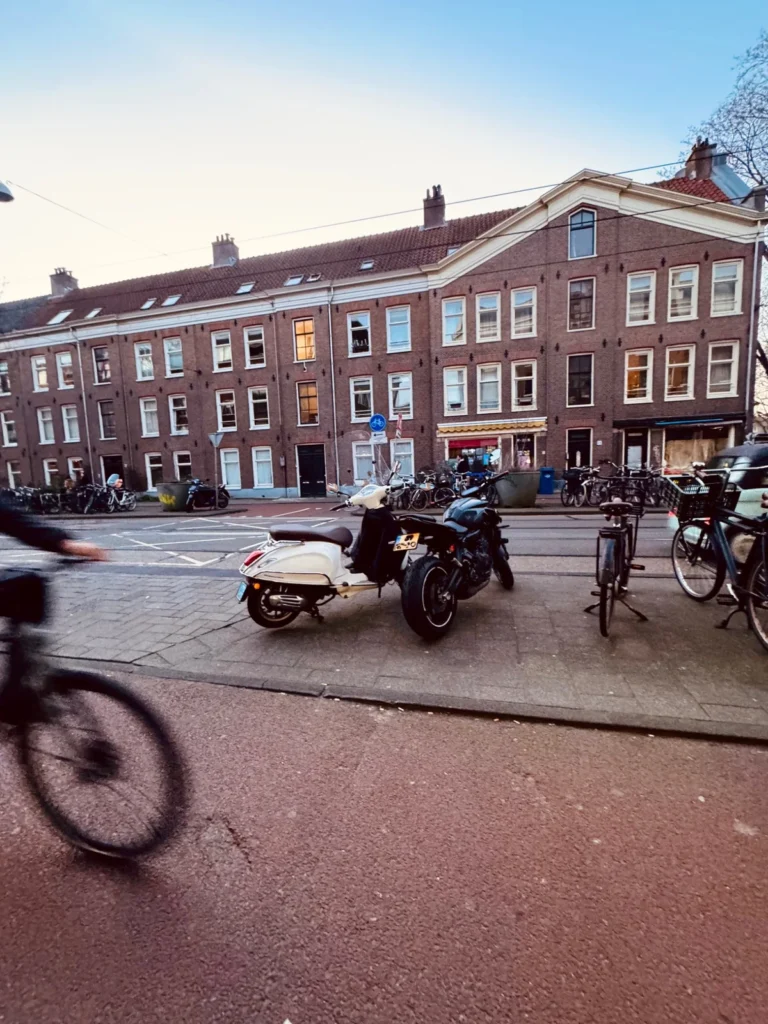
In many urban areas, cyclists and scooters are part of the traffic flow.
They can move quickly, change position suddenly and use spaces that cars cannot use.
Be careful around:
- Cycle lanes
- Junctions
- Roundabouts
- Crossings
- Parked cars
- Narrow streets
- Traffic lights
- Filtering scooters
- Delivery riders
Cyclists may move to avoid potholes, parked cars or pedestrians. Scooters may appear beside you in slow traffic. E-bikes may be faster than you expect.
Do not assume their path will stay straight.
Give them space.
When turning, always check for cyclists or scooters coming from the side or behind.
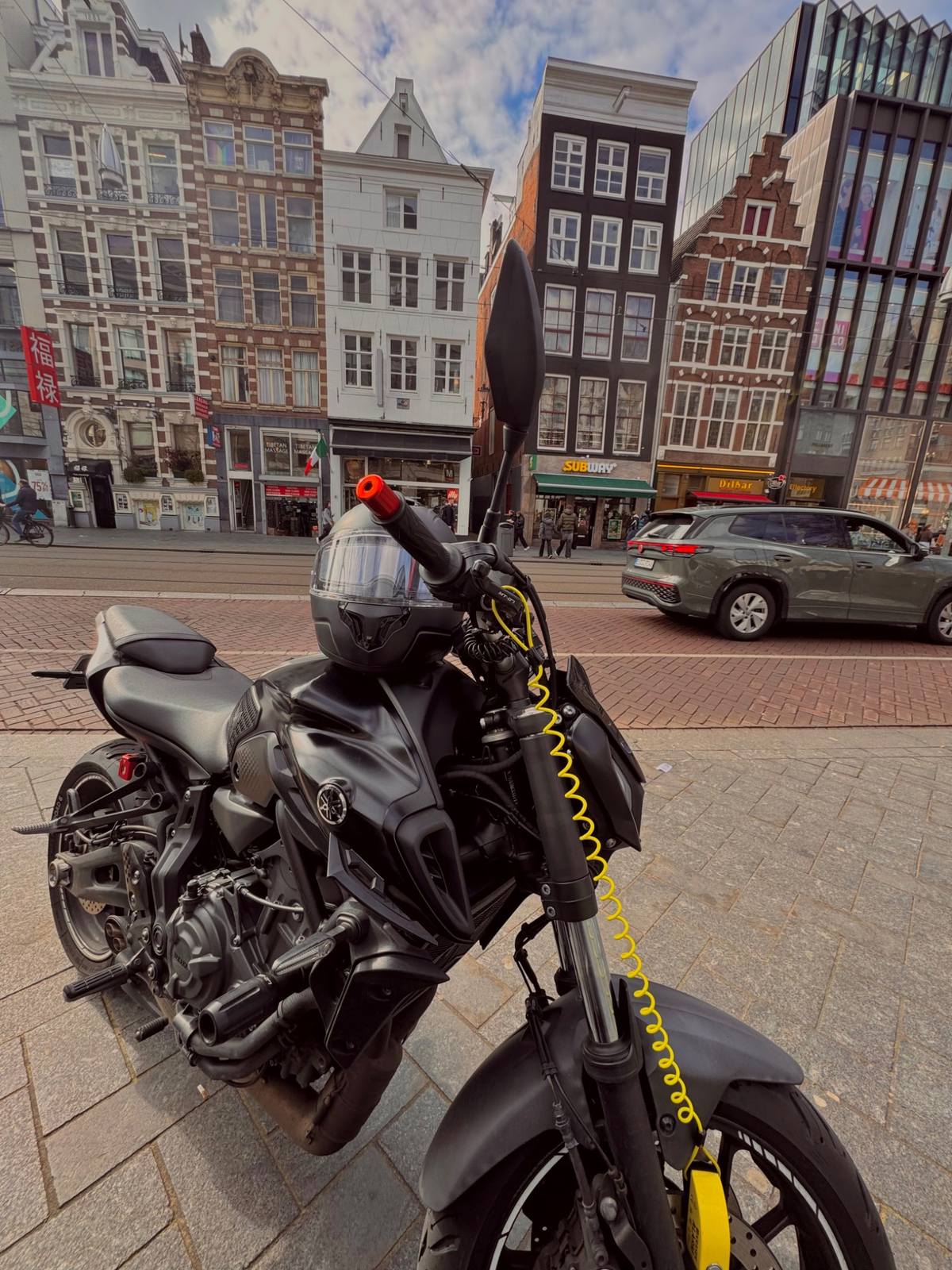
In city riding, especially in places like Amsterdam, bicycle awareness is not optional. It is part of survival.
A motorcycle rider who ignores cyclists is not riding defensively.
Watch Pedestrians Near Crossings and Gaps
Pedestrians can appear suddenly in heavy traffic.
They may cross between stopped cars.
They may step out while looking at their phone.
They may misjudge your speed.
They may walk from behind a bus or van.
They may run across when traffic slows.
When traffic is slow, pedestrians often feel that the road is safe to cross.
But motorcycles can still be moving through the space.
Look for clues:
- People standing near the curb
- Heads turning
- Feet near the road edge
- Gaps between cars
- Bus stops
- Crossings
- School areas
- Shopping streets
- Train and tram stops
If pedestrians are nearby, reduce speed and prepare.
Do not assume they hear you.
Do not assume they understand your path.
Expect movement.
Use Smooth Braking in Traffic
Heavy traffic often creates sudden stops.
But your braking should still be smooth.
Brake early when possible. Use your brake light to communicate. Keep your eyes up. Watch the vehicle behind you when slowing. Leave space in front when stopped.
A useful habit is to brake slightly earlier than necessary when traffic is compressing. This gives the driver behind you more time to react.
Avoid last-second braking unless there is no choice.
In traffic, smooth braking protects you from both the vehicle ahead and the vehicle behind.
Learn : How To Brake Safely On A Motorcycle
When stopping at traffic lights, do not stop too close to the vehicle in front. Leave enough space to move if needed.
Keep the bike in gear until the vehicle behind you has stopped.
Watch mirrors.
A stopped motorcycle is still vulnerable.
Cover the Brake Near Risk Areas
Covering the brake means keeping your fingers ready over the front brake lever.
This can reduce reaction time in situations where something may happen.
Cover the brake near:
- Junctions
- Roundabouts
- Pedestrian crossings
- Parked cars
- Side roads
- School zones
- Traffic queues
- Bus stops
- Delivery vans
- Cyclists
- Unpredictable drivers
Do not ride tense with your hand frozen on the brake everywhere.
The goal is readiness, not fear.
Keep your grip relaxed. Keep your eyes moving. Cover the brake when the environment asks for extra preparation.
In heavy traffic, many hazards are predictable if you look early.
Your fingers should be ready before your brain starts panicking.
Be Predictable With Your Movement
Predictability is one of your best protections in traffic.
Other road users may not understand motorcycles perfectly, but they can respond better when your movement is clear and steady.
Avoid:
- Sudden lane changes
- Sharp swerves
- Random acceleration
- Late braking
- Weaving aggressively
- Changing position without reason
- Rushing into gaps
- Indicating too late
Instead:
- Signal early
- Move smoothly
- Hold a clear lane position
- Brake progressively
- Keep a consistent pace
- Make your intentions readable
Being visible is important.
But being predictable is just as important.
A rider who appears suddenly and moves unpredictably may be noticed, but not safely understood.
You want people to notice you early and understand what you are doing.
Choose Lane Position With Purpose
Lane position matters a lot in heavy traffic.
Your position affects how well you can see, how well others can see you and how much space you have if something changes.
There is no single perfect lane position. You need to adjust.
Use lane position to:
- Avoid blind spots
- See past vehicles
- Stay away from opening doors
- Avoid road debris near curbs
- Increase visibility at junctions
- Create escape space
- Avoid being squeezed
- Prepare for turns
- Stay clear of large vehicles
Do not ride in one fixed lane position out of habit.
Move with purpose.
For example, if parked cars are on your right, move away from the door zone. If a van blocks your view, increase distance or shift position for visibility. If a car beside you is drifting, create space.
Your lane position is communication and protection.
Use it consciously.
Be careful to avoid target fixation while riding
Be Extra Careful Near Parked Cars
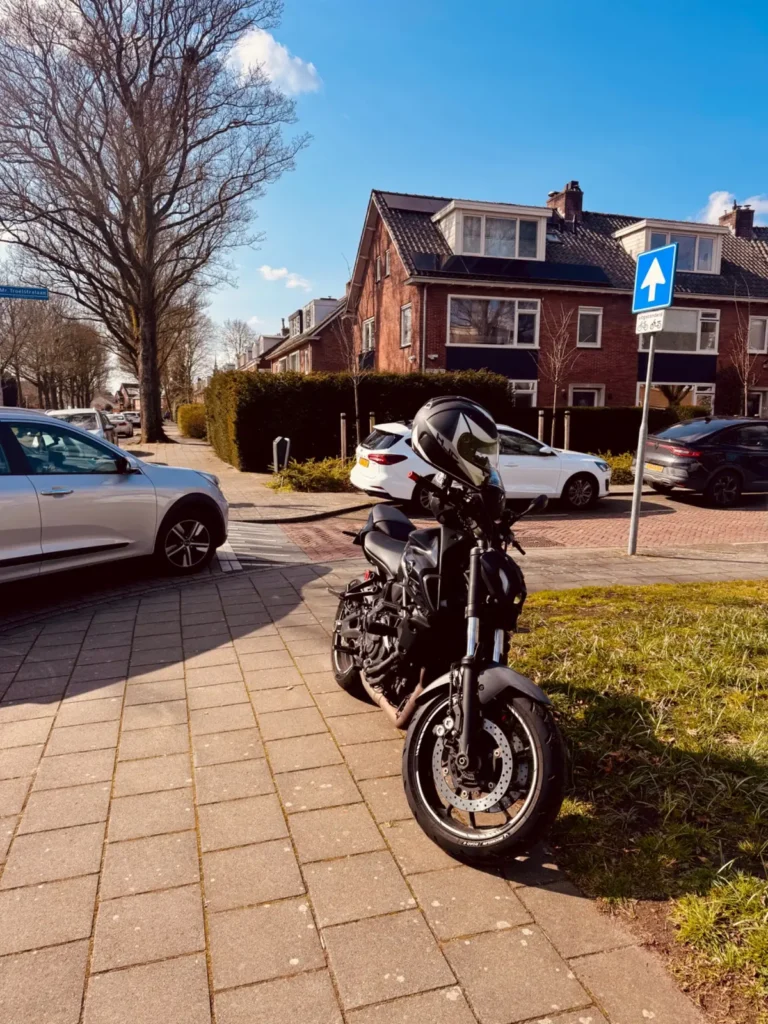
Parked cars create many urban hazards.
A door can open suddenly.
A car can pull out.
A pedestrian can step from between vehicles.
A driver can start moving without checking properly.
Look for clues:
- Brake lights
- Reverse lights
- Front wheels turned outward
- Driver inside
- Exhaust smoke
- People near the car
- Door movement
- Taxi or delivery activity
Do not ride too close to parked cars if you can avoid it.
The “door zone” is real.
If a door opens and you have no space, you may be forced into a sudden swerve or impact.
Leave margin.
If you cannot leave much space because the road is narrow, reduce speed.
Less space should always mean less speed.
Junctions Are High-Risk Zones
Junctions are where many traffic risks come together.
Cars turn.
Cyclists cross.
Pedestrians step out.
Drivers misjudge speed.
Vehicles block visibility.
Traffic lights change.
People rush.
When approaching a junction, become more alert.
Ask:
- Can someone turn across my path?
- Can someone pull out?
- Am I visible?
- Is a vehicle blocking my view?
- Is there a cyclist beside me?
- Do I have space to stop?
- Is there an escape path?
Watch the wheels of waiting cars. Wheels often show movement before the whole vehicle moves.
Do not rely only on eye contact.
A driver may look in your direction and still not register you.
At junctions, reduce speed enough that you can respond calmly.
Priority does not protect you from impact.
Awareness does.
Roundabouts Require Patience
Roundabouts can be stressful on a motorcycle because traffic approaches from multiple directions.
Drivers may enter late, change lanes, fail to indicate or cut across exits.
When approaching a roundabout:
- Slow down early
- Check mirrors
- Choose lane position clearly
- Watch vehicles already inside
- Watch vehicles waiting to enter
- Look for cyclists and pedestrians
- Signal clearly
- Avoid sitting beside cars if possible
- Exit smoothly
Do not rush because the vehicle ahead entered.
Their gap may not be your gap.
If you are unsure, wait.
A few seconds of patience is better than forcing a risky entry.
Roundabouts reward calm timing.
Filtering and Lane Splitting: Be Careful and Legal
Filtering rules vary by country and road situation, so always follow local law.
Where filtering is legal and accepted, it still requires discipline.
Filtering is not an excuse to ride aggressively through traffic.
If filtering, consider:
- Speed difference
- Gap size
- Mirrors
- Indicators
- Wheel movement
- Pedestrians
- Cyclists
- Opening doors
- Road markings
- Driver behavior
- Escape space
The biggest danger in filtering is the unexpected move.
A car may change lanes.
A pedestrian may step through traffic.
A cyclist may appear.
A door may open.
A driver may block the gap.
Keep speed low enough that you can react.
Do not filter if the gap feels tight, the road surface is poor, visibility is blocked, or your body feels tense.
There is no shame in waiting.
Filtering should feel controlled, not forced.
Do Not Let Other Riders Pressure You in Traffic
Traffic can become more dangerous when another rider is pushing the pace.
Maybe they filter faster.
Maybe they take tighter gaps.
Maybe they accelerate harder.
Maybe they ride closer to cars.
Maybe they expect you to follow.
Do not follow someone else into a risk you did not choose.
Ride your own ride.
If another rider takes a gap, you do not have to take it.
If they filter quickly, you do not have to match them.
If they rush through a yellow light, you can stop.
If they squeeze beside a truck, you can wait.
A confident rider is not someone who copies others.
A confident rider makes their own safe decisions.
Read : My experience riding an MT-07 around Amsterdam
Control the Clutch and Throttle Smoothly
Heavy traffic often means slow-speed riding.
This is where clutch and throttle control matter.
Jerky control makes the bike unstable and makes you more tired. Smooth control helps you stay balanced and relaxed.
Practice:
- Gentle throttle
- Smooth clutch release
- Light rear brake for low-speed stability
- Keeping your eyes up
- Relaxed shoulders
- Slow riding without panic
- Controlled stops and starts
In stop-and-go traffic, do not rush every movement.
Move smoothly. Stop smoothly. Start smoothly.
The smoother your control, the less stressful traffic feels.
Traffic exposes your basics.
That is not a bad thing. It shows you what to practice.
Watch the Road Surface
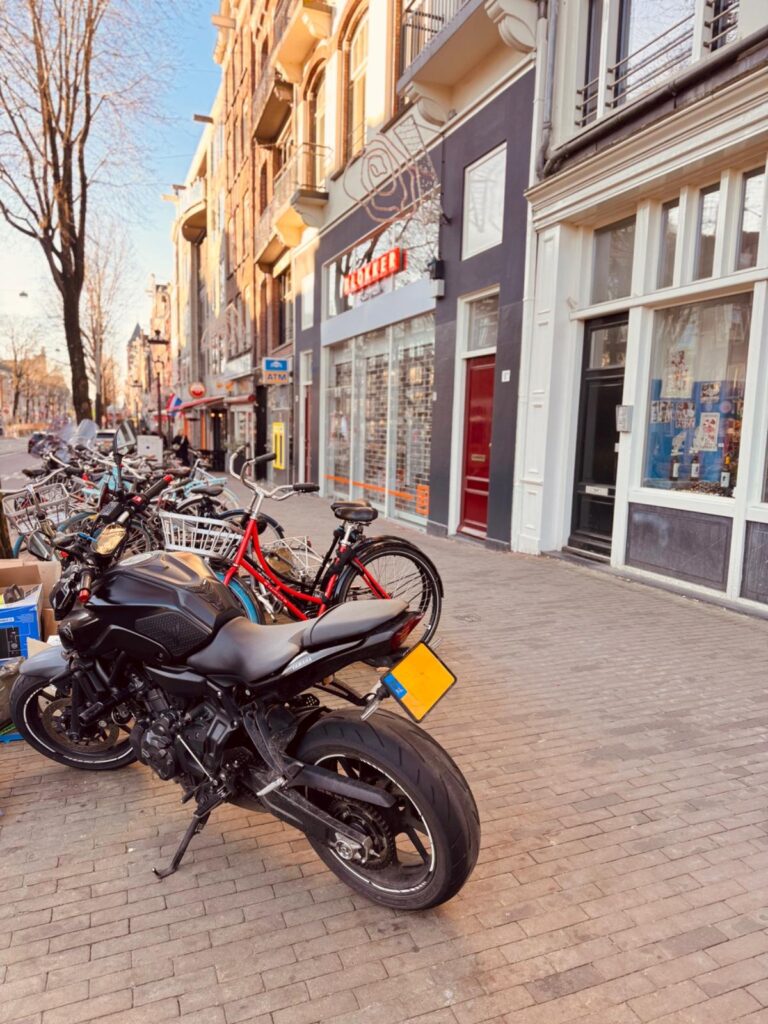
Urban roads are full of surface hazards.
Look for:
- Painted lines
- Tram tracks
- Metal covers
- Potholes
- Oil
- Diesel
- Wet leaves
- Gravel
- Sand
- Roadworks
- Uneven surfaces
- Plastic lane markers
- Broken asphalt
These hazards matter more in traffic because you may need to brake, turn or adjust suddenly.
Avoid braking hard on slippery surfaces if possible. Avoid sudden lean over tram tracks or painted lines. Cross tracks at a safe angle when you can. Keep the bike more upright on uncertain surfaces.
Do not stare at the hazard.
See it, then look at the safe path.
Your vision should constantly scan for grip.
Read : Motorcycle Vision Techniques
Be Careful When Traffic Suddenly Opens Up
Sometimes heavy traffic clears suddenly.
A light changes.
A lane opens.
Cars speed up.
The road becomes wider.
The group of vehicles spreads out.
This is a moment where riders can become careless.
After slow traffic, the temptation is to accelerate hard and enjoy the open space. But other road users may also be changing lanes, accelerating, turning or reacting unpredictably.
If you are into group riding, you might find this helpful : Group Riding Etiquettes
Do not switch instantly from traffic mode to open-road mode.
Build speed gradually. Keep scanning. Watch for drivers who suddenly move into the open lane.
Traffic opening up can create new risk.
Stay awake.
Stay Calm When Someone Tailgates You
Being tailgated on a motorcycle is uncomfortable.
A car too close behind you reduces your safety margin and can make you feel pressured.
Do not let that pressure make you ride faster than you want.
Instead:
- Stay calm
- Increase space in front
- Brake smoothly and early
- Avoid sudden stops if possible
- Move aside safely when appropriate
- Let the driver pass if safe
- Do not gesture aggressively
- Do not race away emotionally
If someone behind you is too close, create more space ahead. That gives you more room to brake gently if traffic slows.
You cannot control the driver behind.
But you can control your response.
Take Breaks After Stressful Traffic
Heavy traffic is mentally tiring.
Even if the ride is short, your brain is processing many things at once. That can create fatigue.
After a stressful traffic section, take a moment if needed.
Stop safely. Breathe. Drink water. Reset.
There is no award for staying tense for the whole ride.
Good riders manage energy, not just speed.
If you feel overloaded, simplify the ride.
Slow down. Create space. Avoid unnecessary filtering. Take easier roads if possible. Stop if needed.
Protecting your focus is part of motorcycle safety.
Common Mistakes
| Mistake | Why It’s Risky | Better Habit |
|---|---|---|
| Following too closely | Less time to react | Keep more space |
| Sitting in blind spots | Drivers may not see you | Stay visible or move away |
| Rushing through gaps | Reduces escape options | Take only calm, safe gaps |
| Staring at one hazard | Causes tunnel vision | Scan and look for safe paths |
| Ignoring cyclists | They may move unpredictably | Give space and check before turning |
| Braking too late | Creates panic stops | Brake earlier and smoother |
| Riding emotionally | Increases risk-taking | Stay calm and let mistakes go |
| Copying other riders | May exceed your skill | Ride your own ride |
| Filtering too fast | Reduces reaction time | Keep speed difference low |
| Stopping too close to cars | No escape space | Leave room in front |
Heavy Traffic Safety Checklist for Motorcyclists
Use this checklist during urban rides:
- Am I visible?
- Am I avoiding blind spots?
- Do I have enough space in front?
- Do I have an escape path?
- Am I scanning several vehicles ahead?
- Am I watching cyclists and pedestrians?
- Am I covering the brake near risk areas?
- Am I riding at a manageable speed?
- Am I calm, or am I reacting emotionally?
- Am I making smooth, predictable movements?
- Am I checking mirrors before slowing?
- Am I staying away from large vehicle blind spots?
- Am I riding my own ride?
You do not need to ride perfectly.
You need to stay aware, calm and honest.
Final Thoughts: Traffic Rewards Patience
Riding in heavy traffic is not glamorous.
It does not always give you beautiful corners, open roads or peaceful flow.
But it teaches you some of the most important motorcycle skills:
Patience.
Clutch control.
Braking control.
Vision.
Defensive riding.
Emotional discipline.
Awareness.
Respect for space.
If you can ride calmly in traffic, you become a better rider everywhere else.
The mistake is thinking traffic is something to fight.
Do not fight it.
Read it.
Flow with it.
Create space. Stay visible. Watch the gaps. Respect cyclists and pedestrians. Avoid blind spots. Keep your hands smooth. Let impatient people go.
A good urban rider does not need to prove anything.
They move through the city with control.
Quiet confidence.
That is the goal.
Ride smart. Stay calm. Come home safe.
FAQs
How do you ride a motorcycle safely in heavy traffic?
Ride safely in heavy traffic by keeping space, staying visible, avoiding blind spots, scanning ahead, covering the brake near hazards, watching cyclists and pedestrians, and riding calmly without rushing.
Is riding a motorcycle in traffic dangerous?
Riding in traffic can be risky because there is less space, more unpredictability and more blind spots. Good defensive riding habits reduce the risk by giving you more time and options.
Should I filter through traffic on a motorcycle?
Only filter where it is legal and safe. Keep the speed difference low, watch for lane changes, pedestrians, cyclists, opening doors and avoid forcing tight gaps.
How do I avoid blind spots in traffic?
Avoid staying beside vehicles, especially vans, buses, trucks and cars preparing to change lanes. If you cannot see the driver’s mirror, they may not be able to see you.
What is the safest speed in heavy traffic?
The safest speed is one that gives you enough time to stop or avoid hazards. In heavy traffic, speed should match visibility, space, road surface and your skill level.
How can beginner riders feel more confident in traffic?
Beginner riders can build confidence by practicing slow-speed control, keeping more space, riding familiar routes first, avoiding pressure from others, and focusing on smooth clutch, throttle and brake control.
Why is traffic stressful on a motorcycle?
Traffic is stressful because many things happen close together: cars, cyclists, pedestrians, stops, lane changes, lights and blind spots. Calm scanning and space management reduce that stress.
Related Reads
Heavy traffic is easier to handle when you start prepared.
Motorcycle Safety for Beginners: The Complete Guide to Riding Smart
Beginner’s Guide to Defensive Motorcycle Riding
Motorcycle Vision Techniques: How to Look Through the Corner Correctly
How to Avoid Target Fixation While Riding
How to Brake Safely on a Motorcycle: Front vs Rear Explained