Where you place your motorcycle on the road matters more than many beginner riders realize.
Lane positioning is not just about staying inside your lane. It is about visibility, space, escape routes, road surface, traffic behavior, and giving yourself more time before something becomes urgent.
A small change in road position can help you see farther ahead.
It can make you easier for drivers to notice.
It can move you away from a blind spot.
It can give you more space from parked cars.
It can help you avoid gravel, oil, painted lines, or road debris.
It can give you an escape path if traffic suddenly changes.
That is why lane positioning is one of the most important skills for motorcyclists.
When I first started riding, I thought staying somewhere in the lane was enough. But the more I rode, especially in city traffic, the more I realized that road position is an active safety decision. You are constantly asking: Where can I see best? Where can others see me? Where is the safest space if something goes wrong?
This guide explains lane positioning for motorcyclists in a beginner-friendly way. Not racing lines. Not complicated theory. Just practical road positioning habits that help you ride smarter, safer and calmer.
Because on a motorcycle, your position is your protection.
Quick Answer
What Is the Safest Lane Position for Motorcyclists?
The safest lane position for motorcyclists depends on the situation. There is no single perfect position. A good rider adjusts lane position to improve visibility, stay out of blind spots, avoid hazards, create space and keep an escape route. The safest position is usually the one that gives you the best view, the most space and the clearest option if traffic changes.
What Lane Positioning Really Means
Lane positioning means choosing where to ride within your lane.
Most lanes can be mentally divided into three parts:
- Left track
- Center track
- Right track
But good lane positioning is not about always riding in one of these areas. It is about choosing the position that works best for the situation.
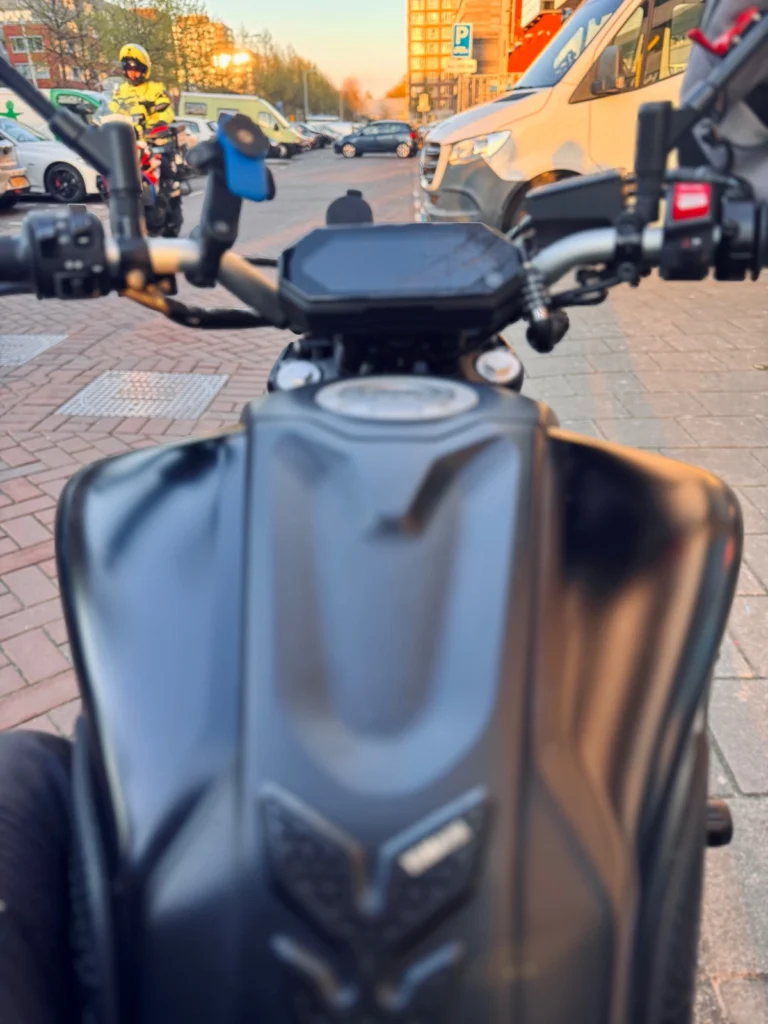
You might move left to see past a car.
You might move right to create space from oncoming traffic.
You might avoid the center because of oil or debris.
You might move away from parked cars to avoid opening doors.
You might position yourself where a driver is more likely to see you in their mirror.
You might use your position to prepare for a corner, junction, or roundabout.
Lane positioning is not random movement.
It is purposeful movement.
Every position should answer a safety question:
Does this position help me see, be seen, or escape?
If the answer is yes, it is probably a better position.
For a wider foundation on safe riding habits : Motorcycle Safety for Beginners
Why Lane Positioning Matters on a Motorcycle
Motorcycles are smaller than cars, easier to miss and more vulnerable when something goes wrong.
Your lane position can reduce risk before you need emergency braking or quick steering.
Good lane positioning helps you:
- Stay visible to drivers
- Avoid blind spots
- See farther ahead
- Create more space
- Avoid bad road surfaces
- Prepare for corners
- Avoid parked car doors
- Reduce surprise at junctions
- Manage heavy traffic
- Keep an escape route
- Ride more smoothly
Poor lane positioning can place you exactly where you do not want to be: hidden beside a vehicle, too close to parked cars, stuck behind a van, riding over oil patches, or boxed in with nowhere to go.
The safest riders are not just good with their hands.
They are good with their position.
They place the motorcycle where risk is lower before danger becomes obvious.
There Is No One Perfect Lane Position
A common beginner mistake is asking, “Should I ride on the left, centre, or right of the lane?”
The honest answer is:
It depends.
There is no permanent safest lane position.
The safest position changes based on:
- Traffic
- Road width
- Weather
- Visibility
- Speed
- Junctions
- Corners
- Parked cars
- Road surface
- Other vehicles
- Cyclists and pedestrians
- Oncoming traffic
- Blind spots
- Escape routes
For example, the center of the lane may be fine on a clean open road, but it may collect oil near traffic lights. The left side of the lane may help you see ahead, but it may place you too close to oncoming traffic on a narrow road. The right side may move you away from oncoming cars, but it may place you near parked vehicles or road debris.
This is why lane positioning is an active skill.
You are always adjusting.
Not nervously.
Not constantly weaving.
Not unpredictably.
Calmly and with purpose.
The Three Goals of Good Lane Positioning
Good motorcycle lane positioning usually serves three main goals.
1. See Better
You want a position that gives you the best possible view of the road ahead.
If you are following a large van, riding directly behind it gives you very little visibility. Moving slightly within your lane may help you see around it, spot brake lights ahead, notice junctions, or identify road hazards earlier.
Seeing earlier gives you more time.
More time means smoother decisions.
Read : Visibility Tips For Motorcyclists
2. Be Seen Better
You also want other road users to notice you.
That means staying out of blind spots, positioning yourself where drivers can see you in mirrors, and avoiding places where your motorcycle disappears behind other vehicles or road furniture.
You should never fully depend on being seen, but you should still position yourself to increase the chance.
Read : Safety Tips for Urban Motorcyclists.
3. Keep an Escape Route
Your position should leave you somewhere to go if something changes.
If the car ahead stops suddenly, where can you move?
If a vehicle changes lane, where is your space?
If a cyclist swerves, what is your option?
If a door opens, do you have room?
If a car behind is too close, can you create space ahead?
A good lane position is not only about where you are now.
It is about where you could go next.
Avoid Riding in Blind Spots
Blind spots are one of the most dangerous places for motorcyclists.
Because motorcycles are small, you can sit beside a vehicle and feel visible while the driver has no idea you are there.
Avoid spending time beside:
- Cars
- Vans
- Trucks
- Buses
- Taxis
- Delivery vehicles
- Vehicles preparing to change lanes
- Vehicles near exits
- Vehicles near roundabouts
- Vehicles near junctions
A simple rule:
If you cannot see the driver’s mirror, they may not be able to see you.
If you find yourself in a blind spot, calmly adjust. Either stay clearly behind or move through safely if it is legal, appropriate and there is enough space.
Do not sit beside a vehicle longer than necessary.
You do not need to panic around blind spots, but you do need to respect them.
Blind spots are not places to relax.
They are places to leave.
For more on staying visible and expecting mistakes from other road users : Beginner’s Guide to Defensive Motorcycle Riding.
Do Not Ride Too Close to Parked Cars
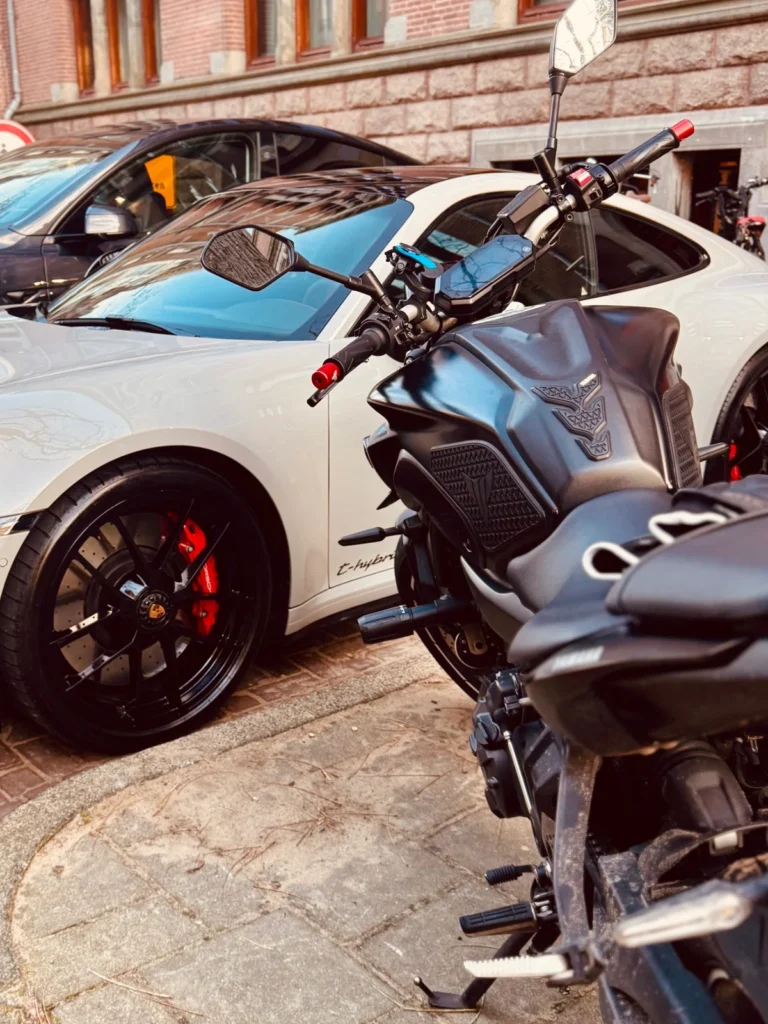
Parked cars create a specific danger: the door zone.
A door can open suddenly.
A driver can pull out.
A passenger can step into the road.
A pedestrian can walk between cars.
A delivery driver can move unexpectedly.
If you ride too close to parked cars, you give yourself very little time to react.
Look for clues:
- Brake lights
- Reverse lights
- A person inside the car
- Front wheels turned outward
- Exhaust smoke
- Door movement
- Taxi or delivery activity
- People standing near the car
When possible, position yourself away from parked vehicles.
If the road is narrow and you cannot create much side space, reduce speed.
Less space should always mean less speed.
That is a simple rule that works almost everywhere.
Be Careful With the Center of the Lane
The center of the lane is not always bad, but it deserves attention.
On some roads, especially near junctions, traffic lights, parking areas and slow traffic zones, the center can collect oil, fuel, dirt, rubber, water and debris from cars.
This can reduce grip.
You do not need to avoid the center of the lane all the time. But you should pay attention to the surface.
Be extra careful with the center of the lane when:
- Stopping at traffic lights
- Approaching junctions
- Riding in rain
- Riding over shiny surfaces
- Riding behind old vehicles
- Riding in areas with heavy traffic
- Riding through fuel stations or parking areas
If the center looks dirty, shiny, oily, or wet, choose a cleaner track if safe.
Your lane position should protect your tires too.
Grip is safety.
Choose Lane Position for Visibility at Junctions
Junctions are high-risk areas for motorcyclists.
Vehicles may pull out.
Cars may turn across your path.
Cyclists may cross.
Pedestrians may step out.
Vans may block your view.
Drivers may misjudge your speed.
Your lane position should help you see and be seen before you reach the junction.
Ask:
- Can waiting drivers see me?
- Can I see side roads clearly?
- Is a vehicle blocking my view?
- Am I hidden behind another vehicle?
- Do I have space to brake?
- Do I have an escape route?
Sometimes moving slightly within your lane improves visibility. Sometimes slowing down is the better answer. Sometimes both are needed.
Do not ride into a junction hidden behind a car or van if you can avoid it.
And never assume eye contact means the driver has truly registered you.
At junctions, priority is not enough.
Position and awareness matter more.
Learn : Motorcycle Vision Techniques, because seeing early is what makes better positioning possible.
Lane Positioning in Heavy Traffic
In heavy traffic, lane positioning becomes even more important because space is limited.
Your job is to avoid being boxed in.
A bad traffic position might include:
- Vehicle close in front
- Vehicle close behind
- Vehicle beside you
- Curb or parked cars on the other side
- No escape path
That position gives you very few options.
In traffic, use your lane position to:
- Stay visible
- Avoid blind spots
- Keep space from parked cars
- See past vehicles
- Avoid door zones
- Watch cyclists and pedestrians
- Create room to brake
- Keep an escape path
Do not ride in a position just because the vehicle ahead is there.
Think for yourself.
The rider who simply follows traffic becomes reactive.
The rider who positions with purpose becomes prepared.
Lane Positioning Around Large Vehicles
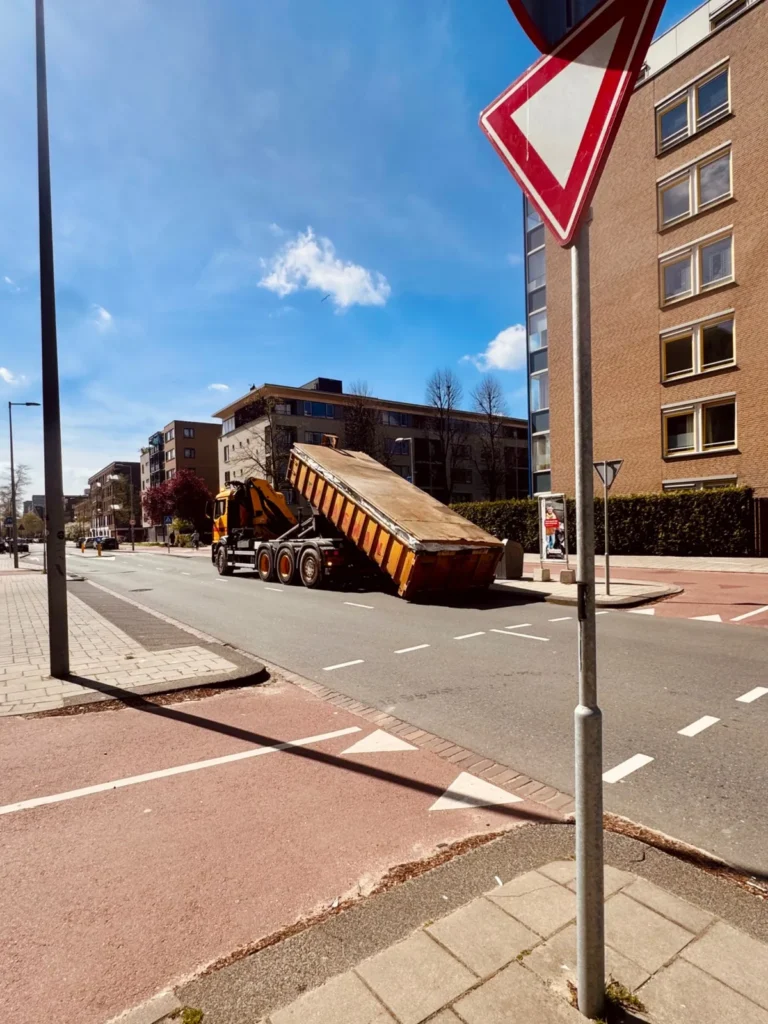
Large vehicles need extra respect.
Vans, buses and trucks create more risk because they:
- Have bigger blind spots
- Block your view
- Need more room to turn
- May stop suddenly
- Hide pedestrians and cyclists
- Reduce your escape options
Do not sit beside a large vehicle near a junction, roundabout, narrow road or turn.
If a bus or truck is turning, give it space.
If a van blocks your view, increase your following distance or adjust position so you can see more.
If you cannot see what is happening ahead, slow down.
A good rule:
If a large vehicle blocks your vision, treat the hidden space as a hazard.
Do not blindly follow a large vehicle through a gap.
It may fit.
You may not be safe.
Lane Positioning for Corners
Cornering is where many riders start thinking about “lines.”
But road cornering is not racing.
The safest line on public roads is not always the fastest line. Your lane position should prioritize visibility, space, grip and staying within your lane.
Before a corner, choose a position that helps you:
- See through the corner
- Avoid road debris
- Stay away from oncoming traffic
- Avoid running wide
- Keep space from the road edge
- Stay within your lane
- Maintain a smooth path
For a right-hand corner, avoid positioning too close to the center line where oncoming vehicles may appear.
For a left-hand corner, avoid drifting too wide toward the curb, gravel, or road edge.
Never sacrifice safety for a dramatic line.
A smooth, controlled road position is better than an aggressive line with no margin.
Learn : How to Corner Safely on a Motorcycle
Lane Positioning and Target Fixation
Lane positioning is closely connected to target fixation.
If you stare at the hazard, you may ride toward it. If you stare at the road edge, you may drift toward it. If you stare at the outside of the corner, the motorcycle may move wider than you want.
Your eyes guide your position.
This means good lane positioning starts with good vision.
You need to see the hazard, then look at the safe path.
For example:
If there is gravel near the road edge, notice it, then look at the clean line.
If a pothole appears, notice it, then look at the path around it.
If a parked car looks risky, notice it, then look at the space away from it.
If a corner feels tight, notice the outside edge, then look through the corner.
Your lane position should follow the solution, not the fear.
Read : How to Avoid Target Fixation While Riding.
Lane Positioning for Better Braking
Good lane positioning can make braking safer.
If you ride too close behind a vehicle, your braking becomes rushed. If you ride over a slippery part of the lane, braking becomes riskier. If you stop too close to the car ahead, you lose your escape route.
When braking, your lane position should help you:
- Stay upright
- Use clean road surface
- Keep enough stopping distance
- Avoid slippery markings
- Stay visible to vehicles behind
- Leave space in front when stopped
- Keep an escape path
At traffic lights, do not stop directly behind a vehicle with no room to move. Leave space in front. Watch mirrors. Keep the bike in gear until the vehicle behind has stopped.
A stopped motorcycle can still be vulnerable.
Your position matters even when you are not moving.
Learn : How to Brake Safely on a Motorcycle: Front vs Rear Explained.
Lane Positioning in the Rain
Rain changes the value of every road position.
Some parts of the lane may become more slippery than others. Painted lines, tram tracks, metal covers, oil patches, wet leaves, and smooth asphalt can all reduce grip.
In the rain, use lane position to avoid poor surfaces when possible.
Be careful around:
- Painted lane markings
- Zebra crossings
- Metal covers
- Tram tracks
- Wet leaves
- Oil patches
- Puddles
- Shiny surfaces
- Center-lane buildup
Do not make sudden movements just to avoid every wet patch. Smoothness still matters.
But if you can choose a cleaner, safer line early, do it.
In rain, lane positioning should become more gentle and more planned.
Less sudden movement.
More space.
More upright bike.
More patience.
Lane Positioning Around Cyclists and Scooters
Cyclists and scooters can move unpredictably, especially in urban areas.
They may avoid potholes, move around parked cars, shift lanes, overtake on the inside, or appear from cycle lanes and side roads.
Your lane position should give them space and give you time.
When riding near cyclists:
- Do not squeeze them
- Expect side movement
- Avoid riding too close beside them
- Check before turning
- Be careful near cycle lanes
- Watch for e-bikes moving faster than expected
- Leave room near crossings and junctions
When riding near scooters:
- Expect filtering
- Watch mirrors
- Avoid sudden lane position changes
- Let aggressive scooters pass
- Stay predictable
In cities like Amsterdam, cyclist awareness is not a bonus skill. It is part of daily motorcycle safety.
Lane Positioning for Group Riding
In group rides, lane positioning becomes shared responsibility.
You are not only choosing position for yourself. You are also helping the riders around you understand what is happening.
On straight open roads, many groups use staggered formation. This gives riders more space while keeping the group organized.
But in corners, narrow roads, poor surfaces, rain, heavy traffic, and roundabouts, single file is usually safer.
Do not force staggered formation everywhere.
Each rider needs enough room to:
- Brake
- Avoid hazards
- Choose a safe line
- Adjust position
- Keep visibility
- Maintain escape space
Do not ride directly beside another rider unless the situation clearly allows it and the group has agreed.
Group lane positioning should feel calm and predictable.
Group Riding Etiquette: How to Stay Safe and Ride in Formation.
Lane Positioning on Multi-Lane Roads
Multi-lane roads create extra positioning choices.
You need to think about vehicles ahead, behind, beside you and merging from other lanes.
Avoid sitting beside vehicles for too long.
Avoid riding between two vehicles with no escape.
Avoid staying in blind spots.
Avoid making sudden lane changes.
Avoid assuming drivers will check properly.
When choosing a lane and position, ask:
- Which lane gives me the best visibility?
- Which position keeps me out of blind spots?
- Where is my escape route?
- Is someone likely to merge?
- Is traffic slowing ahead?
- Is the road surface clean?
- Can the driver behind see me?
If you need to change lanes, do it clearly.
Mirror. Signal. Shoulder check. Move smoothly.
Your lane change should never surprise the people around you.
Lane Positioning on Narrow Roads
Narrow roads reduce your margin.
There may be less space from oncoming traffic, parked cars, cyclists, road edges, or walls.
On narrow roads:
- Reduce speed
- Stay away from oncoming vehicles when possible
- Avoid the road edge if it has gravel or damage
- Watch for pedestrians
- Give cyclists room
- Be ready for hidden driveways or side roads
- Do not rush blind bends
- Use the cleanest and safest part of the lane
When space reduces, speed should reduce too.
Do not try to ride a narrow road with wide-road confidence.
Your position should become more careful, not more aggressive.
Lane Positioning Near Roadworks
Roadworks can change everything quickly.
Lane markings may be unclear.
The surface may be uneven.
Loose gravel may appear.
Traffic may merge suddenly.
Drivers may be confused.
Temporary signs may be hard to read.
Metal plates or plastic barriers may reduce space.
Near roadworks, ride with extra margin.
Use lane position to:
- Avoid loose surfaces
- Stay visible
- Keep away from barriers
- Avoid sudden lane changes
- Watch merging traffic
- Follow temporary signs
- Keep more distance
Do not rush through roadworks.
They are unpredictable by design.
Treat them as a temporary hazard zone.
Read : Handling Gravel & Slippery Roads
Lane Positioning at Traffic Lights
Traffic lights can feel simple, but they deserve attention.
When stopping at a light:
- Avoid stopping too close to the vehicle ahead
- Leave space to move if needed
- Check mirrors
- Stay visible
- Avoid oily center patches if possible
- Keep the bike in gear until traffic behind has stopped
- Position yourself where you are not hidden
- Watch pedestrians and cyclists
At lights, the center of the lane may be slippery from oil and dirt buildup.
Also be aware of vehicles behind you. If a driver approaches too fast, your space in front may give you room to move.
A traffic light stop is not the time to switch off completely.
Stay relaxed, but stay aware.
Lane Positioning for Visibility to Oncoming Traffic
Oncoming vehicles may not judge your position or speed correctly.
This matters especially on narrow roads, corners and roads where cars may cut across your lane.
Use lane positioning to create space from oncoming traffic when needed.
Do not ride too close to the center line if:
- Oncoming vehicles are close
- The road is narrow
- The corner is blind
- Cars may cut the corner
- Large vehicles are approaching
- Visibility is poor
Sometimes moving slightly away from the center line gives you more safety margin.
But do not move so far that you put yourself near gravel, curbs, parked cars, or debris.
Lane positioning is always a balance.
How to Practice Lane Positioning
You can practice lane positioning on every ride.
Start with awareness, not perfection.
On your next ride, ask yourself:
- Why am I in this part of the lane?
- Can I see far enough ahead?
- Can others see me?
- Am I in anyone’s blind spot?
- Do I have an escape path?
- Is the road surface clean here?
- Am I too close to parked cars?
- Am I too close to oncoming traffic?
- Would another position be safer?
This turns lane positioning into a habit.
You are not just riding where the bike happens to be.
You are choosing.
That is the shift.
Beginner Lane Positioning Checklist
Use this simple checklist while riding:
- Can I see clearly from this position?
- Can drivers see me?
- Am I avoiding blind spots?
- Do I have enough space?
- Do I have an escape route?
- Is the road surface safe?
- Am I away from parked car doors?
- Am I positioned safely for the corner?
- Am I giving cyclists and pedestrians space?
- Am I avoiding slippery markings?
- Am I riding smoothly and predictably?
- Am I changing position with purpose?
If your position does not help you see, be seen, or escape, adjust it.
Calmly. Smoothly. Early.
Common Mistakes
| Mistake | Why It’s Risky | Better Habit |
|---|---|---|
| Staying in one lane position all the time | Road risks change constantly | Adjust position with purpose |
| Riding in blind spots | Drivers may not see you | Stay visible or move away |
| Riding too close to parked cars | Doors or pedestrians may appear suddenly | Move away or reduce speed |
| Following directly behind large vehicles | Reduces visibility | Create distance or shift for view |
| Stopping too close to cars | Removes escape space | Leave room in front |
| Riding on slippery center patches | Reduces grip | Choose a cleaner track |
| Cutting corners too tight | Reduces visibility and space | Choose a safe road-riding line |
| Moving unpredictably | Confuses other road users | Signal and move smoothly |
| Ignoring road surface | Grip can change quickly | Scan and position for clean surface |
| Copying other riders | Their position may not fit your situation | Make your own safety decision |
Final Thoughts: Your Road Position Is a Safety Tool
Lane positioning is not about being perfect.
It is about being intentional.
Every road position has a purpose. Sometimes you position for visibility. Sometimes for space. Sometimes for grip. Sometimes for an escape route. Sometimes to stay away from blind spots, parked cars, large vehicles, or poor road surfaces.
A beginner rider may simply stay in the lane.
A growing rider learns to use the lane.
That is the difference.
The safest position is not always left, center, or right.
The safest position is the one that gives you the best combination of vision, visibility, space, grip, and escape options for that exact moment.
So the next time you ride, pay attention to where you place the motorcycle.
Ask yourself:
Can I see?
Can I be seen?
Can I escape?
Is the surface safe?
Am I giving myself margin?
Those questions make you a calmer rider.
And calm riders make better decisions.
Ride smart. Stay calm. Come home safe.
FAQs
What is lane positioning for motorcyclists?
Lane positioning for motorcyclists means choosing where to ride within your lane to improve visibility, avoid blind spots, create space, avoid hazards and keep an escape route.
What is the safest lane position for a motorcycle?
There is no single safest lane position for every situation. The safest position changes based on traffic, visibility, road surface, corners, junctions, parked cars and escape routes.
Should motorcyclists ride in the center of the lane?
Motorcyclists can ride in the center of the lane when it is safe, but the center may collect oil, dirt, water, or debris, especially near traffic lights and junctions. Choose the cleanest and safest track.
How can lane positioning help in traffic?
Good lane positioning helps riders stay visible, avoid blind spots, see farther ahead, keep space from parked cars, and maintain an escape route in heavy traffic.
Where should I position my motorcycle near parked cars?
Move away from parked cars when possible to avoid opening doors, pedestrians stepping out, or cars pulling away. If you cannot create much space, reduce your speed.
How should I position my motorcycle in corners?
For road riding, choose a line that gives visibility, space, grip and control while staying within your lane. Avoid cutting corners or drifting too close to oncoming traffic or road edges.
Why should motorcyclists avoid blind spots?
Motorcycles are small and easy to miss. Riding in blind spots increases the chance that a driver may change lanes or turn without seeing you.
Related Reads
Good lane positioning starts with preparation, awareness and calm decision-making.
Continue building your riding foundation with these guides:
Motorcycle Safety for Beginners: The Complete Guide to Riding Smart
Beginner’s Guide to Defensive Motorcycle Riding
Riding in Heavy Traffic: Safety Tips for Urban Motorcyclists
Motorcycle Vision Techniques: How to Look Through the Corner Correctly