Last Reviewed : July 2026
The best motorcycle safety gear is not always the most expensive gear—it is certified equipment that fits properly, suits your riding and is comfortable enough to wear every time.
A premium helmet that does not match your head shape is a poor purchase.
An AAA-rated jacket that stays at home because it is unbearable in summer does not protect you. Neither does a race boot that makes normal control of the motorcycle difficult.
The right setup balances protection, fit, comfort, weather and the type of riding you actually do.
This guide covers the best motorcycle safety gear categories for 2026, the current products worth comparing and the order in which most riders should build or upgrade their equipment.
Affiliate Disclosure: This article may contain affiliate links. If you buy through one, I may earn a commission at no extra cost to you. See my disclosure for more info.
Quick Answer
What Is the Best Motorcycle Safety Gear?
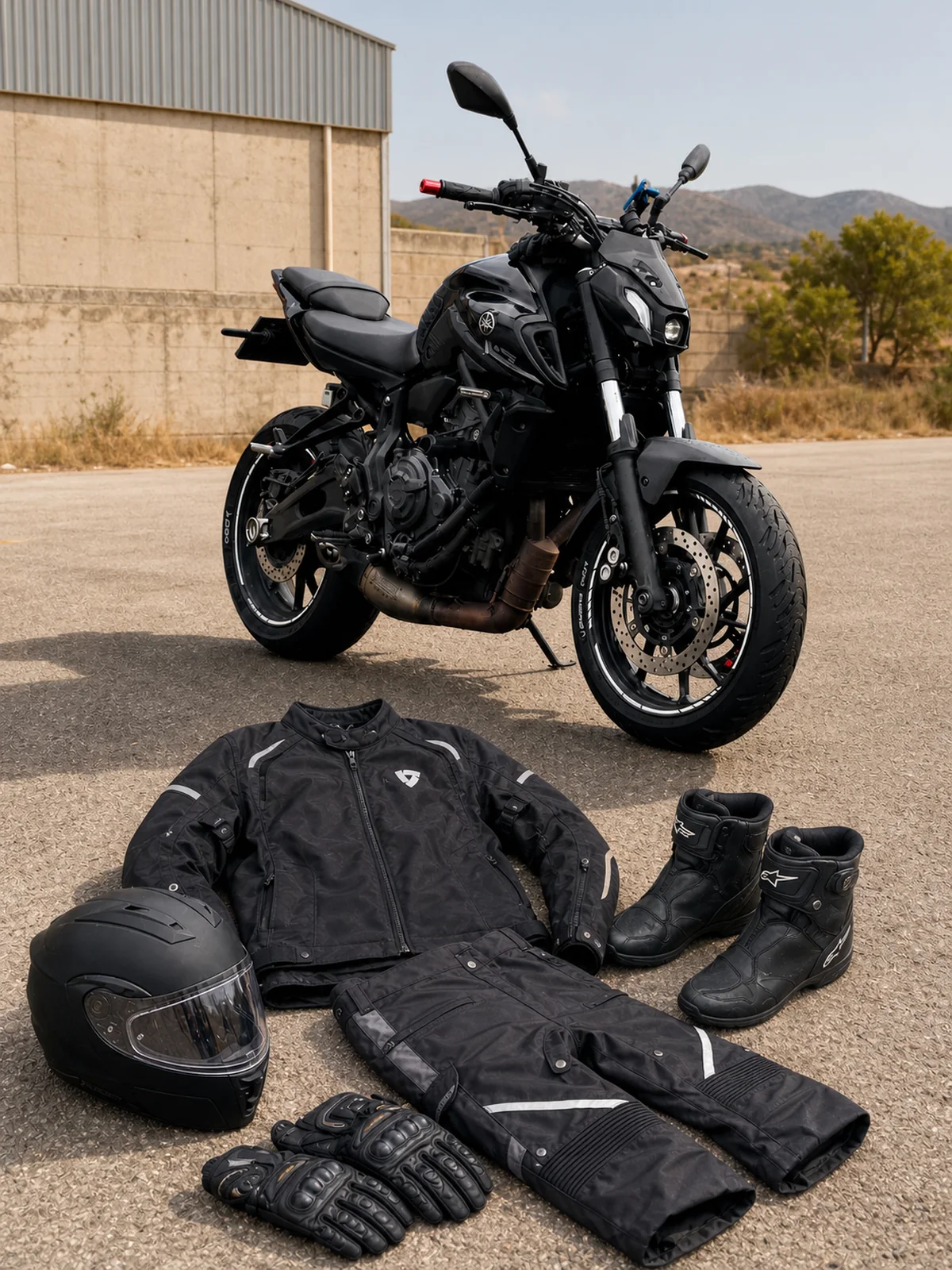
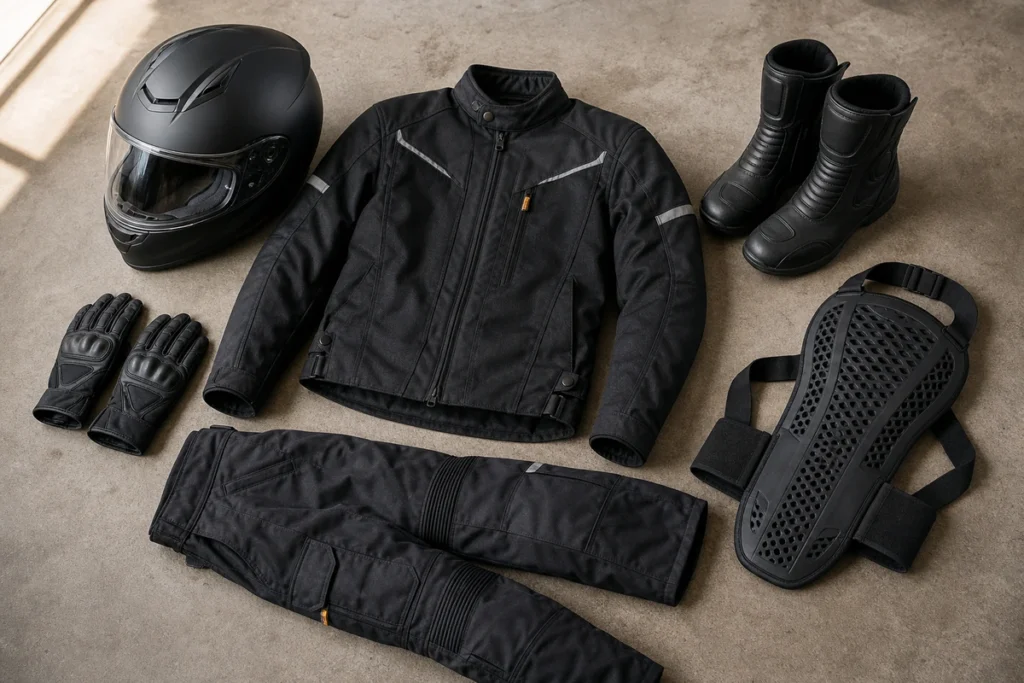
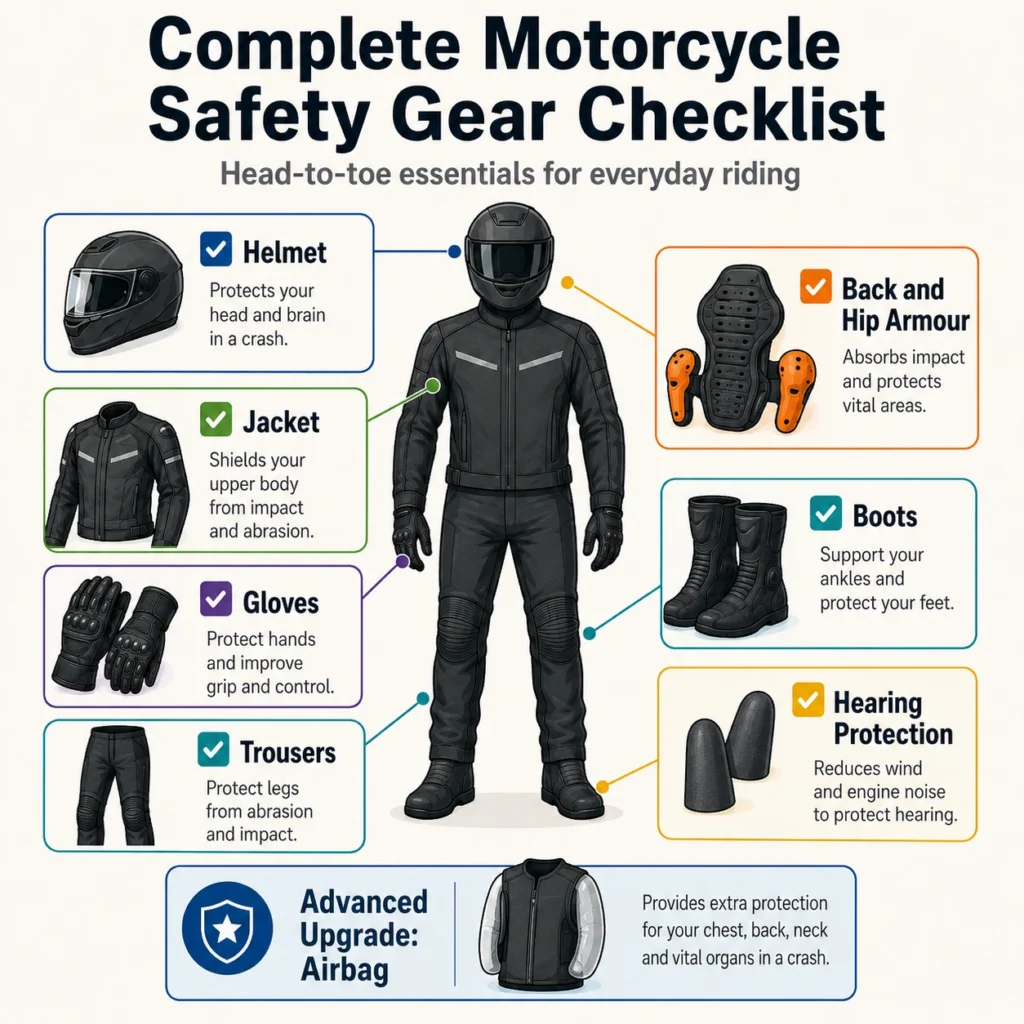
A complete road-riding setup should normally include:
- A correctly fitted ECE 22.06 motorcycle helmet
- A CE-certified motorcycle jacket with shoulder and elbow armour
- CE-certified trousers with knee and hip armour
- Full-finger motorcycle gloves with secure wrist retention
- CE-certified motorcycle boots covering the ankles
- A back protector, when one is not already included
- Hearing protection for rides where wind noise becomes tiring or harmful
- An airbag vest or jacket as an additional protection layer when the budget allows
The strongest setup is not one exceptional item combined with ordinary clothing.
Aim for certified protection from head to toe before spending heavily on optional technology.
My Current 2026 Gear Shortlist
These products represent useful current benchmarks rather than universal choices. Fit, body shape, climate and riding style can make another certified product the better option.
| Category | Current Product to Compare | Best Suited To | Relative Price |
|---|---|---|---|
| Helmet | HJC C10 | Riders wanting strong value and independent safety testing | Budget |
| Protective jacket | Knox Honister MK2 | Warm-weather riders prioritising high garment and armour ratings | Premium |
| Gloves | RST Pro Series GP D3O | Riders prioritising maximum hand protection in a sporty gauntlet | Premium |
| Riding jeans | Pando Moto Karl Devil AAA+ | Riders wanting protective jeans with a casual appearance | Premium |
| Boots | TCX Hero 2 WP | Urban, road and light-touring riders wanting one versatile boot | Mid-range |
| Airbag vest | Helite Turtle 2 | Riders wanting a mechanical airbag without batteries or charging | Premium |
| Earplugs | Alpine MotoSafe Duo | Riders wanting two attenuation options for different journeys | Affordable |
Product availability, colour choices and sizing can change. Verify the current certification label and specification before buying.
1. Best-Value Helmet: HJC C10
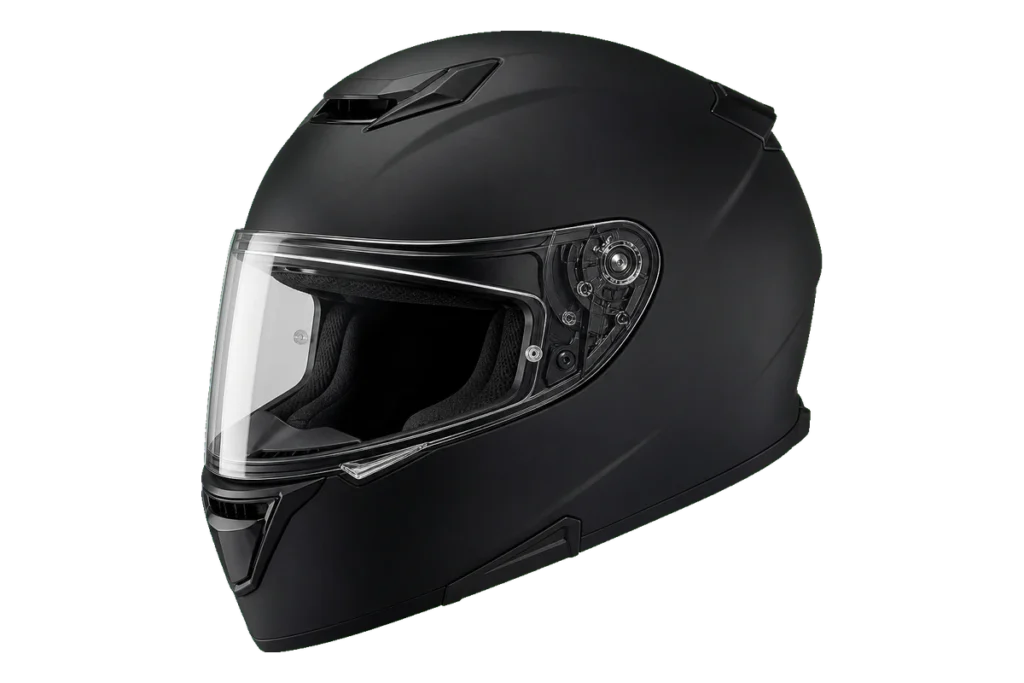
The HJC C10 is a useful value benchmark for riders who want a straightforward full-face helmet.
It is approved to ECE 22.06 and has received four stars in independent SHARP testing. HJC also offers it across a broad size range.
That does not mean it will fit every rider.
Helmet fit remains more important than brand reputation, graphics or accessories. A suitable helmet should feel evenly secure around your head without creating one painful pressure point.
Try several models and keep the helmet on long enough to notice discomfort before buying. Once you have identified the helmets that fit correctly, independent test information such as SHARP can help compare their safety performance.
Read How to Choose the Right Motorcycle Helmet Size before ordering a helmet online.
What to check
- ECE 22.06 approval
- Correct head-shape compatibility
- Firm cheek-pad contact
- Secure retention system
- Clear visor with effective ventilation
- Pinlock compatibility where useful
- Availability of replacement visors and liners
- Independent safety results when available
Do not assume that carbon fibre, a racing design or a high price automatically means better protection for your head.
Compare Motorcycle Helmets For Protection
2. Best High-Protection Ventilated Jacket: Knox Honister MK2
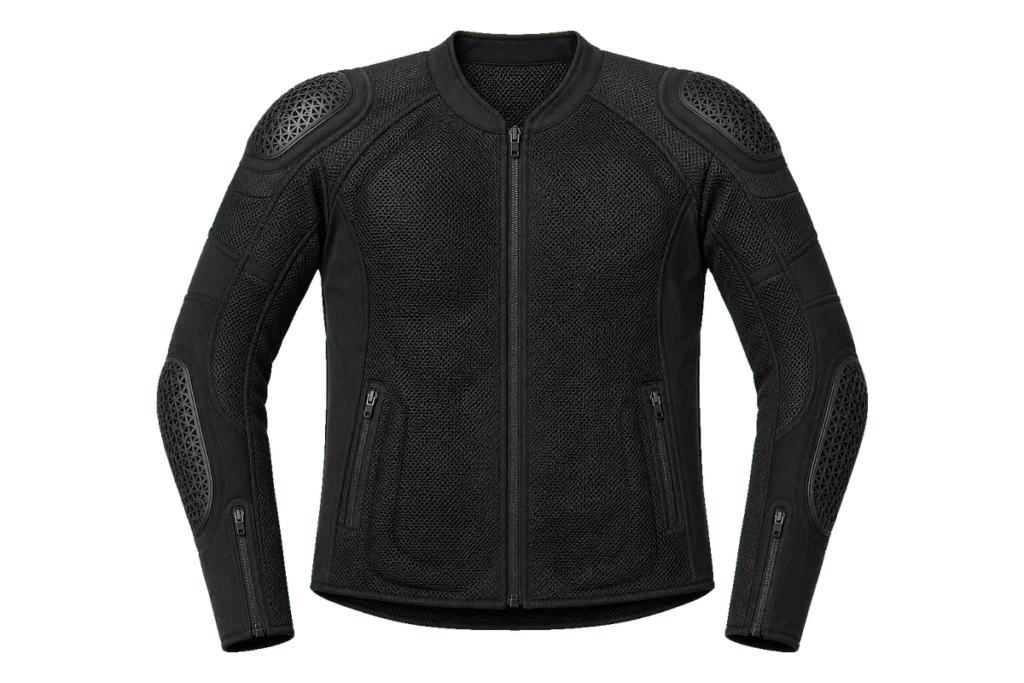
The Knox Honister MK2 is a strong example of how modern protective equipment can combine ventilation with a high clothing classification.
It is certified to Class AAA under EN 17092 and includes Level 2 protection at the shoulders, elbows and back. Knox positions it as a warm-weather protective shirt that can be worn on its own or underneath additional layers.
Its main advantage is not simply the AAA label.
The included back protector and ventilated construction make it easier to understand what you are buying as one complete protective layer.
The trade-off is cost, and some riders may prefer a conventional AA textile jacket with waterproofing or thermal liners.
What to check
- EN 17092 garment classification
- Shoulder and elbow armour levels
- Whether a back protector is included
- Armour position while seated on the motorcycle
- Sleeve and waist retention
- Ventilation
- Jacket-to-trouser connection
- Compatibility with waterproof or thermal layers
AAA is the highest clothing class within the standard, but AA may provide a better balance for many commuters and touring riders.
The label should inform your decision rather than make it automatically.
Read CE Ratings Explained: Helmets, Jackets, Gloves and Armour before comparing clothing labels.
3. Best Maximum-Protection Glove: RST Pro Series GP D3O
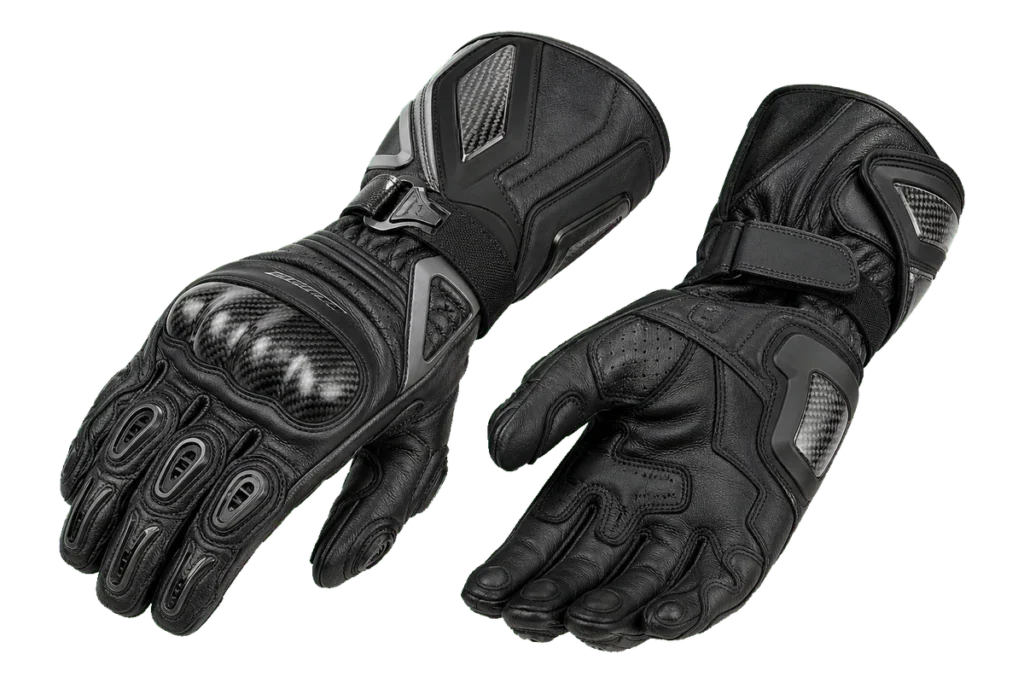
Hands often reach towards the ground instinctively during a fall.
A protective glove should therefore do more than cover the knuckles.
The RST Pro Series GP D3O is certified to Level 2 KP under EN 13594. It combines a long gauntlet, wrist retention, a palm slider and protection around the knuckles, thumb and fingers.
This is a high-spec race-style glove.
It may be more protective than many everyday gloves, but it is not automatically the most practical choice for a short urban commute. Some riders will prefer a less bulky Level 1 KP glove that gives better comfort and control in daily use.
What to check
- EN 13594 certification
- KP marking for knuckle protection
- Secure wrist closure
- Palm reinforcement or slider
- Coverage over the wrist
- Comfortable lever movement
- No excess material bunching at the palm
- Seams that do not create painful pressure
Gloves that are difficult to fasten correctly or restrict your fingers may be left loose, which reduces their value.
Choose the most protective glove you can use properly on every ride.
4. Best Protective Casual Jeans: Pando Moto Karl Devil AAA+
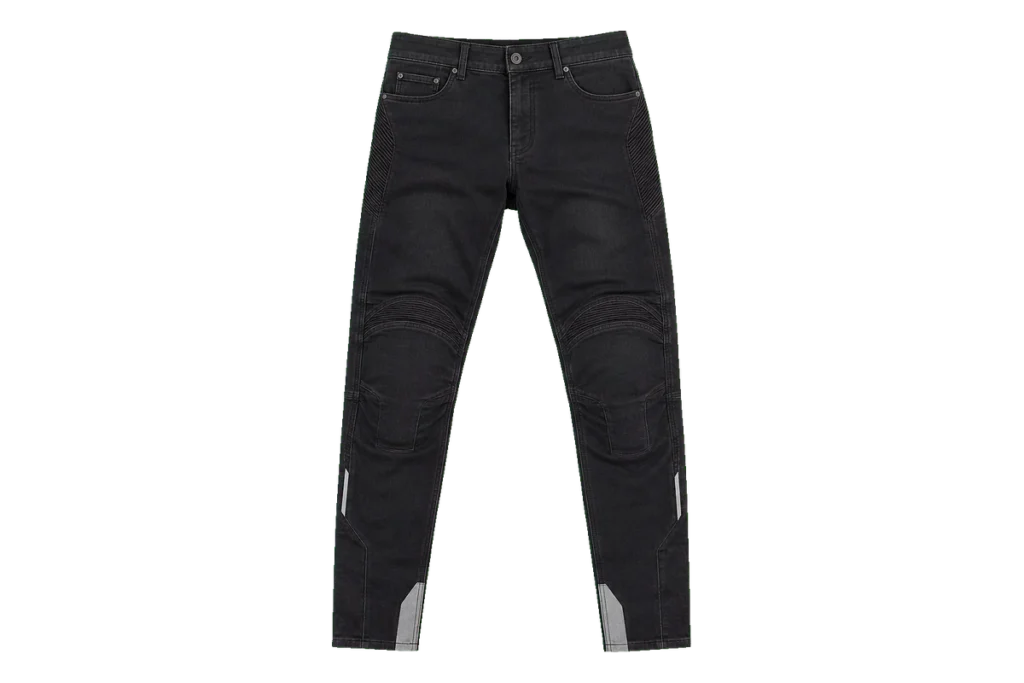
Protective riding jeans have improved significantly.
A modern pair can look relatively normal away from the motorcycle while still providing certified abrasion resistance and impact armour.
The Pando Moto Karl Devil is marketed as an AAA-rated riding jean and includes knee and hip protection. Its construction uses reinforced motorcycle-specific materials rather than ordinary fashion denim with small armour pockets added afterwards.
The product is one current example rather than a fit recommendation for every body shape.
Riders should compare different cuts, including products specifically shaped and sized for women, rather than accepting poor armour placement.
What to check
- EN 17092 classification
- Knee and hip armour included
- Armour position in the riding posture
- Secure waist closure
- Coverage when the knees are bent
- Stitching in high-risk areas
- Single-layer or lined construction
- Heat and walking comfort
- Connection options for the jacket
Ordinary jeans are not a replacement for certified motorcycle trousers.
When your budget is limited, achieving proper leg coverage should normally come before buying optional electronics or cosmetic accessories.
Compare Motorcycle Riding Jeans & Trousers
5. Best Everyday Road Boot: TCX Hero 2 WP
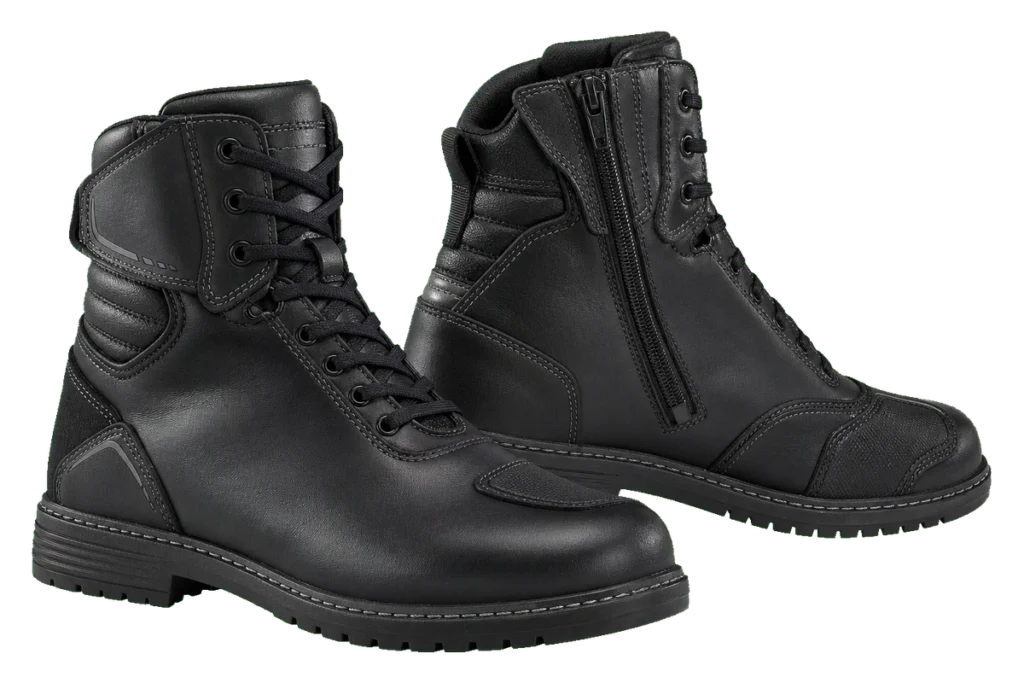
The TCX Hero 2 WP combines a casual leather-boot appearance with motorcycle-specific certification and reinforcements around the ankle, toe and heel.
It also includes a waterproof membrane, making it a practical option for urban riding and moderate touring. TCX states that its certified footwear is assessed under EN 13634:2017.
A certified short boot can be far better than an ordinary trainer, but taller boots generally offer more shin and lower-leg coverage.
Choose according to the journey and the risks you are willing to accept.
What to check
- EN 13634 certification
- Ankle impact protection
- Lateral sole stiffness
- Heel and toe reinforcement
- Secure fastening
- Gear-shift comfort
- Resistance to the boot coming off
- Waterproofing when needed
- Walking comfort
Do not judge a boot only by how solid it feels in your hand.
The certification label provides more useful information than appearance alone.
6. Best Simple Airbag Upgrade: Helite Turtle 2
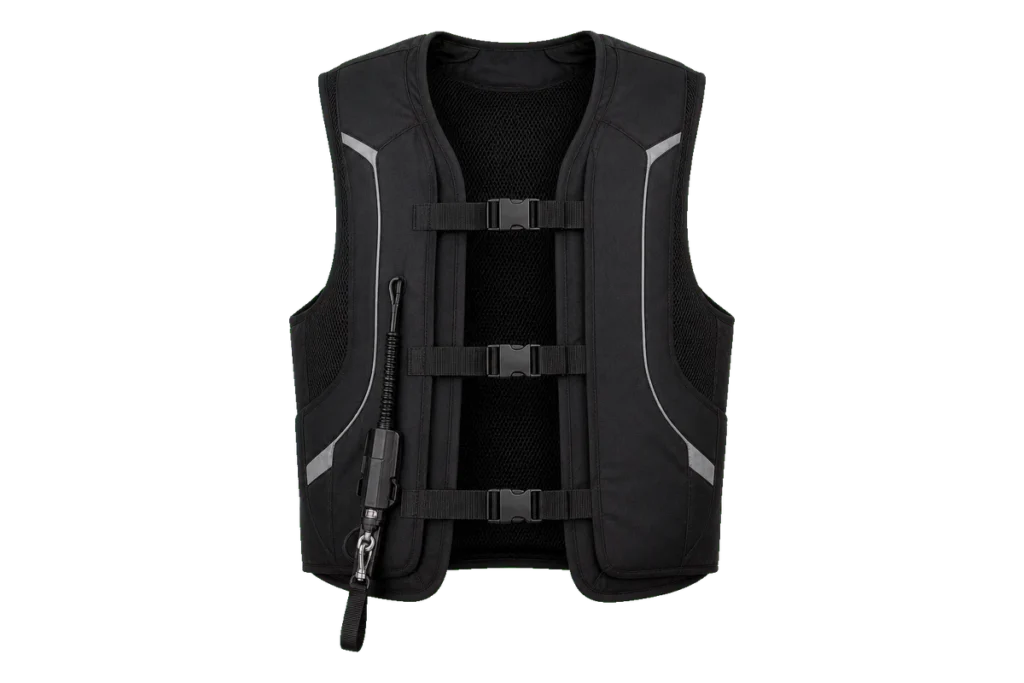
An airbag vest is an additional layer rather than a replacement for a certified jacket, trousers or back protection.
The Helite Turtle 2 uses a mechanical tether attached to the motorcycle. Because it is mechanically triggered, it does not require charging or electronic fall-detection settings.
Helite states that the vest is CE certified by an independent protective-equipment laboratory and uses different airbag volumes according to size.
The tether must be attached correctly before riding, and the vest must have enough expansion space over the clothing underneath.
Electronic systems may detect some crashes without physical separation from the motorcycle, but they introduce batteries, software, compatible-garment requirements or servicing considerations.
What to check
- Correct sizing over your normal jacket
- Mechanical or electronic activation
- Areas of the body covered
- Inflation and service requirements
- Replacement gas-cartridge cost
- Battery and subscription requirements, where applicable
- Compatibility with backpacks and jackets
- Manufacturer inspection guidance after deployment
An airbag can be one of the most meaningful later upgrades, but it should not consume the budget needed for basic head-to-toe gear.
Compare Motorcycle Airbag Vests & Jackets
7. Best Flexible Earplug Set: Alpine MotoSafe Duo
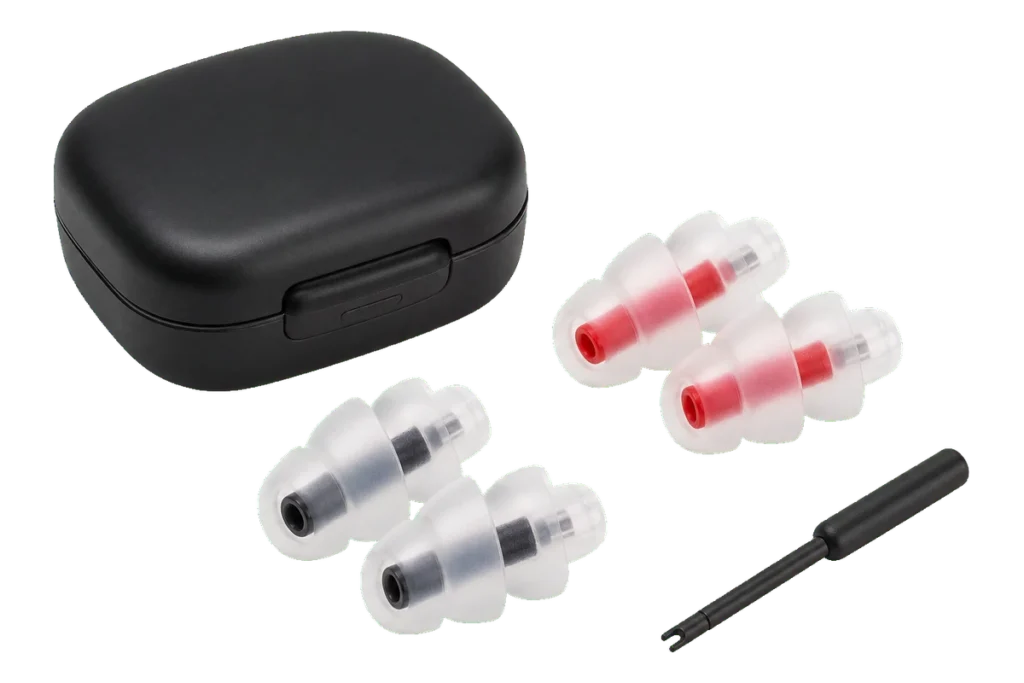
Earplugs are not crash armour, but reducing wind noise can improve comfort and reduce the fatigue created by a loud helmet environment.
The Alpine MotoSafe Duo provides two reusable sets designed for different riding conditions. The Tour version provides lower attenuation, while the Sport version is intended for stronger wind-noise exposure. The filters are designed to reduce wind noise while allowing traffic, communication and navigation sounds to remain audible.
Fit still matters.
An earplug that works loose under the helmet or causes pain will not be used consistently. Custom-moulded options may be worth considering for frequent riders.
What to check
- Comfortable fit under the helmet
- Suitable attenuation for the journey
- Ability to hear important road information
- Reusability and cleaning instructions
- Consistent seal
- Storage case
- Custom-fit options for frequent riding
Never use music volume to cover wind noise.
That adds more sound rather than controlling the original problem.
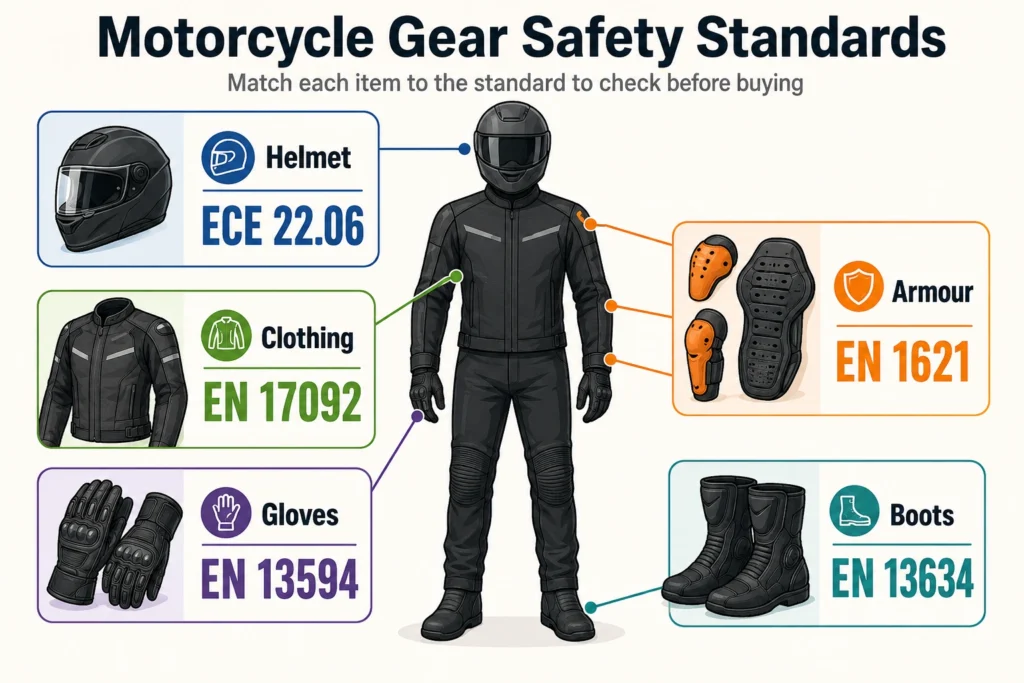
Understand the Safety Labels Before Buying
European motorcycle equipment uses different standards for different products.
| Equipment | Main Standard or Approval |
|---|---|
| Road helmet | UN Regulation No. 22, normally ECE 22.06 for current products |
| Jacket and trousers | EN 17092 |
| Limb armour | EN 1621-1 |
| Back protector | EN 1621-2 |
| Motorcycle gloves | EN 13594 |
| Motorcycle footwear | EN 13634 |
These standards sit within the wider European PPE regulatory framework. The current harmonised-standards list includes the relevant glove and motorcycle-footwear standards, while UN Regulation No. 22 governs motorcycle helmets and visors.
A CE mark by itself does not tell you everything.
Check the full label for:
- The standard number
- Garment class
- Armour level
- Product size
- Declaration of conformity
- Intended use
The complete explanation is available in CE Ratings Explained.
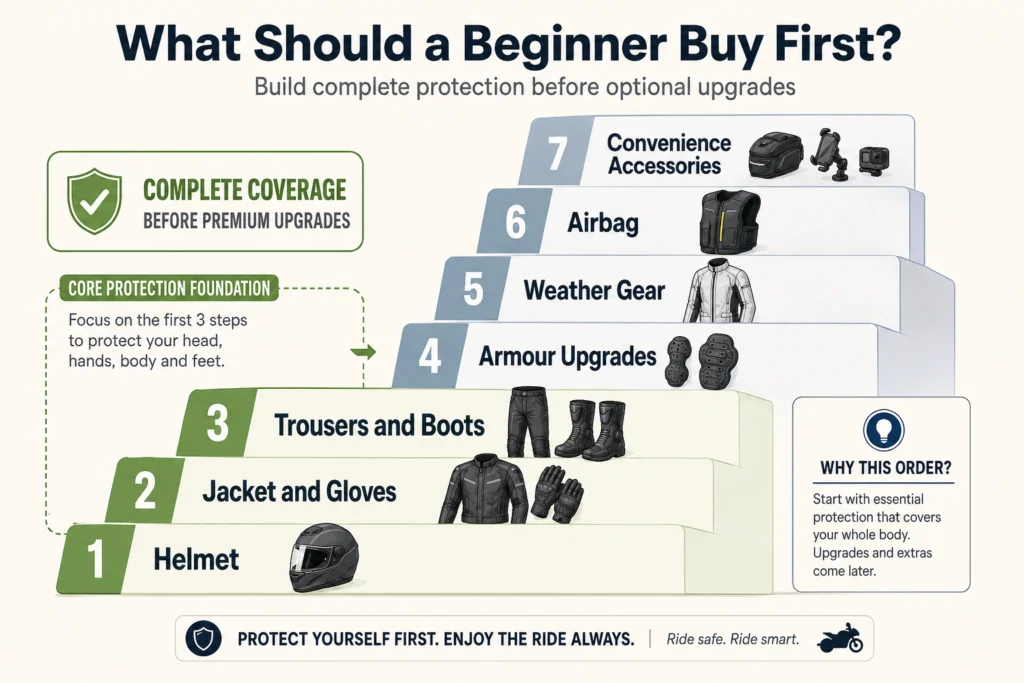
What Should a Beginner Buy First?
The best buying order is usually:
- Properly fitted helmet
- Jacket
- Gloves
- Trousers
- Boots
- Back and hip-armour upgrades
- Weather-specific second set
- Airbag system
- Convenience accessories
This does not mean that boots or trousers are unimportant.
It means the first objective is to establish complete protection across the whole body before spending heavily on optional upgrades.
Avoid buying a very expensive helmet and then riding in ordinary jeans, trainers and thin fashion gloves.
A balanced setup normally creates a better overall safety margin.
Match the Gear to Your Riding
Urban commuter
Prioritise:
- Easy movement
- Ventilation
- Waterproof outer layers
- Comfortable boots for walking
- Reflective details
- Gear that is quick to put on correctly
Weekend road rider
Prioritise:
- Secure jacket-and-trouser connection
- Full-gauntlet gloves
- Strong abrasion protection
- Good helmet ventilation
- Boots with firm ankle support
Touring rider
Prioritise:
- All-day fit
- Weather management
- Hearing protection
- Replaceable liners and visors
- Reliable waterproofing
- Layering flexibility
Read Wet Weather Motorcycle Riding Tips when building a setup for rain and changing conditions.
Night and low-light rider
Prioritise:
- Clean, clear visor
- Reflective outer details
- Light or contrasting helmet colours
- Waterproof layers that do not hide reflective sections
See Night Riding Safety for more guidance on visibility and preparation after dark.
Common Mistakes
| Mistake | Why It Causes Problems | Better Approach |
|---|---|---|
| Buying online without checking fit | Sizing and body shape vary between brands | Try locally or use a reliable return policy |
| Spending the whole budget on a helmet | Leaves other body areas unprotected | Build a complete certified setup |
| Assuming all CE labels mean the same thing | Standards and protection levels differ | Read the complete certification label |
| Buying armour separately without checking compatibility | It may move or leave gaps | Use the approved size and shape for the garment |
| Choosing ordinary fashion boots | Appearance does not confirm crush or ankle protection | Look for EN 13634 certification |
| Buying loose clothing for comfort | Armour may move away from the impact area | Check fit in the riding position |
| Ignoring hot-weather comfort | Unbearable gear may be left at home | Plan ventilation and layering |
| Trusting marketing terms such as “armoured” | The term alone does not prove certification | Check the standard and protection level |
| Buying an airbag before basic gear | Leaves gaps in abrasion and limb protection | Complete the core setup first |
| Choosing only by affiliate discount | Commission does not indicate safety or fit | Prioritise suitability and evidence |
Complete Motorcycle Safety Gear Checklist
Before buying:
- Identify your main type of riding
- Set a budget for the complete setup
- Check every certification label
- Try the equipment in a riding posture
- Confirm armour position
- Check return and exchange conditions
- Verify replacement parts are available
- Read the manufacturer’s care instructions
Before every ride:
- Fasten the helmet correctly
- Secure glove and boot closures
- Confirm armour has not moved
- Connect jacket and trousers when possible
- Attach the airbag tether when using one
- Check visor clarity
- Make sure waterproof layers do not restrict movement
- Replace damaged or compromised equipment
If you are still working out which pieces you already have and which ones are missing, start with the motorcycle gear checklist for new riders before comparing individual products.
Final Thoughts: Build a Complete System
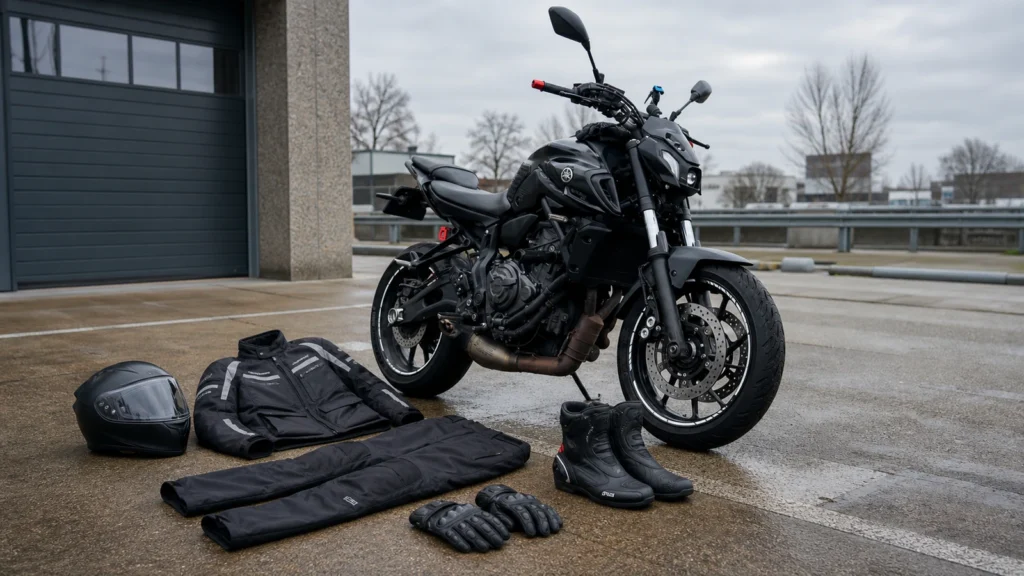
The best motorcycle safety gear is not one product.
It is a complete system that protects your head, body, hands, legs and feet while allowing you to operate the motorcycle properly.
Start with certification and fit.
Then consider comfort, weather, visibility and how often you will genuinely wear the equipment.
A lower-priced helmet with a correct fit and strong independent test result can be a better purchase than a premium helmet chosen for its logo. An AA jacket worn every day can be more useful than an AAA garment that is wrong for your climate.
Build full coverage first.
Upgrade the weak points next.
Add advanced protection such as an airbag when the core equipment is already in place.
Good gear cannot prevent every injury.
It can give your body a better chance when the ride does not go as planned.
FAQs
What motorcycle safety gear does every rider need?
Every road rider should consider a certified helmet, protective jacket, trousers, gloves and motorcycle boots. Back, hip and hearing protection may also be needed, while an airbag is a valuable additional layer.
What should a beginner spend the most money on?
Spend enough to achieve correct fit and certified protection across the whole body. Do not use the entire budget on one premium helmet while leaving other areas unprotected.
Is CE AAA motorcycle clothing always better than AA?
AAA represents a higher garment classification, but the best purchase also depends on fit, armour, ventilation and intended use. A correctly fitted AA garment may be more practical for daily riding.
Is an expensive helmet safer than a cheaper helmet?
Not automatically. Approval, correct fit and independent test results are more useful than price alone. The relatively affordable HJC C10, for example, is ECE 22.06 approved and has received four SHARP stars.
Are motorcycle airbags worth buying?
An airbag can add useful torso and neck-support coverage depending on the system. It should be treated as an additional layer after the rider already owns complete certified gear.
Should motorcycle riders wear earplugs?
Earplugs can reduce wind-noise exposure and fatigue while still allowing important sounds to remain audible when the correct attenuation and fit are chosen.
How often should motorcycle gear be replaced?
Replace equipment after a significant impact or when its structure, seams, fasteners or protective components are damaged. Follow each manufacturer’s inspection and replacement guidance.
Related Reads
Motorcycle Safety Gear Explained: What Each Piece Actually Does
CE Ratings Explained: Helmets, Jackets, Gloves and Armour
How to Choose the Right Motorcycle Helmet Size
Motorcycle Safety for Beginners: The Complete Guide