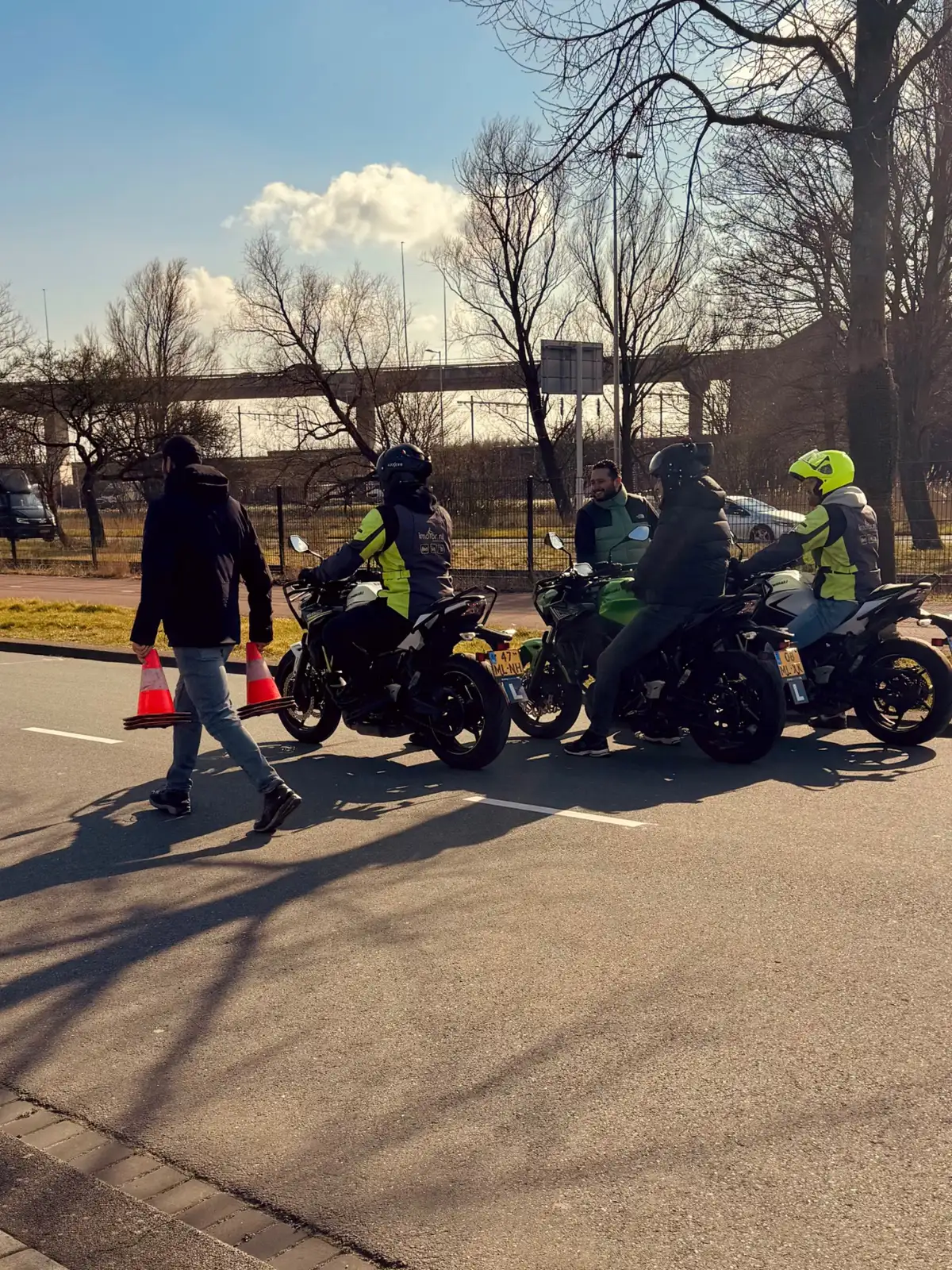
A motorcycle safety course is one of those things many riders think about, but not everyone actually books.
Some riders believe they only need the training required to get their license.
Some think experience on the road is enough.
Some feel nervous about being judged by an instructor.
Some want to improve but do not know which course is worth the money.
And some riders only consider extra training after a scary moment on the road.
I understand that.
Motorcycling already costs money. The bike, gear, insurance, maintenance, fuel, and accessories all add up. So when someone says, “Take a safety course,” it is fair to ask:
Is it actually worth it?
My honest answer is yes — for most riders, a good motorcycle safety course is worth it.
But only if you choose the right course for your level and treat it as the start of improvement, not a magic fix.
A course will not make you invincible.
It will not replace regular practice.
It will not remove the need for defensive riding, proper gear, smart lane positioning, and good judgement.
But a good course can show you mistakes you did not know you were making. It can help you practice braking, cornering, low-speed control, hazard awareness, and road strategy in a structured way.
Most importantly, it can give you feedback from someone who is watching your riding from the outside.
That kind of feedback is hard to get when you only ride alone.
If you are still building your foundation, start with Motorcycle Safety for Beginners: The Complete Guide to Riding Smart
Affiliate Disclosure: This article may contain affiliate links. If you buy through one, I may earn a commission at no extra cost to you. See my disclosure for more info.
Quick Answer
Are Motorcycle Safety Courses Worth It?
Yes, motorcycle safety courses are worth it for most beginner and returning riders because they provide structured practice, professional feedback, safer skill development, and more confidence. A good course can help with braking, cornering, low-speed control, defensive riding, hazard awareness, and emergency reactions.
A course does not replace experience.
It helps you build better experience.
Check Out : A Structured Online Option for New and Returning Riders
Why Motorcycle Training Matters
Motorcycling is not just about balance and throttle control.
A rider has to manage speed, space, braking, cornering, road surface, visibility, traffic behavior, weather, body position, and mental focus — often at the same time.
That is a lot.
When you are new, it is easy to miss small mistakes because you are already using most of your mental energy just keeping everything together.
You may not notice that you are looking too close.
You may not realize your braking is too sudden.
You may not understand why corners feel tense.
You may not see how your lane position hides you from drivers.
You may not know that your low-speed control depends more on clutch, throttle, rear brake, and vision than strength.
A good instructor can see these things.
That is the value of training.
It gives you a controlled environment where someone experienced can say:
“Look farther ahead.”
“Relax your arms.”
“Use smoother brake pressure.”
“Turn your head more.”
“Your speed is fine, but your body is tense.”
“Your lane position could be safer here.”
“You are reacting late because you are not scanning early enough.”
That feedback can save you months or years of guessing.
For more on building awareness before danger becomes urgent : Beginner’s Guide to Defensive Motorcycle Riding.
What a Motorcycle Safety Course Usually Teaches
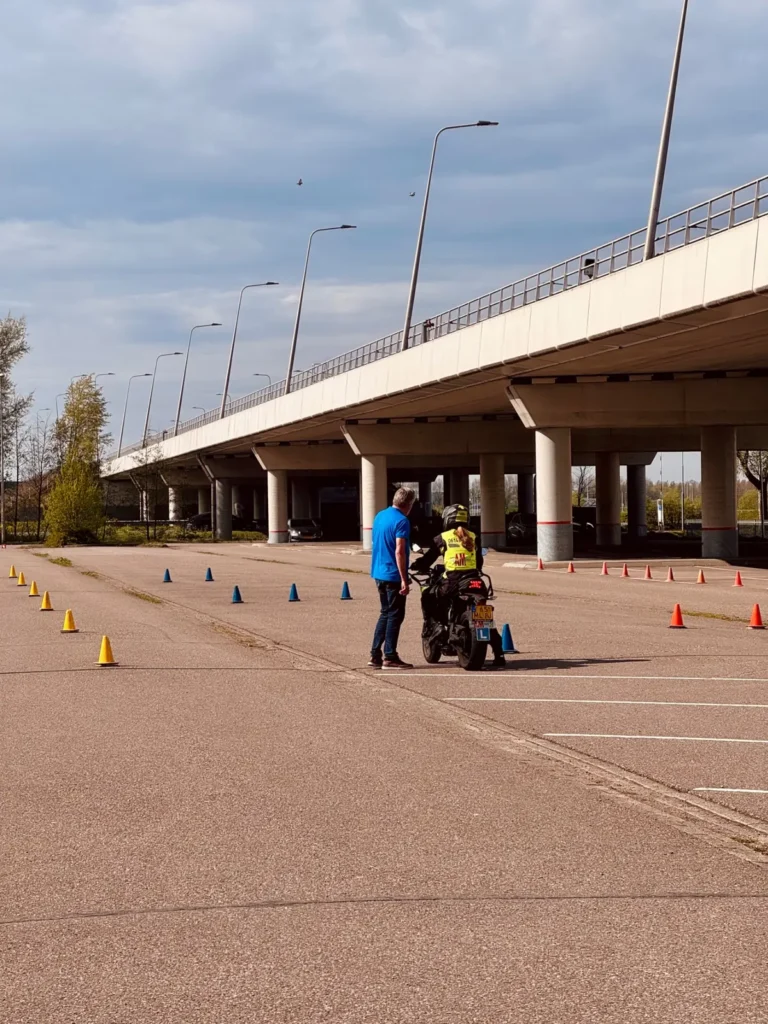
The exact course depends on your country, school, and experience level, but many motorcycle safety courses focus on similar core skills.
A beginner or basic rider course may include:
- Motorcycle controls
- Starting and stopping
- Clutch control
- Throttle control
- Gear shifting
- Low-speed balance
- Turning
- Braking
- Emergency stops
- Swerving
- Basic cornering
- Road awareness
- Protective gear
- Safe riding mindset
More advanced courses may include:
- Defensive riding
- Hazard perception
- Road positioning
- Cornering technique
- Advanced braking
- Riding in traffic
- Group riding awareness
- Wet-weather strategy
- Touring skills
- Track-based skills
- Slow-speed precision
- Emergency maneuver practice
The best courses do not only teach you how to operate a motorcycle.
They teach you how to think like a rider.
That is the difference.
Operating the motorcycle is the basic layer.
Reading the road is the real skill.
Beginner Riders: Why a Course Helps So Much
Beginner riders benefit from structure.
When you learn alone or only from casual advice, it is easy to develop bad habits early.
You may ride with stiff arms.
You may look down too much.
You may overuse the rear brake.
You may avoid practicing emergency stops.
You may enter corners too tense.
You may follow traffic too closely.
You may copy other riders without understanding why they do what they do.
A course gives you a safer place to build the basics.
You can repeat exercises without traffic pressure. You can ask questions. You can make mistakes at lower speeds. You can get immediate correction.
That matters.
The road is not the best place to discover every weakness for the first time.
Some skills should be practiced before you need them.
Braking is a perfect example. If you have not practiced hard braking in a controlled way, your first real emergency stop may become panic instead of skill.
Learn – How to Brake Safely on a Motorcycle: Front vs Rear Explained
Returning Riders: Why a Refresher Course Is Smart
A safety course is not only for beginners.
If you are returning to motorcycles after a break, a refresher course can be very useful.
Maybe you rode years ago.
Maybe you stopped after moving countries.
Maybe life got busy.
Maybe you sold your old bike and are now coming back.
Maybe your new motorcycle is heavier, faster, taller, or more powerful than what you remember.
Your confidence may return faster than your skill.
That can be dangerous.
A refresher course helps you rebuild control before jumping fully back into traffic.
It can help with:
- Slow-speed handling
- Braking confidence
- Cornering rhythm
- Road positioning
- Hazard awareness
- Modern traffic conditions
- Riding with newer technology like ABS or rider modes
There is no shame in refreshing skills.
Actually, it shows maturity.
A good rider does not say, “I already know everything.”
A good rider asks, “What can I sharpen?”
Experienced Riders: Is Training Still Worth It?
Yes, but the course needs to match the rider.
An experienced rider may not need a basic course, but advanced training can still reveal blind spots.
Experience does not automatically mean skill.
A rider can ride for ten years and repeat the same mistakes for ten years.
Some riders become better.
Some riders simply become more comfortable with their bad habits.
That is why experienced riders can still benefit from advanced coaching.
Advanced training can help with:
- Road strategy
- Corner entry speed
- Vision
- Braking precision
- Body relaxation
- Hazard reading
- Overtaking judgement
- Smoothness
- Wet-road confidence
- Riding pace without rushing
- Mental discipline
A good advanced course is not about making you ride recklessly fast.
It should make you smoother, calmer, and more aware.
That is the real sign of progress.
Check out : Motorcycle Vision Techniques: How to Look Through the Corner Correctly
The Biggest Benefit: Feedback You Cannot Give Yourself
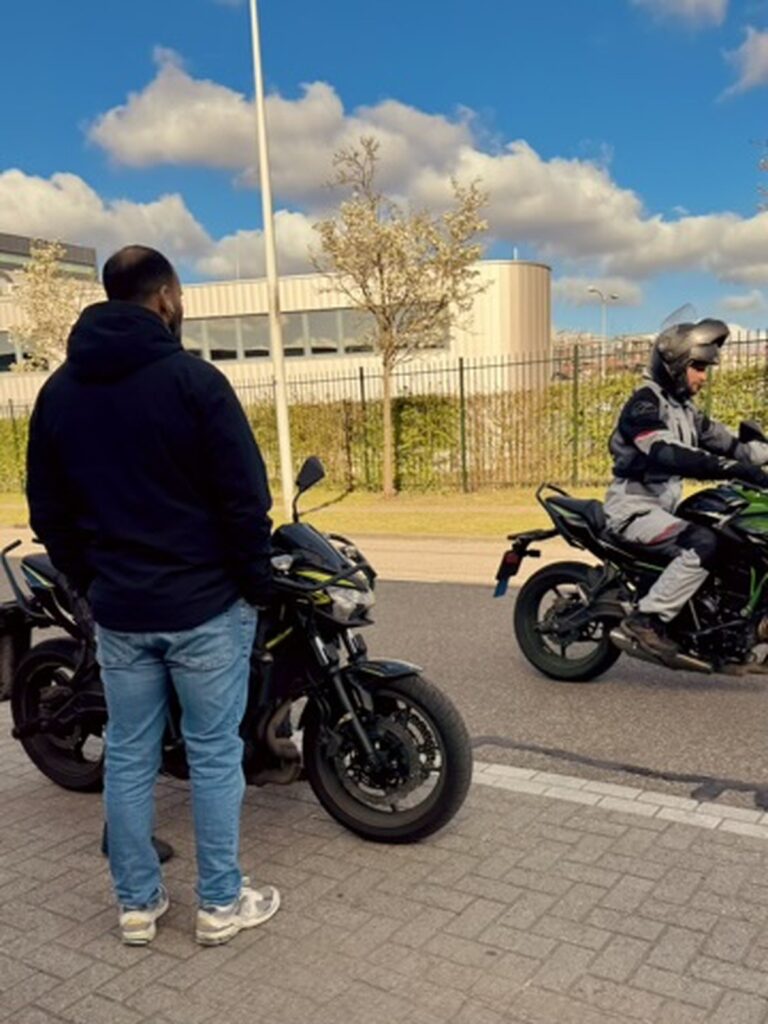
One of the biggest benefits of a motorcycle safety course is outside feedback.
When you ride, you feel what is happening from inside your body.
But you cannot always see yourself clearly.
You may think you are looking through a corner, but your head barely moves.
You may think you are relaxed, but your shoulders are tense.
You may think you are braking smoothly, but your first input is too sharp.
You may think your lane position is safe, but you are sitting in a blind spot.
You may think you are riding defensively, but you are reacting late.
An instructor can see what you cannot.
That outside view is valuable.
This is also why video can help riders improve. Watching yourself ride can reveal habits you never noticed.
But professional feedback is even better because the instructor can explain what is happening and how to fix it.
That turns riding experience into learning.
Without feedback, experience can become repetition.
With feedback, experience becomes progress.
Safety Courses Build Confidence Without Ego
Good training builds real confidence.
Not loud confidence.
Not fake confidence.
Not “I can handle anything” confidence.
Real confidence is quieter.
It sounds like:
“I know how to brake better than before.”
“I know what to practice next.”
“I understand my weak areas.”
“I can control the bike at low speed.”
“I can slow down and reset.”
“I do not need to prove anything.”
“I ride better when I stay smooth.”
That kind of confidence is safer because it is based on skill, not ego.
A safety course can help you feel more connected to the motorcycle. You understand how it responds. You trust your inputs more. You panic less because you have practiced.
But the best courses also remind you of your limits.
That is healthy.
A rider who knows their limits is safer than a rider who has never tested their skills in a controlled environment.
Low-Speed Control: The Skill Everyone Should Practice
Low-speed control may not look exciting, but it is one of the most useful riding skills.
It helps with:
- Parking lots
- U-turns
- Slow traffic
- Tight streets
- Fuel stations
- Hill starts
- Roundabouts
- Filtering where legal
- Manoeuvring a heavy bike
- Riding with luggage or a passenger
Many riders feel comfortable at speed but nervous when the bike slows down.
That is normal.
At low speeds, balance becomes more obvious. Small mistakes feel bigger. The bike may feel heavy. Your eyes may drop. Your clutch hand may tense up.
A safety course can help you practice low-speed skills properly.
You learn how clutch, throttle, rear brake, body position, and vision work together.
This kind of training may not look dramatic, but it builds everyday confidence.
A rider who can control the bike slowly often feels calmer everywhere else.
Braking Practice: Worth the Course Alone
If a motorcycle safety course helps you improve only one thing, braking may be enough to justify it.
Braking is one of the most important survival skills a rider has.
But many riders do not practice it enough.
They brake gently in normal traffic, but they rarely practice firm progressive braking, emergency stops, or stopping quickly in a straight line.
Then one day, a car pulls out.
That is not the best moment to learn.
A course gives you a safer environment to practice braking with feedback.
You can learn:
- How to use the front brake properly
- How to add rear brake
- How weight transfer feels
- How to keep your eyes up
- How to avoid grabbing the brake
- How ABS feels if your bike has it
- How much distance you actually need
- How to stay calm under stronger braking
This matters because emergency braking is not only strength.
It is timing, feel, smoothness, and body control.
How to Brake Safely on a Motorcycle
Cornering: Why Training Can Help
Cornering is another area where riders benefit from coaching.
A beginner rider may enter corners too fast, look too close, tense the arms, shut the throttle, or stare at the outside edge.
An instructor can help identify the real problem.
Sometimes the issue is speed.
Sometimes it is vision.
Sometimes it is body tension.
Sometimes it is poor road position.
Sometimes it is fear.
Sometimes it is trying to follow someone else’s pace.
Good cornering training should not make beginner riders reckless.
It should make them smoother.
You learn to slow before the corner, look through the turn, stay relaxed, choose a safer line, and roll on gently when the road opens.
This makes riding more enjoyable because corners stop feeling like little emergencies.
Learn : How to Corner Safely on a Motorcycle
Hazard Awareness and Defensive Riding
A good motorcycle safety course should not only teach control.
It should teach awareness.
Many crashes are not caused by one dramatic mistake. They are caused by small things building up:
Poor position.
Late vision.
Too little space.
Too much speed.
A hidden junction.
A driver who did not see you.
A surface hazard noticed too late.
A rider who had no escape route.
Defensive riding helps you catch risk earlier.
A course can teach you how to scan, predict, and position yourself better.
You may practice:
- Looking farther ahead
- Identifying escape routes
- Watching vehicle wheels
- Avoiding blind spots
- Reading junctions
- Managing following distance
- Adjusting speed before risk areas
- Choosing safer lane position
These skills are not always obvious to beginners.
They are learned through attention and repetition.
Beginner’s Guide to Defensive Motorcycle Riding
Safety Courses Can Reduce Bad Habits Early
One of the best reasons to take a course early is to prevent bad habits from becoming normal.
Bad habits can feel comfortable because you repeat them often.
Examples include:
- Looking down during slow turns
- Covering the clutch incorrectly
- Gripping the bars too hard
- Using only the rear brake
- Braking too late
- Entering corners too fast
- Not turning the head enough
- Riding too close to traffic
- Sitting in blind spots
- Avoiding practice because it feels uncomfortable
The longer you repeat a bad habit, the more natural it feels.
A course can interrupt that pattern early.
That is why training is not just about learning new things.
It is also about unlearning weak habits.
Sometimes the most valuable sentence from an instructor is:
“You keep doing this one thing.”
That one sentence can change your riding.
What a Motorcycle Course Cannot Do
A safety course is useful, but it is not magic.
It cannot make you immune to crashes.
It cannot replace regular riding practice.
It cannot fix ego.
It cannot guarantee every instructor is good.
It cannot make poor gear protective.
It cannot make risky riding safe.
It cannot replace good judgment after the course ends.
This matters because some riders take a course and then feel overconfident.
That is the wrong lesson.
Training should make you more capable and more humble.
A course gives you tools.
You still need to use them.
You still need to practice braking.
You still need to wear proper gear.
You still need to ride defensively.
You still need to adjust to weather.
You still need to slow down when tired.
You still need to ride your own ride.
The course opens the door.
Your habits decide what happens after.
For gear preparation – Motorcycle Safety Gear Explained: What Each Piece Actually Does
Are Motorcycle Safety Courses Expensive?
The cost depends on the country, school, course type, duration, and whether motorcycles or gear are included.
A beginner course may cost less than advanced multi-day coaching. A track-based course may cost more than a road safety session. A private instructor may cost more than a group course.
Instead of asking only, “Is it expensive?” ask:
What mistake could this course help me avoid?
If a course helps you brake better, ride smoother, avoid panic, improve low-speed control, or understand traffic risk earlier, the value can be significant.
Motorcycling itself is already expensive.
A course is one of the few expenses that can improve the rider, not just the motorcycle.
A new exhaust may make the bike sound better.
A course may make you ride better.
Both can be enjoyable.
Only one directly improves your skill.
How to Choose the Right Motorcycle Safety Course
Not every course is right for every rider.
Choose based on your current level and what you want to improve.
For Complete Beginners
Look for a beginner course that teaches:
- Basic controls
- Starting and stopping
- Clutch control
- Braking
- Turning
- Low-speed riding
- Safety mindset
- Gear basics
The goal is a safe foundation, not speed.
For Licensed New Riders
Look for a post-license course focused on:
- Defensive riding
- Traffic skills
- Braking practice
- Cornering basics
- Road positioning
- Hazard awareness
This is often where real-world confidence improves.
For Returning Riders
Look for a refresher course that rebuilds:
- Slow control
- Braking
- Traffic awareness
- Cornering
- Confidence on a modern motorcycle
For Experienced Riders
Look for advanced training focused on:
- Roadcraft
- Hazard planning
- Smoothness
- Cornering
- Braking precision
- Observation
- Riding strategy
Avoid choosing a course only because it looks exciting.
Choose the course that solves your current weakness.
That is how you grow.
What to Look for in a Good Instructor
A good instructor matters more than a fancy course description.
Look for someone who is:
- Qualified or certified
- Experienced
- Calm
- Clear
- Patient
- Safety-focused
- Good at explaining
- Willing to give honest feedback
- Able to adapt to rider level
- Not obsessed with ego or speed
A good instructor should make you feel challenged but not humiliated.
They should correct mistakes without making you feel stupid.
They should explain why something matters, not only tell you what to do.
Motorcycling already has enough ego in it.
Good training should reduce ego, not add more.
When Should You Take a Motorcycle Safety Course?
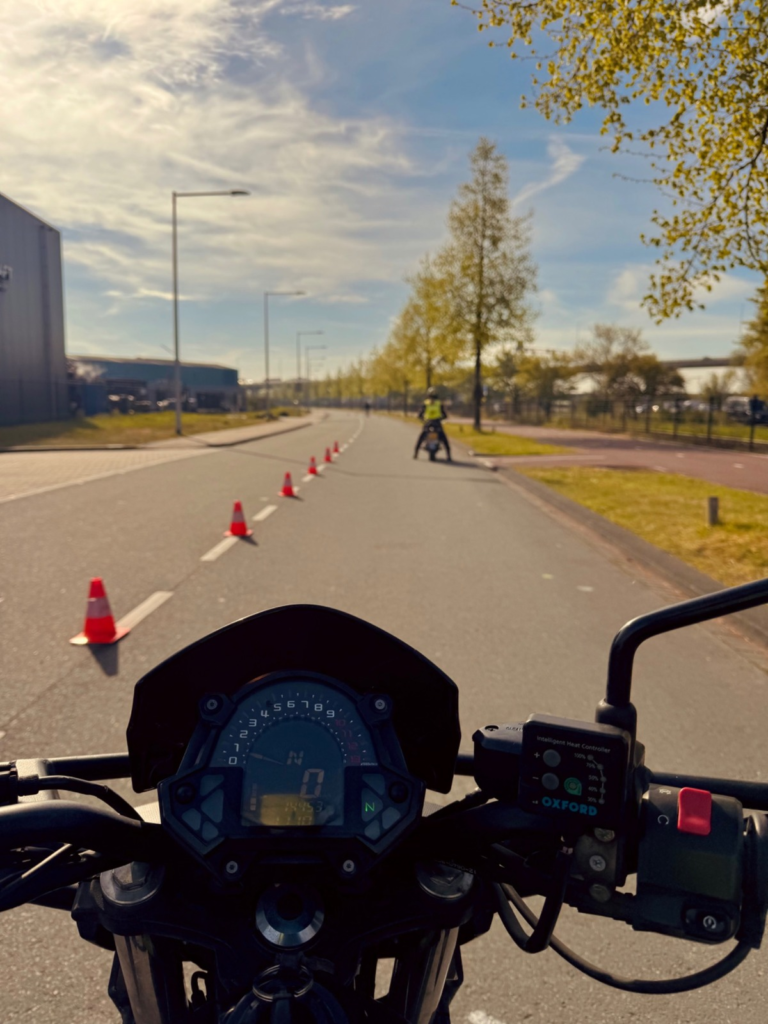
There are several good times to take a course.
Before Getting Fully Comfortable
This is ideal because you can build good habits early.
After Getting Your License
A post-license course can help bridge the gap between passing an exam and riding confidently in real traffic.
After Buying a New Motorcycle
A different bike may have different weight, brakes, power, height, turning behavior, and balance.
After a Scary Moment
A near miss can show you a skill gap. Training helps you respond constructively instead of just becoming fearful.
After a Long Break
Returning riders should refresh skills before assuming everything will feel the same.
Every Few Years
Even experienced riders can benefit from periodic coaching.
Think of it like sharpening a tool.
You do not wait until it is broken.
Should You Take a Course Even If You Already Have a License?
Yes, it can still be worth it.
A license means you met the required standard to ride legally.
It does not mean you have mastered riding.
Passing a test and becoming a skilled rider are not the same thing.
Real riding continues to teach you after the exam:
- Rain
- Heavy traffic
- Group rides
- Fatigue
- Touring
- Emergency braking
- New motorcycles
- Different road surfaces
- Night riding
- Wind
- Roadworks
- Unexpected drivers
A safety course after your license can help you connect test skills with real-world riding.
That is where many riders improve most.
If you ride in busy urban conditions – Riding in Heavy Traffic: Safety Tips for Urban Motorcyclists
Track Training vs Road Safety Training
Track training and road safety training are not the same.
A track course can be useful for learning body position, cornering feel, braking confidence, and understanding the motorcycle in a controlled environment.
But track riding is not the same as road riding.
On the road, you have:
- Oncoming traffic
- Junctions
- Cyclists
- Pedestrians
- Gravel
- Parked cars
- Speed limits
- Road signs
- Blind corners
- Unpredictable drivers
So do not assume track confidence automatically makes you a safer road rider.
Track training can be valuable, but road safety training teaches a different kind of awareness.
For most beginner and everyday riders, I would prioritize road-focused safety training first.
Then consider track training later if you want to understand the bike more deeply in a controlled environment.
Group Courses vs Private Coaching
Both can be useful.
Group Courses
Group courses can be more affordable and structured. You may also learn from watching other riders make and correct mistakes.
The downside is that you may get less individual attention.
Private Coaching
Private coaching gives more personal feedback. The instructor can focus directly on your habits, weaknesses, confidence, and riding style.
The downside is usually cost.
For beginner riders, a good group course can be a strong start.
For riders who want to fix specific issues, private coaching may be worth it.
Choose based on your goal.
If you are nervous, struggling with one skill, or returning after a crash, private coaching can be especially helpful.
How to Prepare for a Motorcycle Safety Course
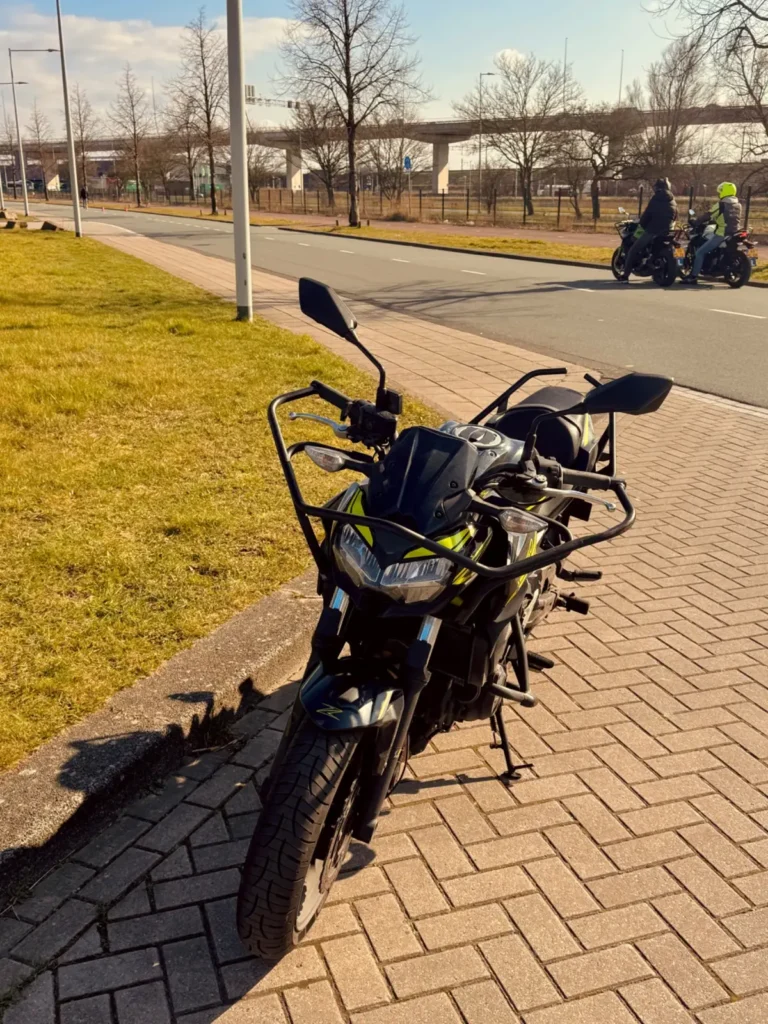
To get the most from a course, prepare properly.
Before the course:
- Check what gear is required
- Check whether a motorcycle is provided
- Check the course location
- Arrive early
- Sleep well
- Eat properly
- Bring water
- Wear comfortable protective gear
- Ask what documents you need
- Bring an open mindset
During the course:
- Listen carefully
- Ask questions
- Do not pretend you understand if you do not
- Accept feedback
- Do not compare yourself too much
- Focus on smooth improvement
- Stay hydrated
- Take breaks seriously
After the course:
- Write down what you learned
- Practice the key exercises
- Identify your top weakness
- Plan your next improvement step
- Do not let the course be a one-day memory
Training works best when you continue it afterward.
What to Practice After the Course
Read : Simple Motorcycle Balance Exercises
A course gives you skills, but practice makes them stick.
After your course, practice:
- Smooth starts and stops
- Low-speed riding
- U-turns
- Emergency braking
- Progressive braking
- Looking through corners
- Scanning traffic
- Lane positioning
- Slow clutch control
- Rear brake control
- Riding calmly in traffic
Do not try to practice everything in one ride.
Choose one skill per session.
For example:
Today: braking.
Next ride: vision.
Next weekend: low-speed control.
Next commute: lane positioning.
Next quiet road: corner entry speed.
Small focused practice is powerful.
That is how you become a better rider without overwhelming yourself.
Practice – Lane Positioning for Motorcyclists: How to Choose the Safest Road Position
Signs You Would Benefit From a Course
You may benefit from a motorcycle safety course if:
- You feel nervous in traffic
- You avoid practicing emergency braking
- You struggle with low-speed control
- You feel tense in corners
- You often look down
- You are returning after a break
- You bought a heavier or more powerful bike
- You had a near miss
- You feel unsure in rain
- You copy other riders too much
- You want honest feedback
- You want to improve faster
- You want more confidence without ego
You do not need to wait until you feel “bad enough” to take training.
Training is not punishment.
Training is investment.
Are Online Motorcycle Courses Worth It?
Online motorcycle courses can be useful for theory.
They can help you understand:
- Road strategy
- Defensive riding concepts
- Hazard perception
- Gear choices
- Cornering theory
- Braking principles
- Mental safety
- Common mistakes
But online learning cannot replace physical practice.
You cannot truly learn braking feel, clutch control, balance, or emergency maneuvers only by watching videos.
Use online courses as support.
Use real practice and instructor feedback for physical skills.
The best combination is:
Learn the idea online. Practice the skill in real life. Get feedback when possible.
That is how knowledge becomes riding ability.
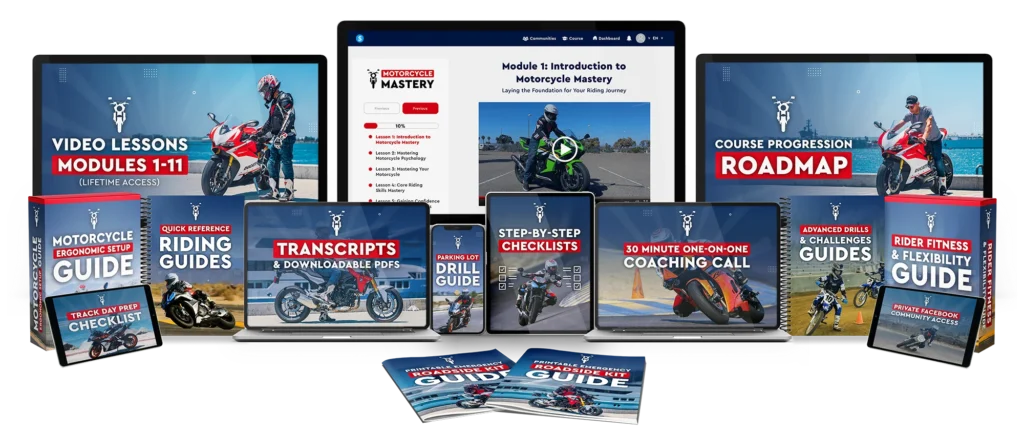
Explore The Motorcycle Mastery Online Course
Common Myths About Motorcycle Safety Courses
Myth 1: “Courses Are Only for Beginners”
No. Good riders keep learning.
Advanced training can help experienced riders refine observation, braking, cornering, smoothness, and road strategy.
Myth 2: “I Already Passed My Test, So I Do Not Need Training”
A license means you met the legal requirement.
It does not mean you have nothing left to learn.
Myth 3: “Courses Are Embarrassing”
There is nothing embarrassing about improving a skill that can save your life.
The embarrassing thing is pretending you have nothing to learn.
Myth 4: “Experience Is Better Than Training”
Experience is valuable, but experience without feedback can repeat mistakes.
Training helps make experience more useful.
Myth 5: “Safety Courses Make Riding Boring”
Good training does the opposite.
It makes riding smoother, calmer, and more enjoyable because you feel more in control.
Myth 6: “Advanced Training Is About Riding Faster”
Good advanced training should make you safer, smoother, and more aware.
Speed is not the main goal.
Control is.
Motorcycle Safety Course Checklist
Before booking a course, ask:
- Is this course right for my current skill level?
- Is the instructor qualified or experienced?
- Is the course focused on safety, not ego?
- Does it include practical riding?
- Does it include braking practice?
- Does it include low-speed control?
- Does it include road awareness or hazard perception?
- Is the group size reasonable?
- What gear is required?
- Is a motorcycle provided?
- What will I be able to practice afterward?
- Does the course solve a real weakness I have?
A good course should leave you with practical skills, not just a certificate.
So, Are Motorcycle Safety Courses Worth It?
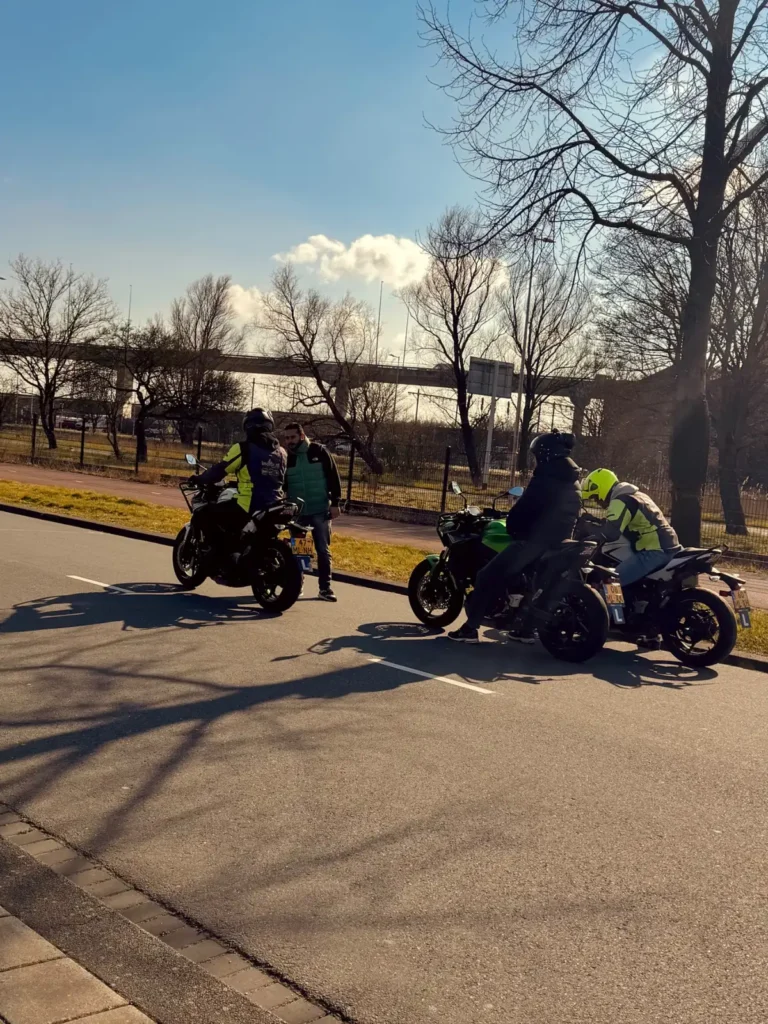
Yes — if you choose the right course and keep practicing afterward.
A motorcycle safety course is worth it because it can help you:
- Build better habits early
- Improve braking
- Improve low-speed control
- Understand cornering better
- Reduce fear
- Increase confidence
- Spot hazards earlier
- Ride more defensively
- Get feedback from an instructor
- Avoid repeating bad habits
- Return to riding safely after a break
- Become smoother and calmer on the road
But remember:
A course is not the finish line.
It is a reset point.
It shows you where you are, what needs work, and how to improve.
That is valuable.
Final Thoughts: Training Is a Shortcut to Better Awareness
Motorcycling rewards humility.
The moment you think you know everything, you stop improving.
A safety course is not a sign that you are weak, nervous, or unskilled.
It is a sign that you respect the craft.
Every rider has blind spots.
Every rider has habits.
Every rider has something to sharpen.
Every rider can benefit from structured feedback.
The road will teach you lessons eventually.
But some lessons are better learned in a controlled training environment than in an emergency.
That is why I believe motorcycle safety courses are worth it.
Not because they make you perfect.
Because they make you more aware.
And awareness is one of the strongest safety tools a rider can build.
Ride smart. Keep learning. Come home safe.
FAQs
Are motorcycle safety courses worth it for beghinners?
Yes. Motorcycle safety courses are worth it for beginners because they provide structured practice, instructor feedback, and a safer environment to learn basic control, braking, turning, and road awareness.
Should experienced riders take motorcycle safety courses?
Yes. Experienced riders can benefit from advanced training, refresher courses, and coaching that improves observation, braking, cornering, road positioning, and hazard awareness.
What do motorcycle safety courses teach?
Motorcycle safety courses may teach clutch control, throttle control, braking, turning, low-speed balance, emergency stops, swerving, defensive riding, road positioning, and hazard awareness.
Can a motorcycle safety course prevent crashes?
A course cannot guarantee that you will never crash. But it can improve skills, awareness, and decision-making, which may help reduce risk and improve your response to danger.
Should I take a motorcycle course after getting my license?
Yes. A post-license course can help connect test skills with real-world riding, especially in traffic, rain, corners, and emergency situations.
Are online motorcycle courses enough?
Online courses can help with theory, but they cannot replace physical riding practice and instructor feedback. Use them as support, not as a full replacement for practical training.
How often should riders take refresher training?
There is no perfect schedule, but refresher training every few years, after a long break, after buying a new motorcycle, or after a scary moment can be very useful.
Related Reads
Keep building your riding foundation with these guides :
Motorcycle Safety for Beginners: The Complete Guide to Riding Smart and Staying Alive
Beginner’s Guide to Defensive Motorcycle Riding
How to Brake Safely on a Motorcycle: Front vs Rear Explained
How to Corner Safely on a Motorcycle: Step-by-Step Guide
Lane Positioning for Motorcyclists: How to Choose the Safest Road Position