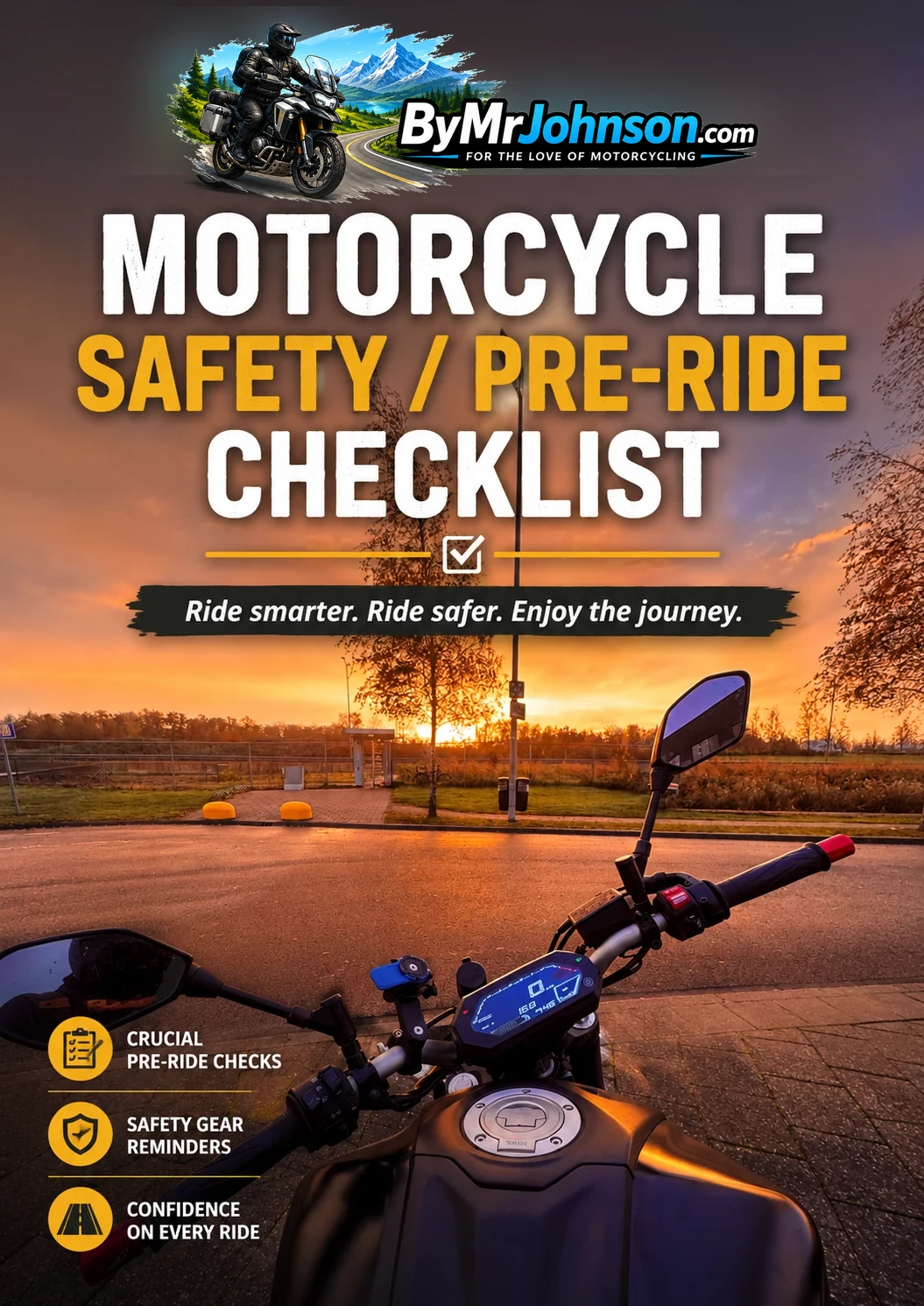
Motorcycling is one of the most freeing things I have ever experienced.
The sound of the engine, the focus, the feeling of leaning into a corner, the way a simple ride can clear your head — it is hard to explain until you feel it yourself. But that freedom comes with responsibility. A motorcycle gives you less protection, less margin for error and much more direct feedback than a car.
That does not mean riding has to be scary. It means riding has to be intentional.
Motorcycle safety is not about being afraid of the road. It is about respecting the machine, understanding your limits, reading the environment, and building habits that help you come home safely after every ride.
This guide is written for beginner riders, but the truth is simple: even experienced riders need to keep coming back to the basics.
Quick Answer:
What Is the Most Important Motorcycle Safety Tip for Beginners?
The most important motorcycle safety tip for beginners is to ride with margin. That means leaving enough space, riding at a speed where you can react, wearing proper protective gear, looking far ahead, and never assuming that other road users have seen you.
Motorcycle safety is not one single trick. It is a system of small habits that protect you before something goes wrong.
What Motorcycle Safety Really Means
A lot of beginner riders think motorcycle safety means “don’t crash.”
That is the outcome, but it is not the method.
Real motorcycle safety means making better decisions before danger becomes obvious. It is the way you prepare before the ride, how you position yourself on the road, how you use your eyes, how smoothly you control the bike and how honestly you judge your own skill level.
For me, safety became much clearer when I stopped thinking only about speed or gear and started thinking about awareness.
A safe rider is not just someone who rides slowly. A safe rider is someone who knows when to slow down, when to create space, when to wait, when to avoid a risky overtake and when to say, “Not today.”
That kind of judgement matters more than ego.
Motorcycle safety includes:
- Wearing protective gear every time
- Keeping the motorcycle maintained
- Practicing braking and low-speed control
- Looking far ahead instead of directly in front of the wheel
- Riding defensively around cars, cyclists, pedestrians and other riders
- Adjusting for rain, wind, gravel, darkness and fatigue
- Knowing your limits and respecting them
The best riders are not the ones who constantly prove something. They are the ones who make riding look calm, controlled and smooth.
That is the goal.
Read : Essential Motorcycle Safety Tips For Beginners
The Biggest Risks for Beginner Riders
When you are new to riding, everything happens quickly. The motorcycle feels powerful, traffic feels unpredictable and your brain is trying to process clutch control, throttle, balance, braking, mirrors, road signs and other vehicles at the same time.
That is why beginners are most vulnerable when they are overloaded.
Here are the biggest risks new riders should understand.
1. Overconfidence After the First Few Rides
The first few successful rides can make you feel like you are improving fast. That confidence is good, but it can become dangerous when it grows faster than your skill.
A beginner may know how to ride in a straight line, shift gears and take basic corners, but that does not mean they are ready for emergency braking, wet roads, heavy traffic or unexpected hazards.
Confidence should come from practice, not adrenaline.
A good rule: ride slightly below the level you think you can handle. Leave space for mistakes.
2. Poor Braking Technique
Many beginners are afraid of the front brake because they hear stories about locking the front wheel. But the front brake provides most of your stopping power.
The problem is not using the front brake. The problem is grabbing it suddenly.
Braking should be progressive. Smooth pressure first, then stronger pressure as the weight transfers forward.
Emergency braking is a skill. You cannot expect to master it during an emergency if you have never practiced it calmly.
3. Looking at the Danger Instead of the Escape
This is called target fixation.
If you stare at the pothole, curb, barrier or a car you are afraid of hitting, your body may unconsciously steer the motorcycle toward it.
Motorcycles tend to go where you look.
That is why your eyes are one of your most important safety tools. Look where you want to go, not where you are afraid of going.
4. Riding Too Close to Other Vehicles
Cars can brake suddenly. Drivers can change lanes without warning. Delivery vans can block your view. Cyclists and scooters can move unpredictably, especially in urban areas.
If you ride too close, you remove your reaction time.
Space is safety. Space gives you time to see, think, brake, swerve or escape.
5. Not Being Visible Enough
A common beginner mistake is assuming that because you can see a car, the driver can see you.
That is not how traffic works.
Motorcycles are smaller, easier to miss and often hidden in blind spots. You need to ride as if you are invisible, especially at junctions, roundabouts, lane changes and traffic merges.
Do not depend on being seen. Position yourself to be seen, then still prepare for the possibility that you are not.
6. Riding Tired, Angry or Distracted
Your mental state matters.
Riding requires attention. If you are tired, stressed, emotional or distracted, your reaction time and judgement drop. That does not mean you can only ride when life is perfect, but it does mean you need to check in with yourself before riding.
Some days, the safest decision is to take it easy. Some days, the safest decision is not to ride.
That is not weakness. That is maturity.
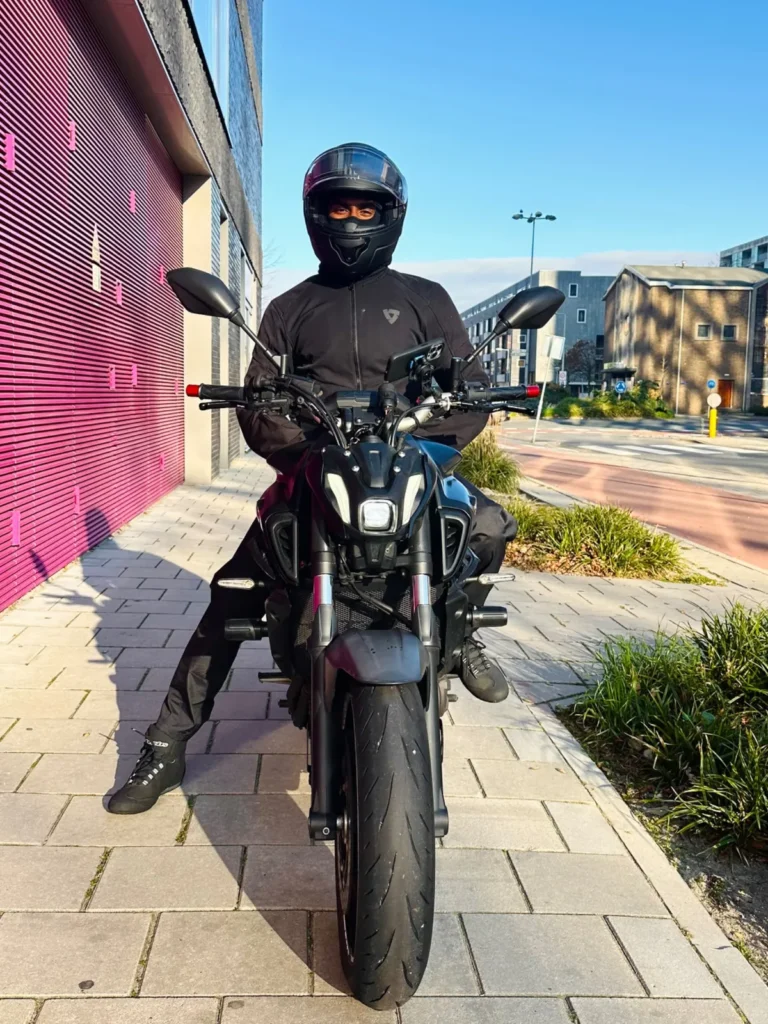
Essential Protective Gear for Beginner Riders
Motorcycle gear is not about looking cool. It is about reducing injury when things go wrong.
You do not need to buy the most expensive gear on day one, but you do need proper protection. Beginner riders should avoid the mindset of, “I’m just going for a short ride.” Many accidents happen close to home because that is where we feel most familiar and relaxed. In fact, the worst accident of my life happened within a 3 km radius of my home — a reminder that every ride deserves the same respect.
My personal rule is simple: if I am getting on the bike, I gear up properly.
For Gear Preparation – Motorcycle Safety Gear Explained: What Each Piece Actually Does
Helmet
Your helmet is the most important piece of motorcycle gear you own.
Choose a helmet that:
- Meets the safety standard required in your country
- Fits snugly without painful pressure points
- Does not move around when you shake your head
- Has good visibility
- Has a visor suitable for your conditions
- Feels comfortable enough to wear every ride
A loose helmet is not a good helmet. A helmet that looks nice but distracts you with pressure or wind noise is also not ideal.
Fit matters more than style.
Jacket
A motorcycle jacket protects your skin, shoulders, elbows, chest and back. Look for abrasion-resistant material and impact protectors.
A good jacket should feel secure but still allow movement. If the armor shifts away from your elbows or shoulders too easily, it may not protect you well in a slide.
For beginner riders, a protective all-season textile jacket is often a practical first choice.
Gloves
Your hands are usually the first thing you put out during a fall.
Good motorcycle gloves protect your palms, knuckles, fingers and wrists. Avoid riding with thin fashion gloves or regular winter gloves. They are not designed for sliding on asphalt.
Look for gloves with:
- Palm sliders or reinforced palms
- Knuckle protection
- Secure wrist closure
- Good throttle feel
- Weather protection if needed
You need protection, but you also need control. Gloves that are too bulky can make throttle and brake control harder.
Pants
Regular jeans are not proper motorcycle protection.
Motorcycle jeans, textile pants, or leather pants are designed to resist abrasion and hold knee and hip protectors. If you are a beginner, protective motorcycle jeans can be a comfortable and realistic option for daily riding.
The key is to wear something designed for motorcycling, not normal street clothing.
Boots
Your feet and ankles are vulnerable on a motorcycle.
Good motorcycle boots protect your ankles, toes, heels and shins. They also give better grip when stopping or manoeuvring the bike.
Avoid riding in sneakers. They may feel comfortable, but they offer very little protection in a crash or when the bike drops onto your foot.
Ear Protection
Many beginners forget about hearing protection.
Wind noise at speed can be tiring and may damage hearing over time. Earplugs do not block everything; they reduce harsh wind noise while still allowing you to hear traffic and important sounds.
For longer rides, earplugs make a big difference in focus and fatigue.
You do not need premium equipment in every category to start with complete coverage.
If you are building your first setup, use this complete motorcycle safety gear checklist to make sure you have not left a protection gap between your helmet and boots.
I have also built an example beginner motorcycle gear setup under €500 to show where I would put the money first.
How to Ride Defensively
Defensive riding means you are not just controlling your own motorcycle. You are also reading what other people might do before they do it.
The mindset is simple:
Assume people can make mistakes
Position yourself so their mistake does not become your emergency.
This is especially important in city riding, where cars, bicycles, scooters, pedestrians, buses and delivery vehicles all share limited space.
Learn : Defensive Motorcycle Riding Techniques
Keep a Safety Bubble
Try to keep space around your motorcycle.
That includes:
- Space in front
- Space behind
- Space to the sides
- An escape path
Do not ride boxed in between vehicles. Avoid staying next to cars longer than necessary. If a driver suddenly moves into your lane, you want somewhere to go.
Watch the Wheels, Not Just the Indicators
Indicators are useful, but not reliable.
Many drivers do not indicate. Some indicate too late. Some indicate one way and move another way.
Wheels tell the truth earlier. If the front wheel of a car starts turning, the vehicle is about to move. At junctions and side roads, watching the wheels can give you an extra moment to react.
Avoid Blind Spots
Do not sit in a car’s blind spot.
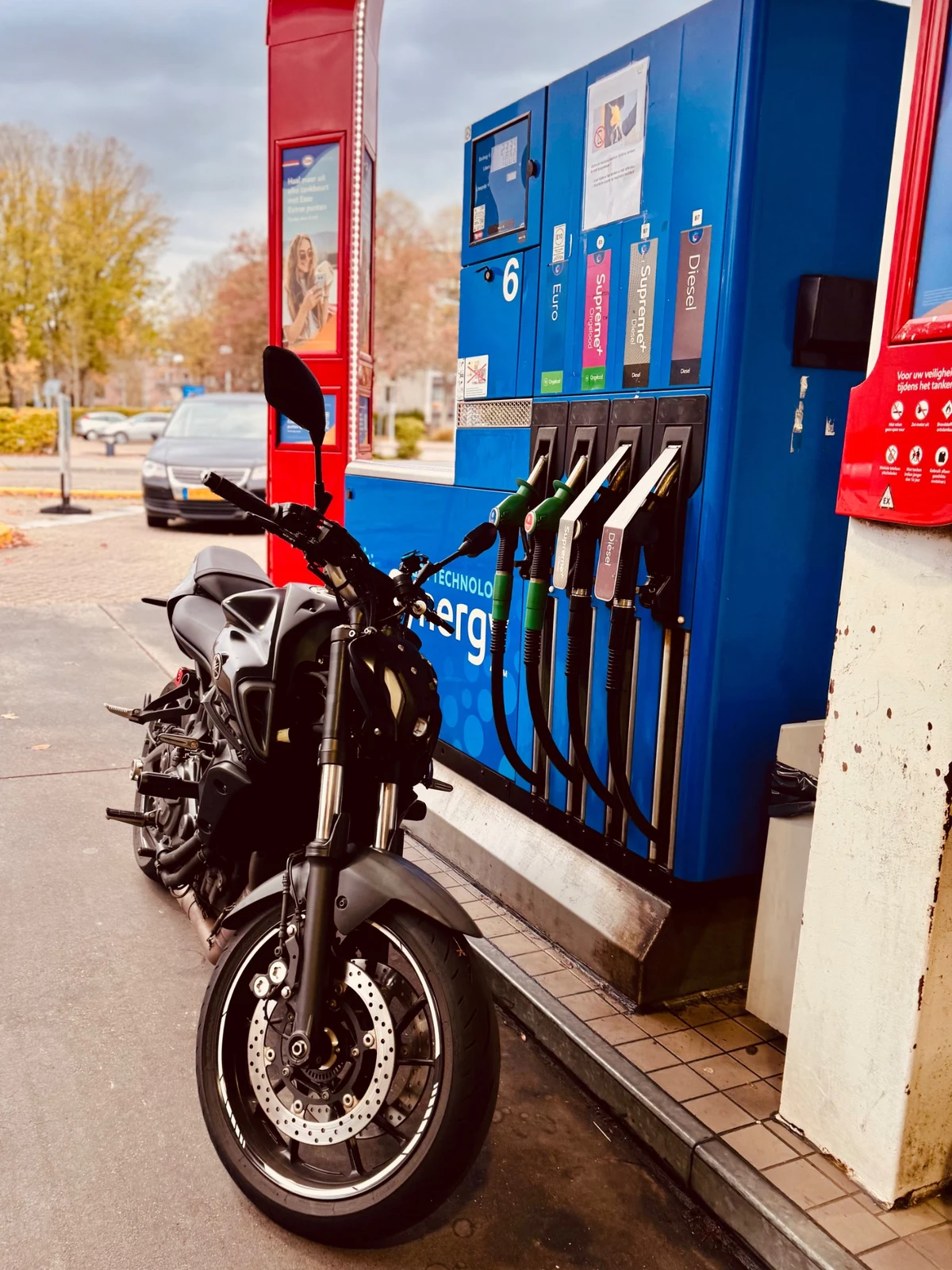
Either stay clearly behind or move through safely when appropriate. If you cannot see the driver’s mirrors, there is a good chance the driver cannot see you.
This is one of the simplest habits that can prevent serious problems.
Be Careful at Junctions
Junctions are one of the most dangerous places for motorcyclists.
When approaching a junction, ask:
- Can someone turn across my path?
- Can someone pull out without seeing me?
- Is there a car waiting to turn left or right?
- Am I hidden behind another vehicle?
- Do I have space to brake or escape?
Slow down enough that you have options. Being “right” does not protect you from impact. Riding defensively does.
Do Not Fight for Priority
This is a hard lesson for many riders.
Sometimes you technically have priority. But if another road user has not seen you, your priority does not matter.
Let them make the mistake. Let them go. Stay alive.
Your ego can complain later. Your body will thank you now.
Braking Basics for Beginner Riders
Braking is one of the most important motorcycle safety skills.
Learn : How To Brake Safely On A Motorcycle
It is also one of the skills beginners often avoid practicing because it feels uncomfortable.
But you need to know how your motorcycle behaves when you brake hard, especially before an emergency happens.
Use Both Brakes
On most motorcycles, the front brake provides most of the stopping power. The rear brake helps stabilize the bike and can be useful at low speeds.
A beginner should learn to use both smoothly.
The key word is smoothly.
Do not grab the front brake suddenly. Apply pressure progressively. As the motorcycle’s weight shifts forward, the front tire gains more grip, allowing you to brake harder.
Practice Progressive Braking
Find a safe, empty area and practice:
- Ride at a low speed
- Roll off the throttle
- Apply both brakes gently
- Increase brake pressure smoothly
- Come to a controlled stop
- Repeat at slightly higher speeds
The goal is not drama. The goal is control.
You want braking to feel familiar, not scary.
Keep Your Eyes Up
When braking, do not stare at the ground in front of you.
Keep your eyes up and look where you want to stop. This helps with balance, judgement, and control.
If you stare down, your body becomes tense and your steering becomes worse.
Brake Before the Corner
As a beginner, do most of your braking before the corner, while the bike is upright.
Trying to brake hard while leaned over can reduce your margin for error. Advanced riders may use more complex techniques, but beginners should first master simple, safe habits.
Slow down before the turn. Look through the corner. Maintain smooth control.
That alone will make your riding safer.
Cornering Basics
Cornering is one of the most enjoyable parts of riding, but it is also where beginner mistakes show up quickly.
A safe corner starts before the corner.
Learn : How To Corner Safely On A Motorcycle
Slow In, Smooth Out
For beginner riders, the best cornering principle is:
Slow in, smooth out.
Enter the corner at a speed you can handle comfortably. Once you see the exit and the bike is stable, gently roll on the throttle.
Do not rush the entry. If you enter too fast, you force yourself to fix the problem while leaned over. That creates stress, target fixation and sudden inputs.
A smooth corner feels calm.
Look Through the Corner
Your motorcycle follows your eyes.
Turn your head and look where you want to go. Do not just look with your eyes; point your chin toward the exit.
This helps your body guide the motorcycle naturally.
Stay Relaxed
Beginner riders often become stiff in corners.
They lock their arms, hold the bars too tightly and fight the motorcycle. This makes the bike harder to control.
Keep your arms relaxed. Hold the tank gently with your knees. Let the motorcycle move underneath you.
You are guiding the bike, not wrestling it.
Avoid Sudden Inputs
In a corner, avoid sudden braking, sudden throttle changes or aggressive steering.
Smoothness gives the tires a better chance to do their job.
That does not mean you cannot adjust mid-corner. It means your adjustments should be calm and controlled.
Vision and Target Fixation
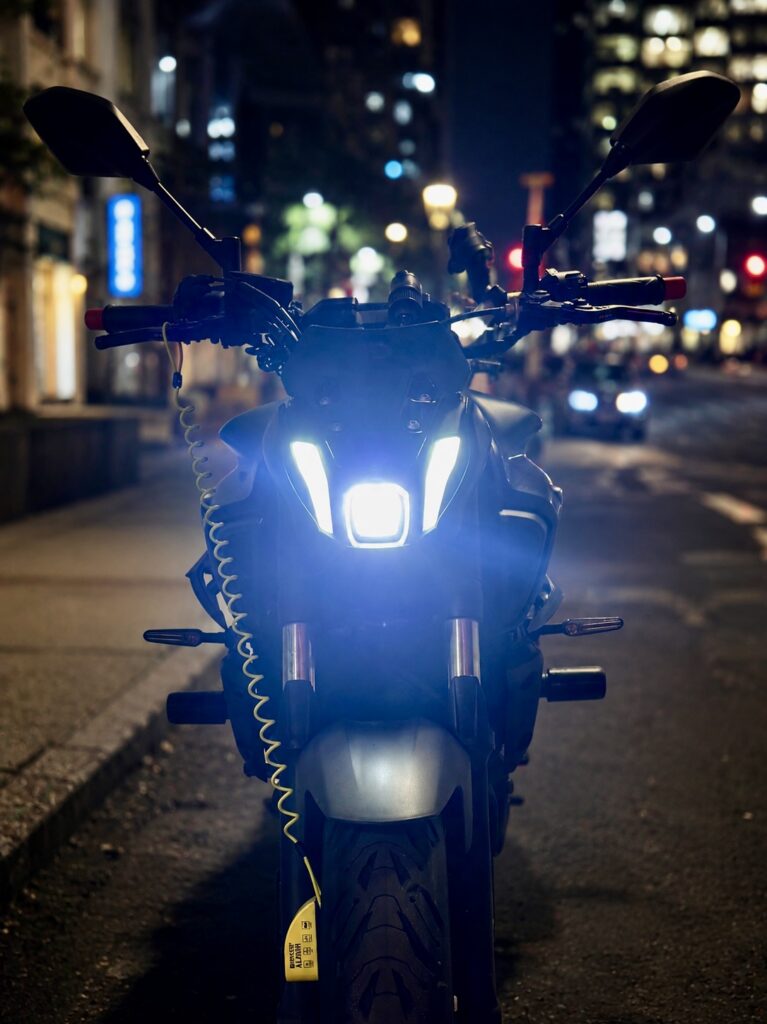
Your eyes are your steering system.
This is one of the biggest lessons every new rider needs to understand.
If you look at the danger, you are more likely to go toward it. If you look at your escape path, you are more likely to steer toward safety.
Learn : How To Avoid Target Fixation While Riding
Look Where You Want to Go
If there is gravel in the road, do not stare at the gravel. Look at the clean path around it.
If a corner feels tighter than expected, do not stare at the outside curb. Turn your head and look through the corner.
If traffic suddenly slows, do not stare at the bumper in front of you. Look for your stopping zone or escape path.
This habit takes practice.
At first, your brain wants to stare at the threat.
You have to train yourself to look at the solution.
Read : Motorcycle Vision Techniques
Scan Far Ahead
Do not ride with your eyes fixed only a few meters in front of the motorcycle.
Look far ahead. Then scan back. Then check mirrors. Then scan ahead again.
You are constantly building a picture of what is happening around you.
Ask yourself:
- What is moving?
- What could move?
- What can I not see yet?
- Where is my escape path?
- What is the road surface like?
Good riders see problems early.
Riding in Traffic
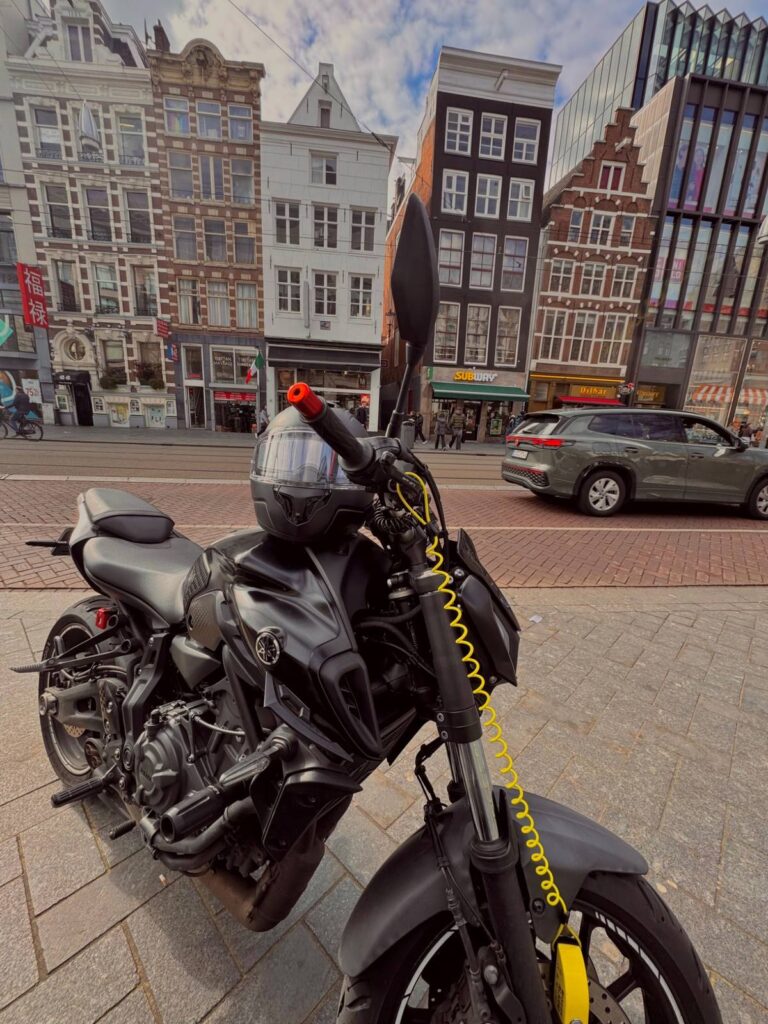
Traffic is where motorcycle safety becomes very real.
Cars may not see you. Cyclists may move unexpectedly. Pedestrians may step out. Delivery vehicles may stop suddenly. Other riders may pressure you from behind.
Your job is to stay calm and predictable.
Be Visible
Position yourself where drivers are more likely to see you.
Avoid hiding directly behind large vehicles. Avoid sitting beside cars near junctions. Use your lane position to improve visibility.
Your lights, gear and road position all help, but none of them guarantee that someone sees you.
Ride as if you are invisible.
Be Predictable
Do not weave aggressively. Do not make sudden lane changes. Do not surprise other road users.
Predictability keeps you safer because people can better understand what you are doing.
Smooth riding is not just elegant. It is safer.
Manage Speed Difference
One of the biggest dangers in traffic is a big speed difference between you and other vehicles.
If traffic is moving slowly and you are moving much faster, your reaction window becomes smaller. A car door, lane change, pedestrian or cyclist can become a problem instantly.
Ride at a speed where you can still react.
Watch for Gaps
In traffic, gaps are warnings.
If there is a gap in the next lane, someone may move into it. If there is a gap at a junction, a car may turn across it. If traffic suddenly opens, people may accelerate or change lanes.
Do not only watch vehicles. Watch the spaces between vehicles.
That is where movement often happens.
Learn : How To Ride Safely In Heavy Traffic
Weather and Road Hazards
The road is not always clean, dry and predictable.
Beginner riders need to learn how weather and surface conditions change the way a motorcycle behaves.
Rain
Rain reduces grip and visibility.
When riding in the rain:
- Increase following distance
- Brake earlier and smoother
- Avoid sudden lean angles
- Be careful with painted lines and metal covers
- Use gentle throttle inputs
- Keep your visor clear
- Stay relaxed
The first rain after dry weather can be especially slippery because oil and dirt rise to the surface.
Do not ride in the rain like you ride on a warm dry road.
Gravel and Sand
Gravel and sand can make the bike feel unstable.
If you see loose material:
- Avoid sudden braking
- Avoid sudden steering
- Keep the bike as upright as possible
- Look where you want to go
- Let the motorcycle move slightly underneath you
- Do not panic-grip the bars
The goal is to stay smooth and reduce lean.
Wind
Strong wind can push you across the lane, especially on open roads or bridges.
Stay relaxed, keep both hands steady and expect gusts when passing large vehicles or open gaps between buildings.
Do not overcorrect aggressively. Small, calm corrections work better.
Darkness
Night riding reduces visibility and makes it harder to read the road surface.
Slow down, use clean visors, make sure your lights are working and avoid outriding your vision. If you cannot see far enough to stop safely, you are going too fast for the conditions.
Pre-Ride Safety Checklist
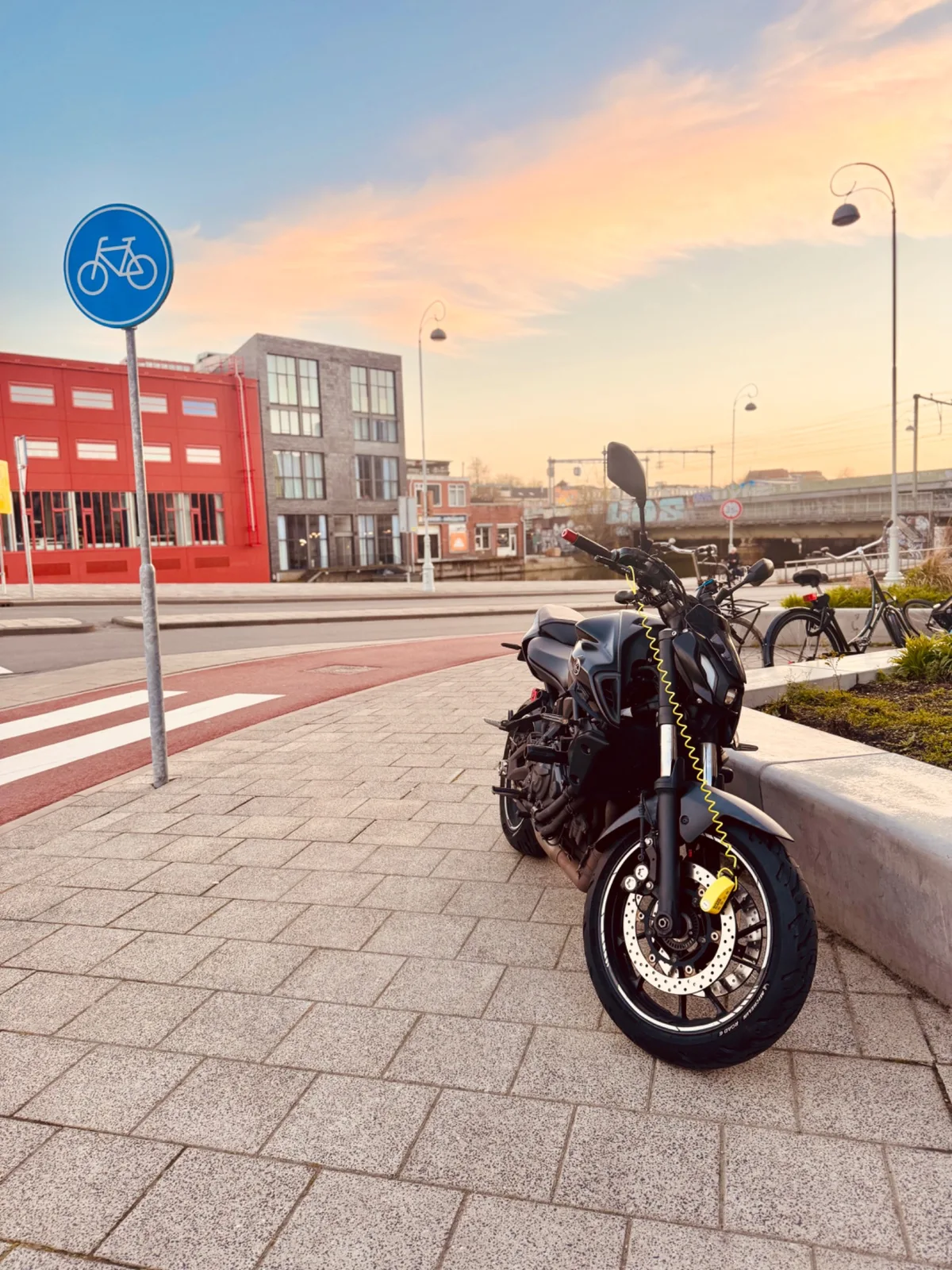
Before every ride, take a short moment to check the bike and yourself.
This does not need to take 20 minutes. A simple one-minute habit can prevent problems.
Motorcycle Check
Check : Whether a bike like the MT-07 suits a beginner
- Tires: pressure, visible damage, tread
- Brakes: lever feel and brake response
- Lights: headlight, brake light, indicators
- Mirrors: clean and adjusted
- Chain: condition and tension if applicable
- Fluids: leaks or warning signs
- Controls: clutch, throttle, brake levers
- Stand: fully up before moving
Rider Check
Ask yourself:
- Am I tired?
- Am I distracted?
- Am I rushing?
- Am I angry or emotional?
- Am I dressed properly?
- Do I know where I am going?
- Is the weather suitable for my skill level?
This is not overthinking. This is responsibility.
A safe ride starts before the engine starts.
Read : Mental Preparedness Before Riding
Common Mistakes
Every rider makes mistakes. The goal is to notice them early and correct them before they become habits.
Mistake 1: Riding Too Fast Too Soon
Speed hides skill gaps.
At low speeds, mistakes are easier to correct. At high speeds, everything becomes more serious.
Build your skill first.
Speed can wait.
Mistake 2: Following Too Closely
Tailgating removes your safety margin.
Leave enough distance to brake, react and escape. In poor weather or heavy traffic, leave even more.
Mistake 3: Not Practicing Emergency Braking
Reading about braking is not enough.
Practice in a safe place. Start slow. Build gradually. Learn how your motorcycle feels when stopping quickly.
Mistake 4: Staring at Hazards
Target fixation is real.
Train your eyes to look at the path, not the problem.
Mistake 5: Wearing Incomplete Gear
Short rides still count.
A crash does not care whether you were going to the shop, commuting or riding for fun. Gear up every time.
Mistake 6: Trying to Keep Up With Faster Riders
Never ride someone else’s ride.
If another rider is faster, let them go. Your pace should match your skill, your comfort, your motorcycle and the conditions.
A good riding friend will respect that.
Mistake 7: Ignoring Fatigue
Tired riding is sloppy riding.
When you are tired, your body reacts slower and your judgement gets weaker. Stop, rest, hydrate or call it a day.
Mistake 8: Thinking Safety Makes Riding Boring
Safety does not remove freedom. It protects it.
The more skilled and aware you become, the more relaxed riding feels. You stop surviving the ride and start enjoying it properly.
Read : Common Beginner Motorcycle Mistakes
Next Steps for New Riders
If you are new to motorcycles, do not try to master everything at once.
Focus on building a strong foundation.
Are Motorcycle Courses Worth It?
Step 1: Take a Proper Riding Course
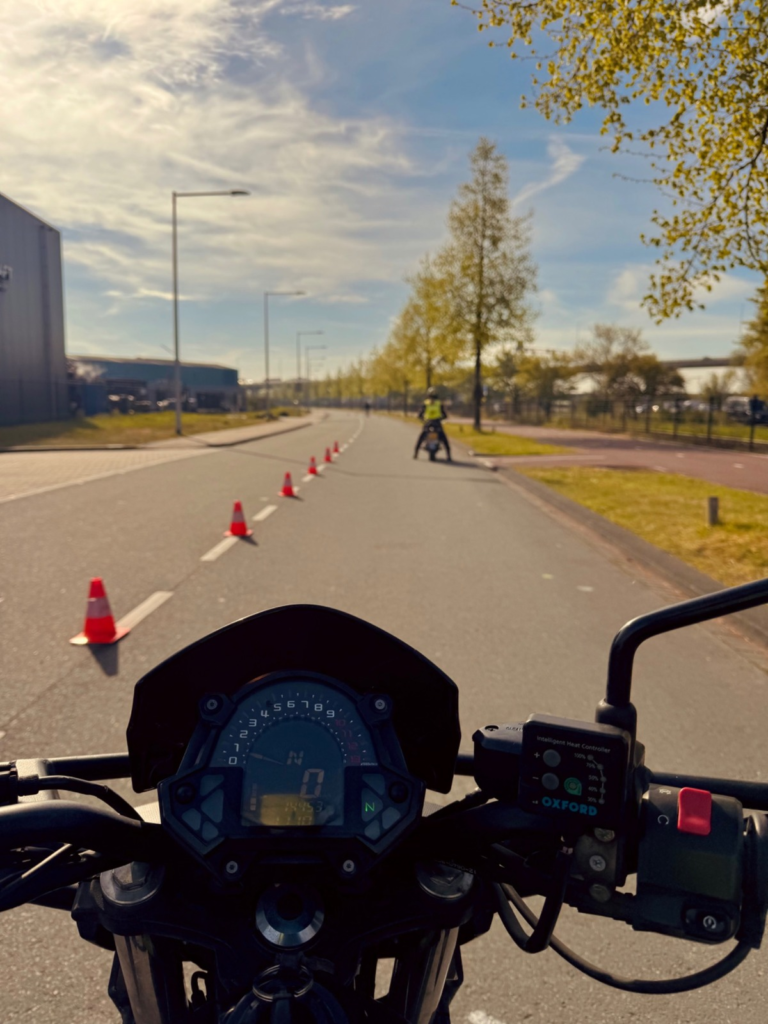
A good riding course gives you structured feedback. You learn faster when someone experienced can see what you are doing and correct small mistakes before they become habits.
Even after getting your license, extra training is valuable.
Step 2: Practice Low-Speed Control
Low-speed control builds confidence.
Practice:
- Slow riding
- U-turns
- Figure eights
- Smooth clutch control
- Rear brake control
- Starting and stopping smoothly
These skills make daily riding easier, especially in parking lots, traffic and tight streets.
Read : Low-Speed Motorcycle Control Tips
Step 3: Practice Braking
Do not wait for an emergency to learn emergency braking.
Find a safe area and practice progressive stops. Build muscle memory calmly.
Step 4: Ride Familiar Roads First
When you are new, familiar routes reduce mental load.
You already know the turns, traffic patterns and road signs, so you can focus more on the motorcycle and your technique.
Gradually expand your routes as confidence grows.
Step 5: Keep Learning
Motorcycling rewards humility.
Read, watch, practice, ask questions and reflect after your rides.
After each ride, ask:
- What went well?
- Where did I feel uncomfortable?
- What surprised me?
- What skill should I practice next?
That is how you improve.
Final Thoughts: Ride Like You Want to Ride for Life
Motorcycle safety is not about fear.
It is about staying in the game long enough to enjoy riding for years.
The best riders I respect are not reckless. They are smooth. Calm. Aware. Patient. They know when to push and when to back off. They understand that every ride is a chance to practice.
As a beginner, you do not need to be perfect.
You need to be honest, prepared, and willing to learn.
Wear the gear. Check the bike. Look far ahead. Keep space. Practice braking. Slow down before corners. Stay humble.
And before every ride, ask yourself one simple question:
Will the way I ride today help me come home safely?
If the answer is yes, ride.
FAQs
Is motorcycling safe for beginners?
Motorcycling can be safe for beginners when approached with proper training, protective gear, defensive riding habits and realistic limits. The danger increases when beginners ride too fast, skip gear, follow too closely or ride beyond their skill level.
Should beginner riders use the front brake?
Yes. The front brake provides most of the stopping power on a motorcycle. Beginners should learn to use it progressively and smoothly, not suddenly or aggressively.
How can I become more confident on a motorcycle?
Confidence comes from practice, not rushing. Practice low-speed control, braking, smooth cornering and defensive riding on familiar roads before taking on more difficult situations.
How often should I check my motorcycle before riding?
You should do a quick safety check before every ride. Tires, brakes, lights, mirrors, controls and leaks are worth checking regularly, even if the ride is short.
What is the most important motorcycle safety skill?
The most important motorcycle safety skill is awareness. Braking, cornering and throttle control matter, but awareness helps you avoid needing emergency reactions in the first place.
What gear should a beginner motorcyclist buy first?
A beginner should start with a proper helmet, jacket, gloves, pants and boots. These five pieces create the foundation of motorcycle protection.
Is riding in the rain dangerous for beginners?
Rain adds risk because it reduces grip and visibility. Beginners should ride more slowly, brake earlier, increase following distance, avoid sudden inputs and be extra careful on painted lines, metal covers and slippery surfaces.
What is defensive motorcycle riding?
Defensive motorcycle riding means anticipating mistakes from other road users and positioning yourself to avoid danger. It includes keeping space, avoiding blind spots, watching junctions and never assuming drivers have seen you.
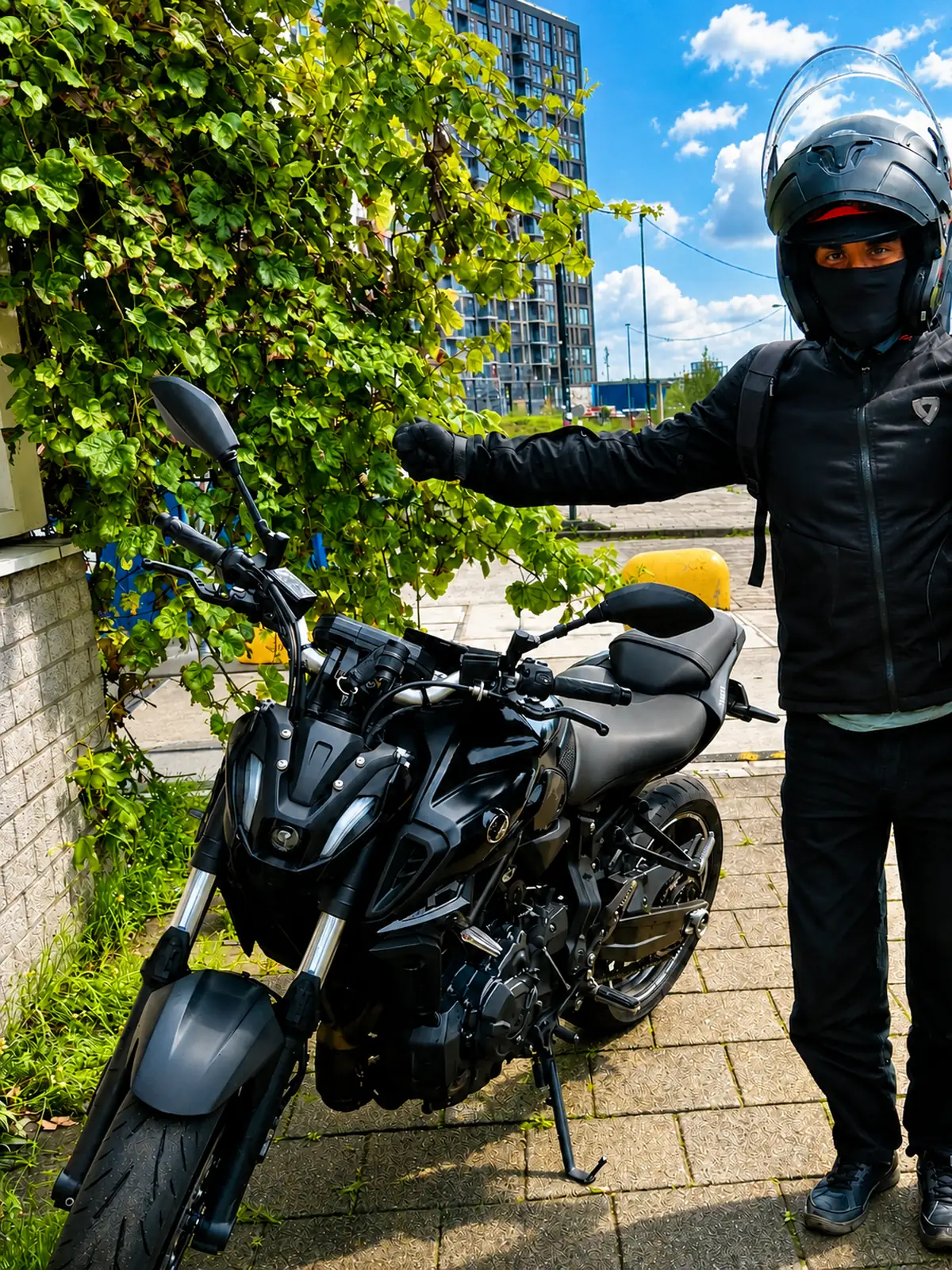
This safety guide is built from real riding experience, not theory alone. Many of these lessons come from my own journey with TITAN – My Yamaha MT-07, the bike that continues to teach me patience, focus and respect for the road.
Related Reads
Lane Positioning For Motorcyclists
Motorcycle Safety Gear Every Rider Should Understand